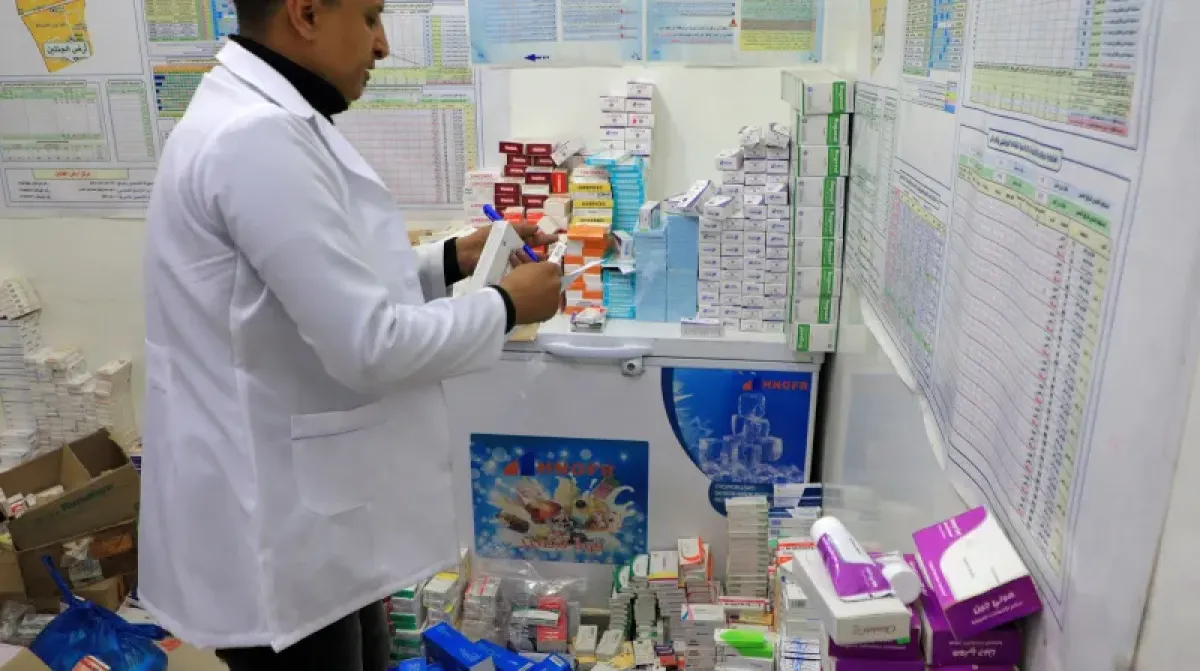
Smuggled pharmaceuticals originating from Iran and entering Houthi-controlled territories in Yemen represent a perilous dimension of the ongoing conflict, transforming medicine into a silent weapon that endangers patients and fuels a vast black market operated by networks linked to the militia.
Over recent years, government forces have intercepted numerous large shipments of unlicensed drugs, predominantly from Iran, destined for Houthi-controlled areas via land routes and maritime channels, particularly through the key smuggling hub of Hodeidah ports. Analysts view these seizures not as isolated incidents but as indicators of a widespread smuggling operation orchestrated by the Houthi group. This operation is part of a parallel economy built on monopoly, smuggling, and control over vital sectors, most notably healthcare.
Since the Houthi takeover, the health sector has become highly vulnerable to corruption and smuggling networks associated with influential figures within the group. Instead of supporting the import of regulated and approved medicines, the group has facilitated the market entry of substandard and unknown-source products, generating immense profits for war profiteers connected to them. Experts confirm that this drug smuggling not only involves illegal products but also jeopardizes the lives of millions of Yemenis. Many of these pharmaceuticals lack proper storage conditions or essential medical standards, and their efficacy and safety are not subject to genuine laboratory oversight.
Doctors note that many medications circulating in Houthi-controlled areas have lost their effectiveness, leading to severe complications for patients with chronic illnesses, infections, and cancer. Many families are unable to afford original alternatives due to high prices or monopolistic practices. Concurrently, the Houthi militia has conducted extensive campaigns against pharmaceutical companies and authorized agents of international manufacturers in Sana'a and its controlled regions. These campaigns involve imposing financial and administrative restrictions and arbitrary measures, resulting in the closure or significant reduction of operations for many companies.
Observers suggest these actions are strategic, aimed at reshaping the pharmaceutical market to serve the economic interests of Houthi leadership. This involves marginalizing authorized agents and replacing them with newly established companies linked to the group, which have secured exclusive import rights for medicines and medical supplies. As these networks expand, low-quality products from Iran and unregulated markets have flooded the market, causing a dangerous decline in the quality of medicines available in hospitals and pharmacies.
Medical sources accuse the militia of leveraging the health sector for economic control and extortion, by compelling hospitals and treatment centers to use specific products, even when doctors express clear reservations about their quality or efficacy. Specialists contend that the situation in Houthi-controlled drug markets constitutes a systematic replacement designed to transform the health sector into a revenue stream for the group, regardless of the risk to civilian lives. Political figure Nayef Al-Qanis has warned of escalating "death trade through smuggled drugs," emphasizing that this phenomenon threatens thousands of patients, including children, due to the widespread circulation of counterfeit and smuggled medical products.
Al-Qanis described Yemen's health system as facing a "silent humanitarian catastrophe" that surpasses the impact of conventional warfare, stemming from the proliferation of counterfeit and smuggled drugs forced upon health facilities. He deemed the substitution of globally approved medications with substandard or unknown-source alternatives a "silent crime" and a blatant violation of the right to life. He pointed to the absence of drug regulation and market monopolization by smuggling networks, forcing doctors to use medications that fail to meet minimum safety and quality standards. Medical reports and testimonies document cases where patients in intensive care deteriorated due to ineffective antibiotics, only to improve after original medications were procured through individual efforts.
Al-Qanis also recalled the tragedy of children with cancer in Sana'a who died from contaminated drug doses, calling it one of the most painful medical incidents in modern Yemeni history and a testament to the disregard for the health sector in Houthi-controlled areas. Observers believe the smuggled drug trade is an integral part of the war economy the group has established, transforming humanitarian and service sectors into tools for financing, control, and influence. While Yemenis suffer from an unprecedented economic collapse and deteriorating health services, Houthi-affiliated networks have monopolized the trade in medicines and medical supplies, profiting significantly from importing low-quality items, exploiting the lack of official oversight and the group's control over ports and border crossings.
The most dangerous aspect of this trade, according to observers, is its targeting of the most vulnerable populations. Patients are compelled to use unknown-source medications due to the lack of alternatives or the prohibitive cost of original drugs, turning treatment itself into a life-threatening danger. The continued flow of smuggled drugs also reflects the extent of Iranian influence within vital sectors in Houthi-controlled areas, with accusations of the Yemeni market being used as a conduit for substandard or prohibited pharmaceutical products. Specialists warn that these practices portend a long-term health disaster, given the collapse of the drug regulatory system and the expanding influence of smuggling and monopolistic networks.
Addressing what is termed "drug terrorism" requires urgent governmental and international action to tighten control over maritime entry points, prevent the influx of smuggled drugs, support official health institutions, and ensure access to original, internationally regulated medicines for millions of Yemenis. Human rights activists and health organizations have called for international investigations into drug smuggling networks and practices that endanger patients' lives, considering the transformation of the health sector into a domain for profit and monopoly in a country experiencing one of the world's worst humanitarian crises as a crime no less grave than other war crimes.