The California State Senate has reconfirmed five commissioners to the Board of Parole Hearings, a move that has ignited a sharp political divide, with Republicans vehemently opposing the decision due to recent paroles granted to serial sex offenders.
The Republican opposition, voiced on the Senate floor on June 1, centered on the board's recent decisions to grant parole to individuals such as David Allen Funston, Gregory Lee Vogelsang, and Roberto Antonio Detrinidad. Senator Steven Choi (R-Irvine) argued that the current board is "clearly not doing a good job protecting children and should be replaced." The Board of Parole Hearings comprises 21 commissioners, appointed by the governor and confirmed by the Senate for three-year terms. The reconfirmations of commissioners William Muniz, Michael Ruff, Rosalind Sargent-Burns, Mary Thornton, and Jack Weiss occurred along party lines.
Democrats defended the commissioners and the board's decisions, citing a 2008 California Supreme Court ruling that mandates parole denial be supported by evidence of current risk. Senator Eloise Gómez Reyes (D-Colton) stated, "Parole decisions must be based on current safety risks not on the seriousness of the original offense. Evidence based risk assessment exists for this exact purpose." The state's elderly parole program allows inmates aged 50 and older, who have served at least 20 continuous years, to be eligible for parole suitability hearings, with release contingent on a determination that they do not pose a public safety risk.
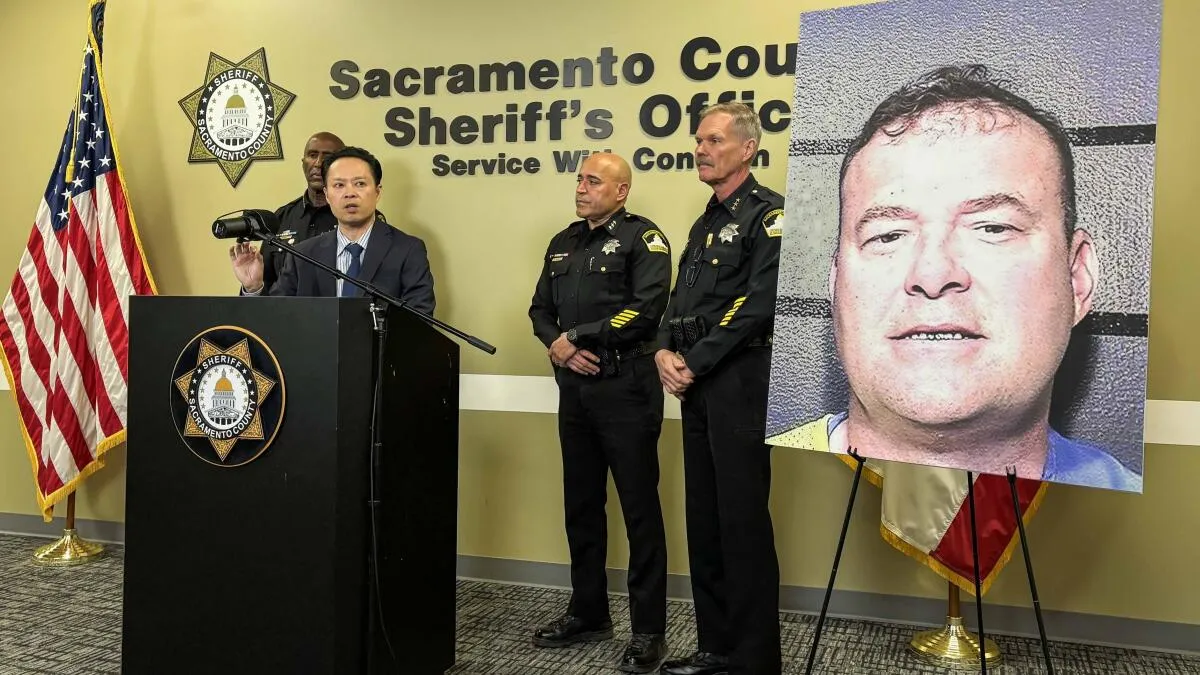
Republicans questioned the board's judgment and the transparency of its processes. Senator Shannon Grove (R-Bakersfield) referenced a transcript from David Allen Funston's parole hearing where he reportedly acknowledged lingering attraction to children. Funston was convicted in 1995 and 1996 for kidnapping and child molestation, using candy and toys to lure children in Sacramento suburbs. Senator Rosilicie Ochoa Bogh (R-Yucaipa) criticized the commissioners for refusing to disclose their individual voting records, stating, "If you are not willing to publicly own how you voted to release a serial child molester or repeat rapist, you will not receive my vote."
Following the votes, Senate Minority Leader Brian W. Jones (R-Santee) accused Democrats of "rubber-stamping" the reappointments, asserting that the board has lost public credibility. A spokesperson for the board, Emily Humpal, stated in an email that commissioners adhere to California law, prioritize public safety, and utilize stringent processes including validated risk assessment tools and forensic psychologist evaluations. She noted that "Over 97% of parolees successfully transition into their communities without a new conviction within three years."
The controversy highlights ongoing legislative efforts to address parole for sex offenders. Senators Jones and Roger Niello (R-Fair Oaks) introduced Senate Bill 1278 earlier this year, aiming to exclude individuals convicted of serious sex offenses from the elderly parole program, but the bill did not advance from committee. Meanwhile, Assembly Bill 2727, a bipartisan measure sponsored by Assemblymember Stephanie Nguyen (D-Elk Grove), seeks to raise the minimum parole eligibility age for certain sex offenders to 65. This bill would amend legislation from 2020 that lowered the minimum age for elderly parole consideration from 60 to 50.