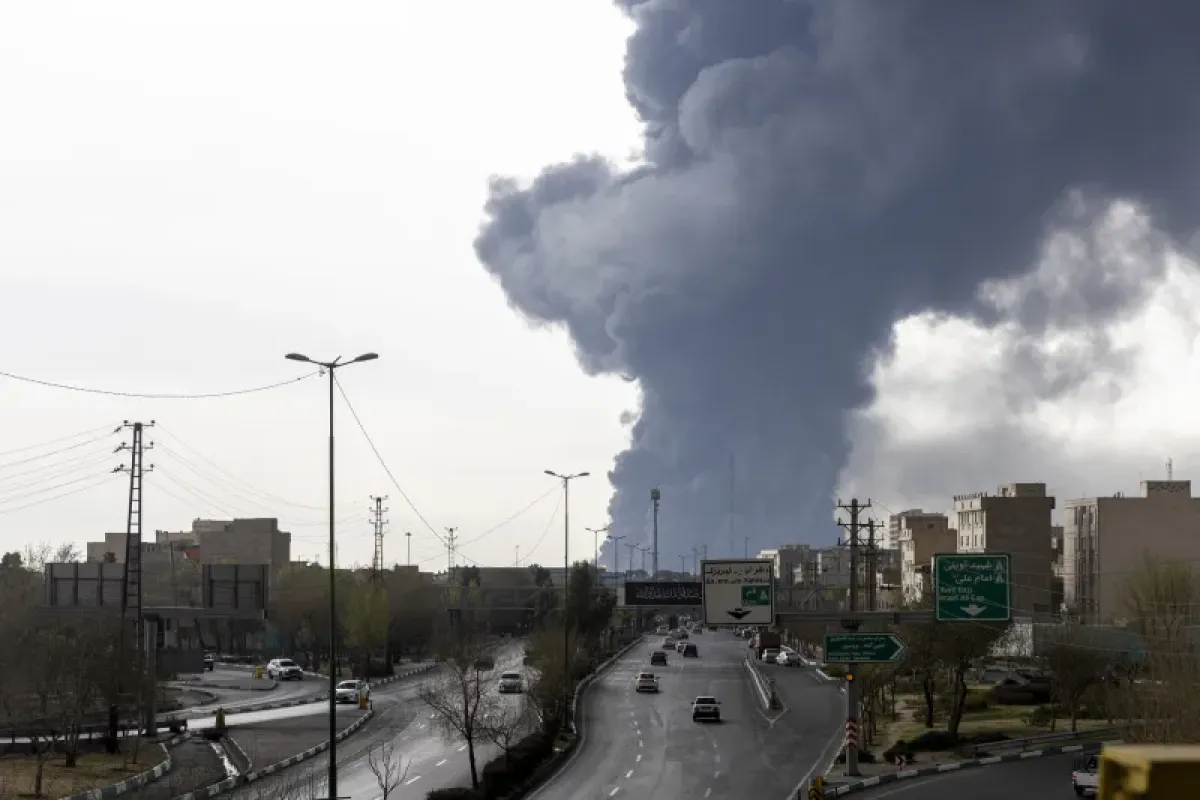
An Israeli strike on Iran's Karun Petrochemical Complex in Khuzestan province is seen not merely as an attack on an industrial facility, but as a blow to a critical component of Iran's military-industrial complex, revealing significant breaches in the Islamic Republic's strategic infrastructure.
The analysis, conducted by energy and Iranian economy researcher Dalga Khatinoglu, emphasizes that the Karun complex's significance lies not in its economic output, which represents a minor portion of Iran's petrochemical sector, but in its unique role as the sole producer of chemicals vital for both civilian and military applications.
The complex manufactures essential materials for polyurethane, used in civilian industries. Crucially, it also forms an integral part of the supply chain for solid-fuel ballistic missiles, a cornerstone of Iran's deterrence strategy in recent years.
According to the analysis, the targeting of the facility signifies a shift in Israeli tactics, moving from conventional military sites to the industrial infrastructure supporting Iran's defense programs. Instead of focusing on launch pads or military depots, strikes are now directed at facilities providing the raw materials essential for these programs.
This approach highlights a key vulnerability in Iran: the reliance on a limited number of specialized facilities for producing strategic chemicals makes them high-value targets in any military confrontation. Prolonged sanctions and isolation appear to have compelled Tehran to concentrate the production of sensitive materials in specific locations, thereby amplifying the importance and risk associated with these sites.
The attack on Karun is part of a series of assaults on major industrial and petrochemical centers in Mahshahr and Assaluyeh, disrupting production capabilities in a sector that serves as a vital source of foreign currency for Iran, particularly given the sanctions on its oil exports.
These developments suggest that recent conflicts have not only targeted Iran's military capacities but have also extended to the economic and industrial infrastructure that funds its strategic programs. This presents Tehran with a dual challenge: compensating for economic losses and ensuring the continuity of industries linked to its defense initiatives.
The analysis concludes that the strike on the Karun complex carries implications beyond immediate industrial losses, signifying a successful penetration of facilities representing Iran's strategic depth. It raises questions about the regime's ability to protect the infrastructure underpinning its military industries should confrontations continue or re-emerge.