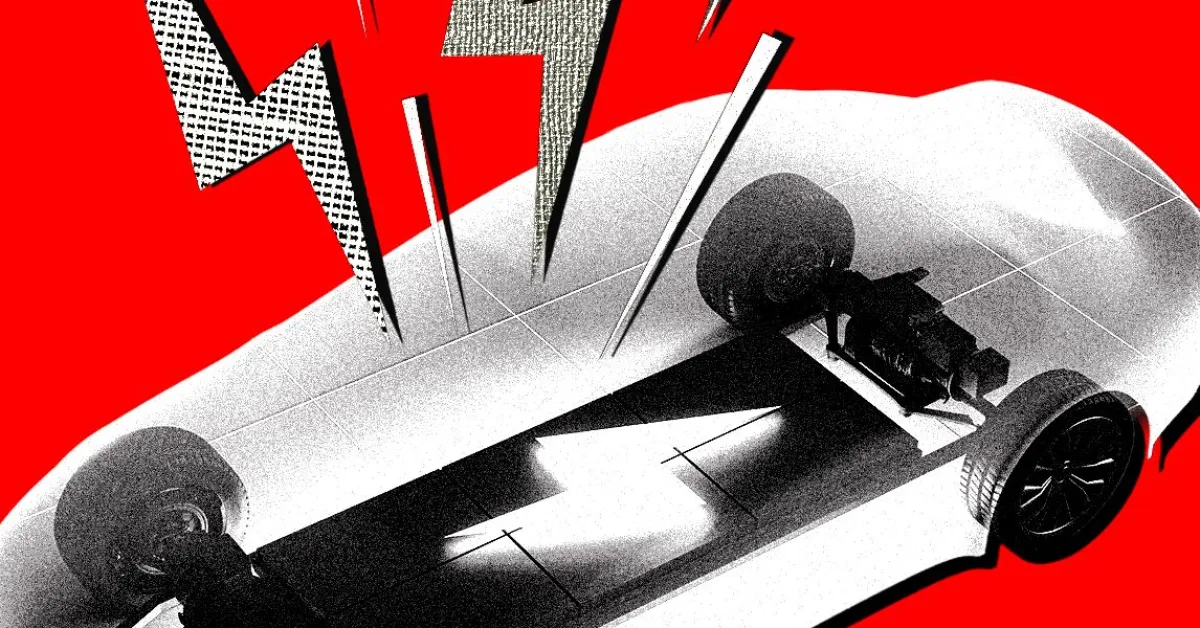
Taiwanese battery innovator ProLogium is making a bold move to challenge Chinese giants like CATL and BYD in the booming solid-state battery market, aiming for mass production by 2027.
The electric vehicle and energy storage sectors are currently dominated by Chinese companies, making it tough for international competitors. However, ProLogium's CEO Vincent Yang believes the key to challenging the status quo lies in next-generation battery tech, specifically solid-state batteries.
Unlike traditional lithium-ion batteries that use liquid electrolytes prone to spills, fires, and extreme temperature issues, solid-state batteries replace the liquid with a solid electrolyte. This promises safer, more powerful, and more resilient batteries, though manufacturing them at scale has been a persistent hurdle. ProLogium claims its fourth-generation solid-state battery product is both cost-effective and easy to mass-produce.
The company is rapidly expanding, having broken ground on a gigafactory in Dunkirk, France, backed by a €1.5 billion government grant. ProLogium also recently announced plans to go public on the Nasdaq via a merger with TDAC, valuing the company at $3.8 billion. This strategic positioning, away from a Chinese manufacturing base, taps into growing global trends of technological protectionism and the desire for diversified supply chains.
While Chinese companies, along with Japanese and South Korean conglomerates, are also investing heavily in solid-state research, the distinct materials and production methods required create a new competitive landscape. ProLogium’s CEO sees this as an opportunity, stating, "We are racing with the greatest people in the world. But even for the largest companies in the world, this remains a technical challenge that’s difficult to solve."
Initially, the higher cost of solid-state batteries might limit their application in electric vehicles. Instead, ProLogium anticipates early adoption in sectors less sensitive to cost, such as robotics, AI data centers, and aerospace. However, Yang expects electric vehicles to become the dominant customer in the long run, potentially accounting for 60 percent of battery usage by 2032, even if other emerging markets drive more revenue.