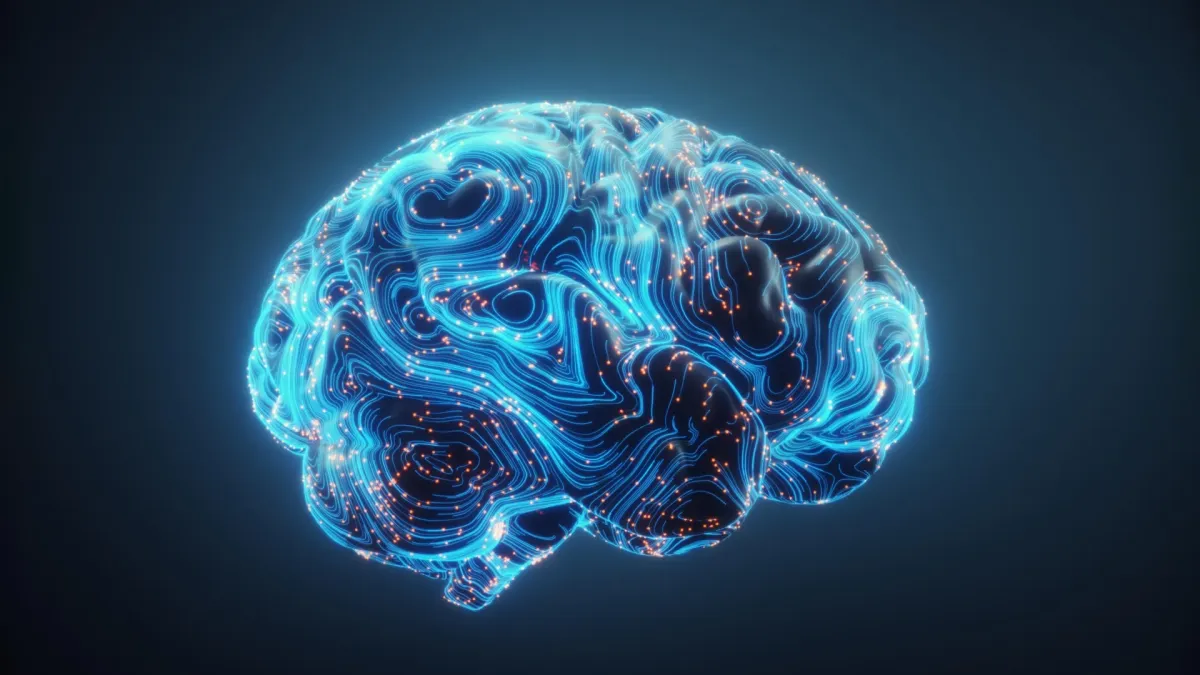
Scientists have discovered that the brain physically changes as we master a skill, allowing us to perform well-practiced tasks simultaneously rather than just switching between them. This breakthrough challenges the long-held belief that true multitasking is impossible for humans.
Researchers at Georgetown University found that extensive practice can shift complex tasks from the prefrontal cortex, which typically handles one demanding task at a time, to the temporal cortex. This region is more adept at recognizing patterns and processing information automatically.
The study involved participants sorting images for weeks, with brain scans showing a shift in activity from the prefrontal to the temporal cortex as they became proficient. This "offloading" of tasks from the prefrontal cortex not only frees it up for other activities but also allows for genuine multitasking, according to senior author Maximilian Riesenhuber.
These findings could shed light on habit formation, why changing ingrained behaviors is tough, and how to develop more sophisticated artificial intelligence capable of continuous learning by building on existing knowledge. It suggests that rather than juggling tasks, the brain can actually develop parallel processing capabilities.
The research implies that simply telling someone to "think of something else" isn't effective for breaking habits because these behaviors become ingrained in brain circuits less dependent on conscious control. Future AI systems might benefit from this understanding of flexible brain architecture to learn more effectively without forgetting previous skills.