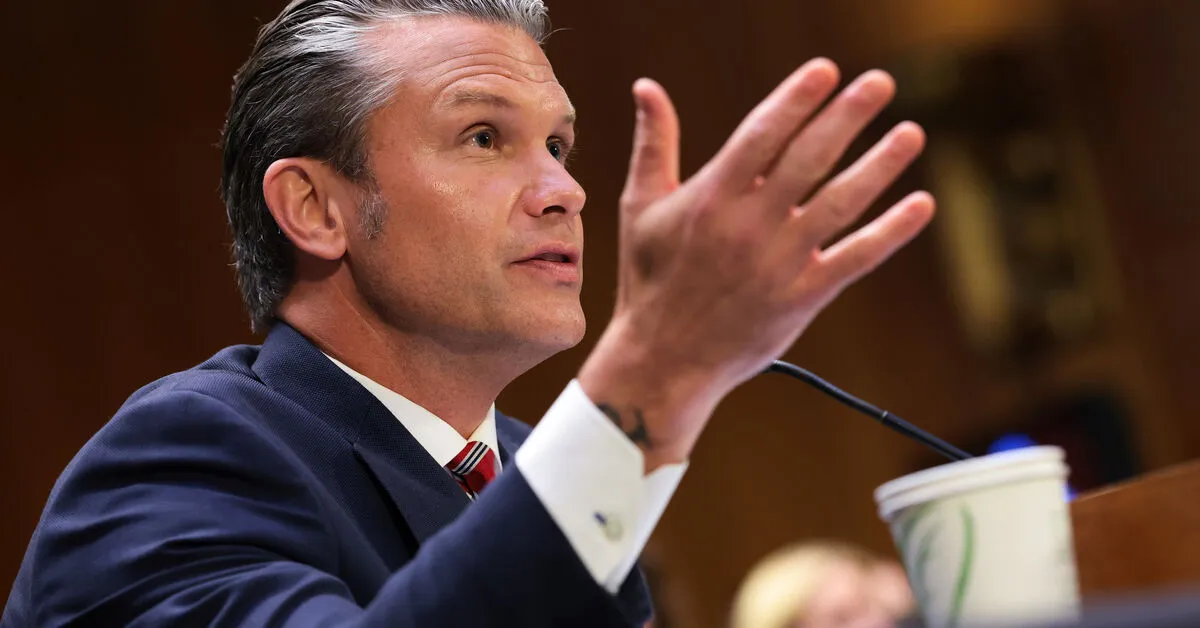
Defense Secretary Pete Hegseth informed the Senate Appropriations Committee that the U.S. military's ongoing conflict with Iran is projected to cost approximately $37.5 billion by the conclusion of the current fiscal year on September 30.
This comprehensive estimate encompasses military personnel compensation and the operational and maintenance expenses associated with the war campaign. The projected cost represents a significant increase from the previous estimate of $29 billion, disclosed by acting Pentagon Comptroller Jay Hurst in mid-May.
Hegseth's testimony, delivered in conjunction with Chairman of the Joint Chiefs of Staff Gen. Dan Caine, accompanies a Pentagon request for over $67 billion in supplemental funding. This additional funding is intended to cover war-related expenses not accounted for in the current Department of Defense budget.
During the hearing, Hegseth emphasized the necessity of this funding to ensure the operational capability of U.S. forces and their allies in the Strait of Hormuz and to compel Iran to adhere to U.S. objectives. He described the request as a response to evolving global realities, stating, "This is a new request based on new realities of a world we face, stepping up to meet that moment."
The U.S. Navy recently reinstated a blockade of Iranian ports following a series of drone attacks on commercial shipping, which the Trump administration attributes to Iran's Islamic Revolutionary Guard Corps. General Caine indicated that Iran continues to pose a potential threat, necessitating ongoing military preparedness for control of the Strait of Hormuz.
Despite recent hints from both Washington and Tehran regarding a willingness to resume peace talks, President Donald Trump and top Pentagon officials have signaled an open-ended commitment to the conflict. President Trump, speaking from the Oval Office, commented on potential strikes against an underground nuclear facility and stated that the U.S. would respond to any attempts by the Houthis to close the Bab al-Mandeb strait.