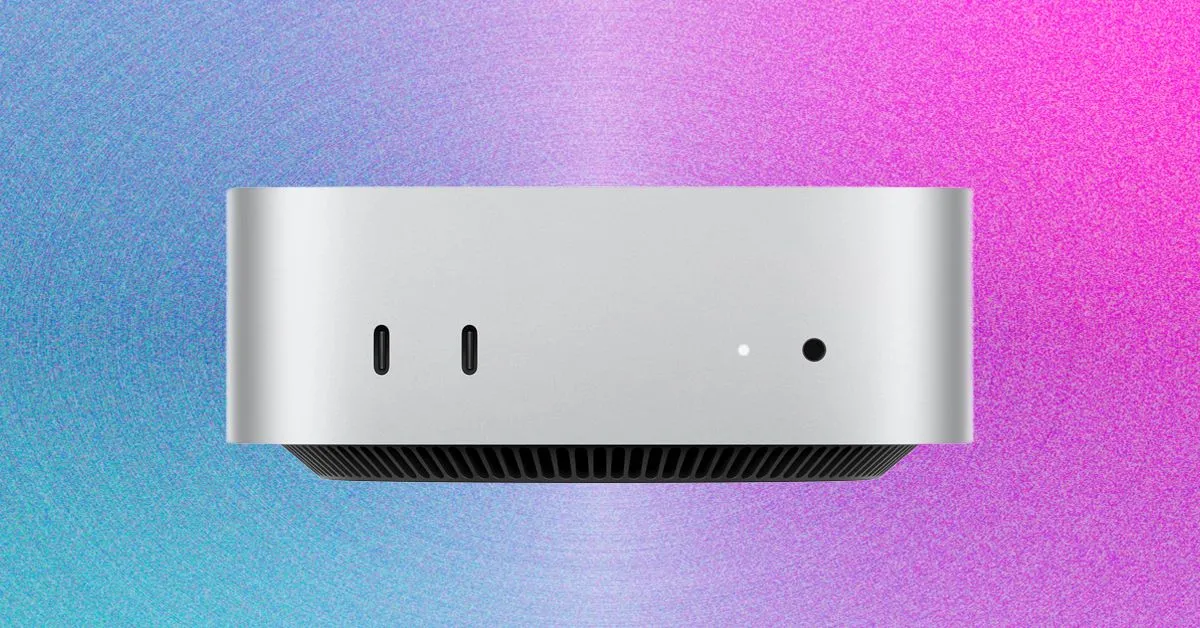
Months after Apple CEO Tim Cook acknowledged a significant Mac Mini shortage, the compact computer remains difficult to purchase, with extended wait times and increased prices plaguing the lineup.
The demand surge, partly driven by increased use for local AI tasks, initially left Apple scrambling. While the situation has eased slightly from its worst point, when base models were completely sold out, buying a Mac Mini directly from Apple still involves lengthy shipping delays. Even a base 16GB RAM configuration can take three to four weeks to arrive, longer than comparable MacBook Air models.
Wait times escalate with increased RAM. Mac Mini configurations with 36GB of RAM face roughly month-long waits, while 48GB models can take three months or more. The Mac Studio experiences even longer delays, with a 48GB memory version estimated at 13 to 14 weeks. These higher-end memory options are largely unavailable through third-party retailers like Amazon or Best Buy.
These extended delays could create an awkward situation for Apple's next product refresh. The Mac Mini hasn't been updated since October 2024, and rumors suggest an M5 chip update this fall. This means customers ordering an M4 model now might receive it after the newer version is announced, highlighting how far behind Apple is in meeting demand.
For those needing a Mac Mini faster, Amazon offers some limited configurations with quicker shipping, though at a premium. For instance, an M4 Mac Mini with 24GB RAM and 512GB storage costs $1,570, a $471 increase over Apple's standard price. However, an M4 Pro Mac Mini is available for just $100 more than Apple's price and delivers within about a week and a half.
Beyond availability issues, prices have risen across the board for Macs. Apple quietly removed its $599 base Mac Mini configuration (256GB storage) in early May, pushing the starting price to $799. By late June, the 256GB model returned at $699, and the 512GB model is now $899. The Mac Studio has seen even steeper price hikes, with the M4 Max model starting at $2,499 (a $500 increase) and the top-tier M3 Ultra jumping from $3,999 to $5,299.
Apple attributes these "unavoidable" price increases to soaring component costs, particularly for memory and storage, which began rising rapidly in late 2025. Industry forecasts suggest memory costs won't decrease until at least 2030, with some predicting 2027 could be the worst year for the shortage.