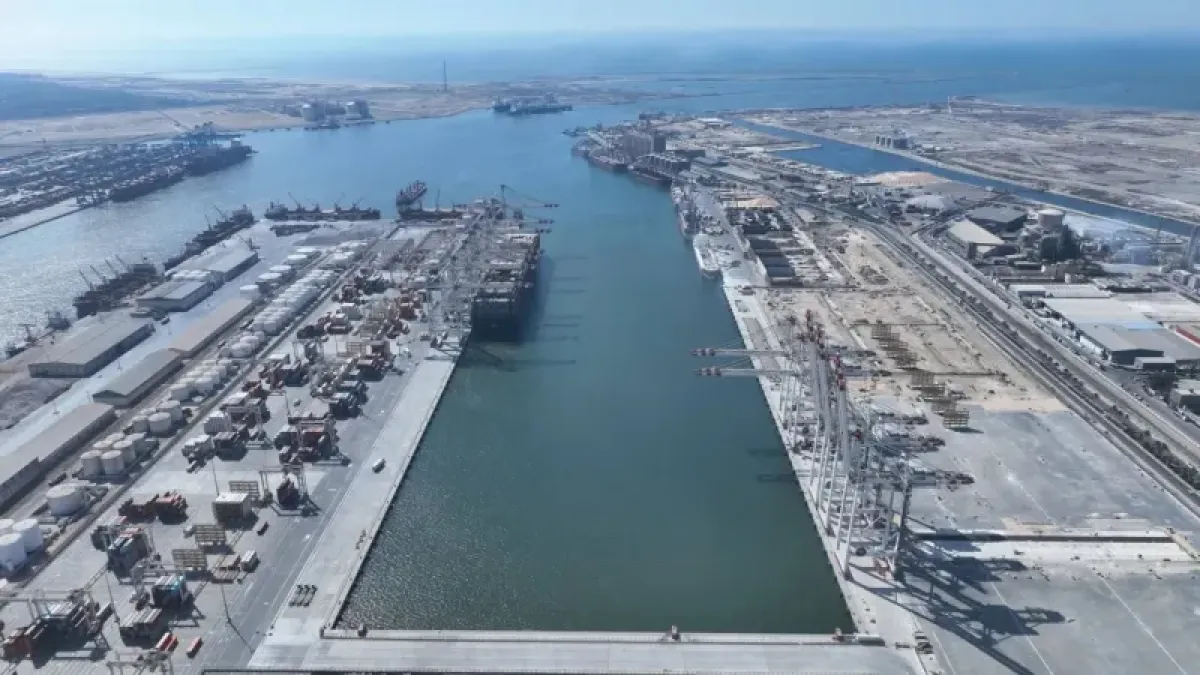
Egyptian authorities confirmed that a drone strike caused a fire on two ships at Damietta Port, prompting a swift denial from the Houthi movement. The incident raises critical questions about the group's naval operations and escalating actions in a vital global trade route.
The Houthi movement, through its controlled media outlets, including the Saba news agency, issued a statement refuting any involvement in the Damietta Port incident. A source from their internationally unrecognized Ministry of Foreign Affairs claimed that their operations are solely directed at Saudi Arabia and that navigation in the Red Sea remains secure. This denial is seen by observers as an attempt to distance the group from potential diplomatic and political repercussions, especially concerning Egypt, a pivotal nation for regional and global maritime security whose interests are directly tied to the stability of the Red Sea and the Suez Canal.
Analysts suggest that the Houthis' efforts to portray themselves as targeting only Saudi Arabia contradict the broader regional escalation. Their threats to maritime navigation have extended beyond specific military targets to encompass commercial shipping and international economic interests, resulting in disrupted shipping lines and increased transportation and insurance costs. The Egyptian Cabinet announced on July 29th that initial investigations indicated a drone strike was responsible for the fire at Damietta Port, while the Damietta Port Authority confirmed that operations continue without interruption.
The targeting of Damietta Port, according to official Egyptian accounts, is interpreted as part of a wider escalation in the Red Sea. Drone and missile attacks have become a pressure tactic employed by Iran and its allies to threaten global trade routes and impose political conditions by targeting critical maritime corridors. The timing of the attack is particularly significant, as Saudi Arabia is reportedly increasing its reliance on the Egyptian route for oil exports due to escalating risks associated with maritime navigation to Saudi ports in the Red Sea stemming from Houthi threats.
Reports indicate that Saudi Arabia has begun augmenting its use of the Egyptian route for crude oil transportation, with supertankers heading to the Sidi Kerir port. This route involves transferring oil from Yanbu port to Ain Sokhna, then via the SUMED pipeline to Sidi Kerir, before re-exporting it to global markets. This shift is an effort to mitigate maritime risks and circumvent increasing security constraints, particularly as insurance and shipping companies express heightened concerns about navigating to Red Sea ports in Saudi Arabia, leading some operators to alter their routes or reduce activity in the region.
This development places Saudi Arabia and Egypt at the center of a new regional energy security dynamic. Any threat to Egyptian ports or alternative oil transport routes could be viewed not as an isolated incident but as part of a larger struggle for control over global energy and trade pathways. Observers believe Iran perceives the Red Sea and Bab el-Mandeb strait as strategic leverage, mirroring decades of similar threats in the Strait of Hormuz, aimed at increasing the cost of confrontation with adversaries and demonstrating influence over global energy markets without direct engagement.
Security reports suggest that the Houthis have developed advanced capabilities in drones and missiles, likely with Iranian support. This makes any future attacks on vital infrastructure or commercial vessels subject to scrutiny regarding the supply and guidance networks behind such operations. The Houthi denial does not resolve the controversy but highlights a significant challenge for the international community: how to address a group possessing advanced military tools capable of disrupting global trade while simultaneously evading political and legal accountability for its escalatory actions. Observers emphasize that continuing this pattern will keep the Red Sea a zone of risk unless international efforts focus on addressing the sources of these threats, primarily by halting the flow of weapons and military expertise that empower the Houthis to endanger maritime routes and critical infrastructure in the region.