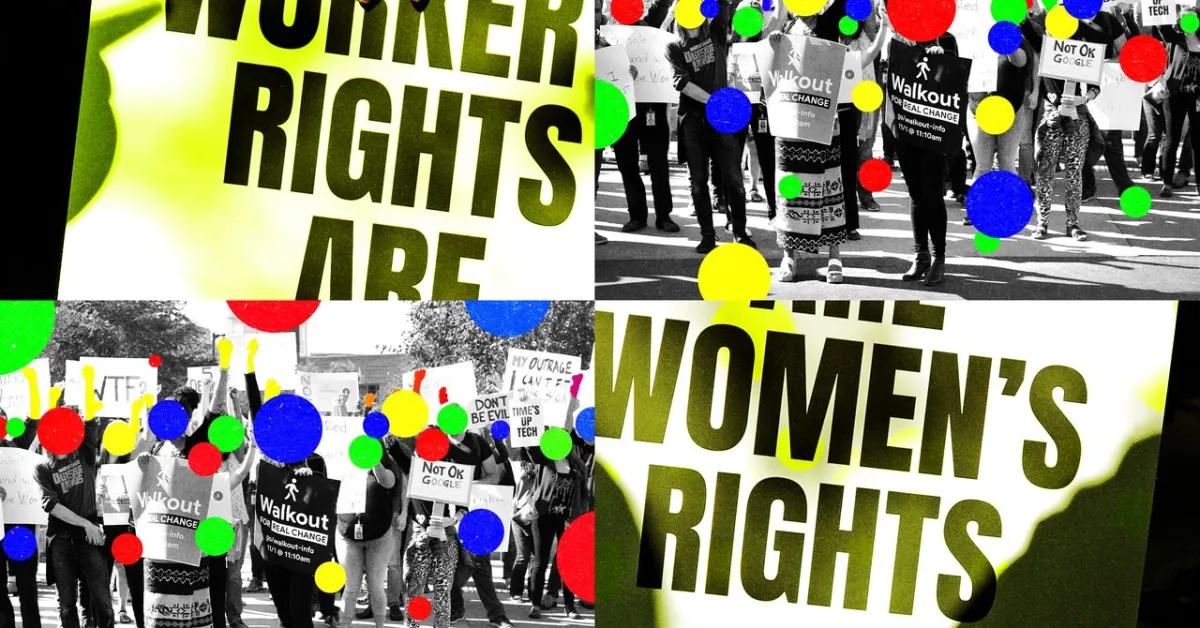
In 2018, Claire Stapleton, a marketing manager at Google, co-founded the historic Women's Walkout after being fed up with the company's handling of sexual harassment issues. In an excerpt from her book "Don't Be Evil," she reveals how a simple Google Group became the catalyst for this massive protest.
The journey began on a Saturday morning. Stapleton, juggling motherhood and a demanding job, found herself drawn to the newly created "womens-walk" Google Group. While her manager was pushing for engagement on EU legislation like Article 13, Stapleton's focus was elsewhere. She suspected Google's push against Article 13, which aimed to hold platforms accountable for user-generated content, was driven by a desire for unchecked growth rather than genuine concern for the internet's future.
The response to the Google Group was overwhelming. Hundreds of names, mostly strangers, joined, creating a sense of unexpected community. Stapleton, fueled by this energy, sent an email from her personal account, inviting collaboration on what would become the Google Women's Walkout. She posed critical questions: What should the walkout accomplish? Why were people participating? And crucially, when should it happen, balancing the need for global reach with the urgency of the moment, especially with the US midterms looming?
The replies flooded in, shifting from raw anger to strategic discussions. The group quickly decided on a date: November 1, just five days away, to capitalize on the existing momentum and avoid dilution by the upcoming midterms. This decision set off a week of intense, almost surreal activity. While the company juggled mundane marketing tasks like Halloween tweets, Stapleton and a growing team, including a hyper-organized project manager named Tanuja, were building a decentralized plan for the walkout, creating a hub-and-spoke model to empower local leads in every office.
The organizing effort wasn't without its warnings. An engineer named Amr alerted Stapleton that Google was likely monitoring their communications, emphasizing the importance of using their privilege to check the company's power. Amr, who had experience organizing with the Fight for $15 movement, stressed the need for strong, trusting relationships in organizing, cautioning against shortcuts. Meanwhile, Stapleton connected with Meredith Whittaker, known for her moral clarity within Google, who had previously led a successful protest against the company's involvement in the Maven drone surveillance project.
The core of the movement's drive came from the overwhelming responses to Stapleton's prompt: "Why are you walking out?" The submitted anecdotes painted a grim picture of discrimination, harassment, retaliation, and a deeply flawed HR system. One story detailed a director who made sexist remarks, pressured women about their appearance, and facilitated an assault attempt on an assistant, yet was repeatedly promoted. Another described a "boys club" culture where women were excluded and discouraged from reporting issues to HR. These stories highlighted a stark contrast between Google's proclaimed values and the lived experiences of its employees, revealing a pervasive culture of disillusionment.
Reading these raw accounts solidified Stapleton's belief in the walkout's purpose. She realized that while the company's official narrative promoted progress and a better world, the reality for many was far different. The stories became the heart of the protest, aiming not necessarily to topple the company, but to puncture the myth and expose the disconnect between Google's image and its internal culture. Stapleton concluded that sometimes, exposing the truth, like a story that "wouldn't topple anything," is precisely where real change begins.