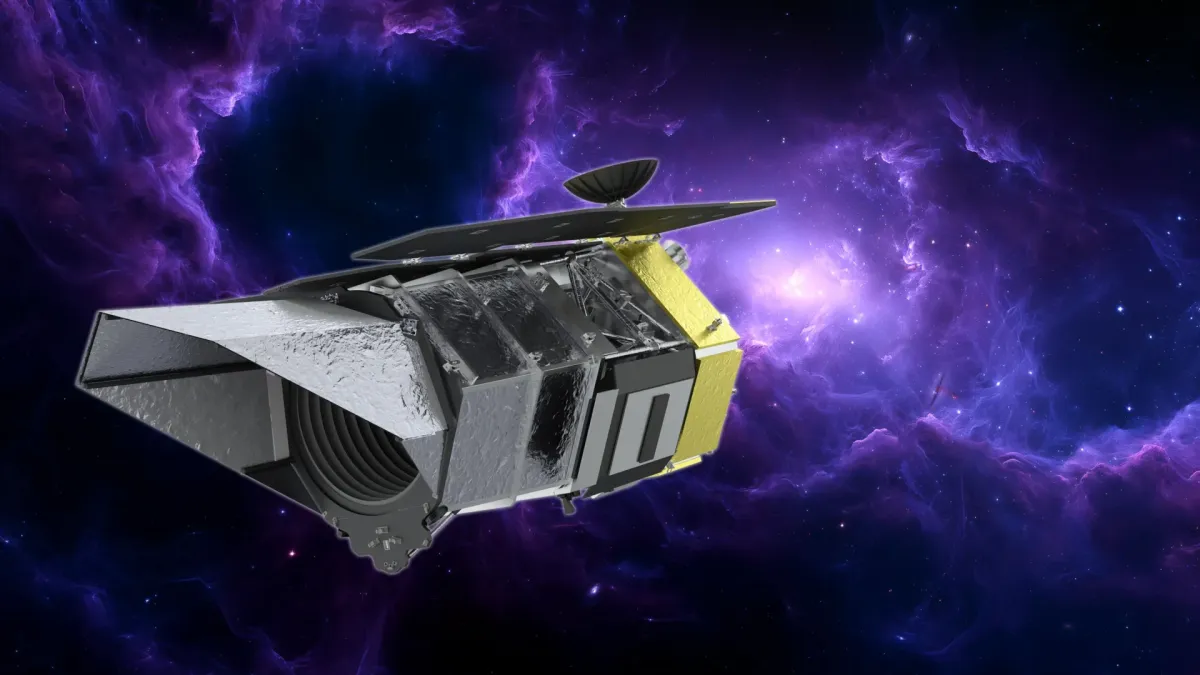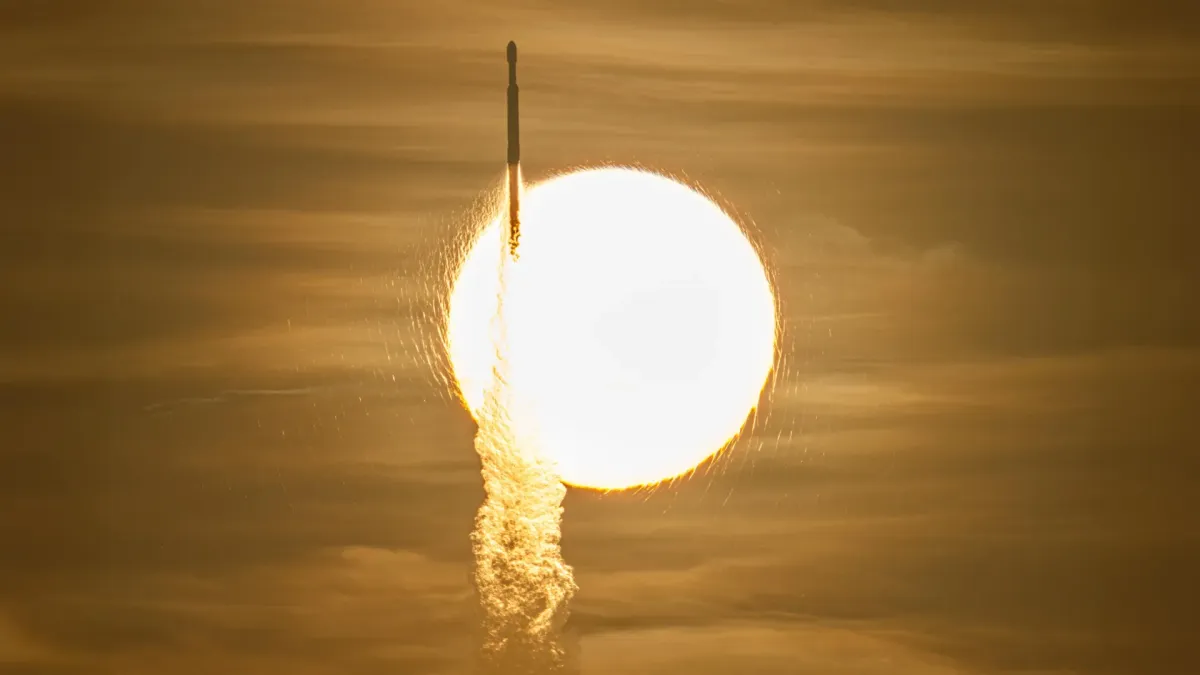
NASA’s Nancy Grace Roman Space Telescope has officially begun its epic three-month voyage, traveling approximately one million miles to reach its final orbit. Launched Sunday at 7:26 a.m. EDT aboard a SpaceX Falcon Heavy rocket from NASA's Kennedy Space Center in Florida, the observatory is poised to revolutionize our understanding of the universe.
Once operational, Roman will leverage its potent combination of sharp infrared vision and an exceptionally wide field of view. This capability will empower astronomers to explore vast swathes of space and peer deep into cosmic history. Its primary objectives include investigating the enigmatic forces of dark matter and dark energy, as well as searching for exoplanets – worlds beyond our solar system. The mission is also expected to drive numerous discoveries beyond these core scientific goals.
“Roman is exactly the kind of success story we want to see across NASA,” stated NASA Administrator Jared Isaacman. “Delivered ahead of schedule and on budget, this mission reflects more than a decade of dedication from the NASA workforce and our industry partners. Now, Roman will give us a new atlas of the universe, push the boundaries of discovery, and demonstrate what is possible when America's space program pairs bold ambition with disciplined execution.”
Controllers at NASA's Goddard Space Flight Center in Greenbelt, Maryland, began receiving telemetry just seven minutes after launch. The Falcon Heavy rocket performed as expected, separating from the observatory 31 minutes post-liftoff. The mission’s journey to the second Sun-Earth Lagrange point, or L2, a gravitationally stable location about one million miles from Earth, will involve communications managed by both the Near Space Network and NASA's Deep Space Network.
Key systems on Roman have already begun deploying, including its solar panels and a crucial sun shade, confirmed about an hour and 23 minutes after launch. Over the coming days, its high-gain antenna and a protective aperture cover will also be deployed. The mission will include course corrections and the activation of its Coronagraph Instrument, which will test technology capable of directly imaging Earth-like planets by blocking starlight, demonstrating its potential for future missions like the Habitable Worlds Observatory.
A few weeks into its journey, Roman’s main scientific instrument, the Wide Field Instrument – a formidable 300-megapixel infrared camera – will be activated. Designed for optical stability during rapid movements, Roman can survey the cosmos approximately 1,000 times faster than the Hubble Space Telescope, allowing it to capture detailed panoramas of enormous cosmic regions in a fraction of the time. NASA anticipates releasing Roman's first stunning images in early 2027, ushering in a new era of astronomical discovery with an expected daily data transmission rate of 1.4 terabytes, the highest yet for a NASA astrophysics mission.