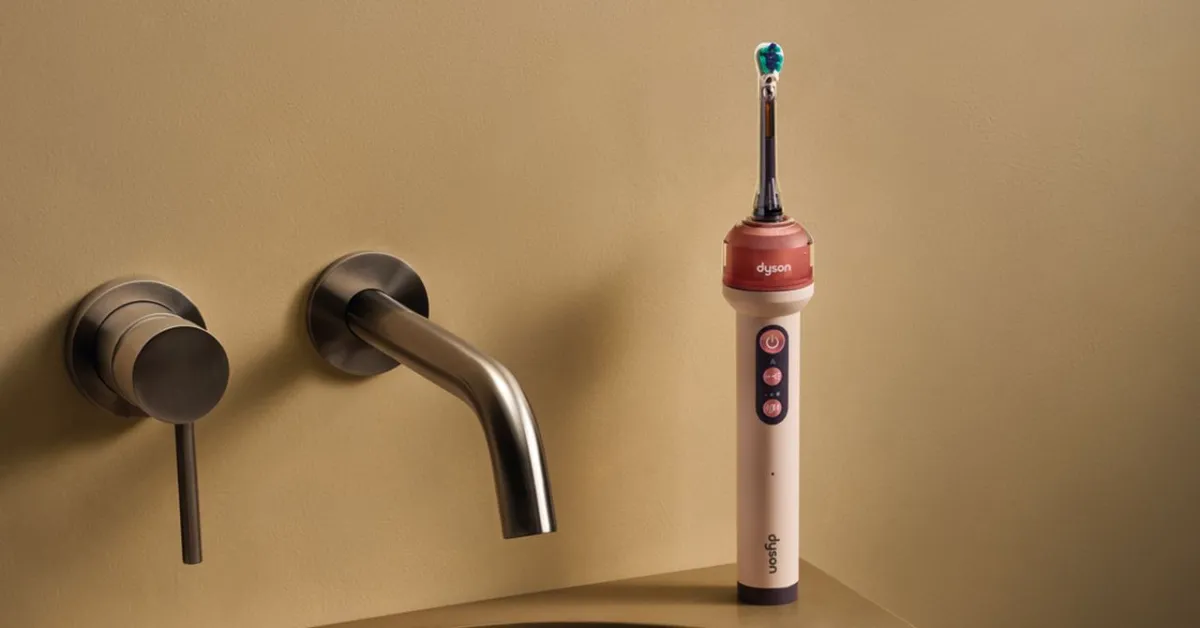
Dyson is shaking up the oral care game with its latest gadget, the CameraJet, a smart electric toothbrush and flosser hybrid designed to revolutionize your daily clean.
This isn't Dyson's first foray into combining tech with personal care, but the CameraJet pairs two functions—brushing and flossing—in a way that feels far more practical than their previous air-purifying headphones. The star of the show is a tiny endoscope camera embedded in the brush head, which analyzes your teeth 28 times per second to identify gaps needing a targeted rinse.
Dyson calls this advanced system "Gap Optical Targeting." It uses a macro lens camera and a machine learning algorithm trained on over 470,000 dental images collected during the product's six-year development. The tech works in about 100 milliseconds: the camera spots a gap, and the device fires a burst of mouth rinse exactly where it's needed, all while you brush normally.
The fluid jet itself is engineered to be conical, which Dyson claims is more effective at removing plaque than the needle-like jets found in standalone water flossers. This conical jet supposedly covers a wider area with less pressure, making it gentler on your gums and enamel. Dyson even developed a special "proxy plaque" with the National University of Singapore to rigorously test the brush's cleaning power in the lab.
The CameraJet holds 12.5 milliliters of alcohol-free mouth rinse in a built-in tank. A special pump ensures consistent jetting, regardless of how you hold the device. When you're done, a docking station not only recharges the toothbrush but also refills the rinse tank in just three seconds. The brush heads are also smart, featuring RFID tags to track usage and let you know exactly when it's time for a replacement. For those with sensitive teeth, a softer brush head option is available.
Beyond the flossing tech, the CameraJet boasts variable sonic oscillations for effective cleaning and claims to remove up to 69 percent more plaque in hard-to-reach areas compared to leading premium electric toothbrushes. The device connects via Bluetooth to the MyDyson app, offering real-time camera views, personalized feedback, and coverage mapping. Dyson assures users that the camera is only active when the app is open or during automatic scanning, and it does not record or store images.
However, this cutting-edge tech comes with a $499 price tag. Additionally, you'll need to use Dyson's specifically formulated non-foaming toothpaste and low-foaming rinse, as standard foamy products can obstruct the camera. Dyson plans to offer a subscription service for these consumables and replacement brush heads, though third-party sodium lauryl sulfate-free options can also be used.