Get ready to mark your calendars, stargazers! After a packed August, September 2026 is serving up its own cosmic lineup, featuring a "diamond" moon, Venus at its absolute brightest, and a prime viewing opportunity for Neptune.
Kicking off the month on September 1st and 2nd, Venus will put on a show, appearing close to Spica, the brightest star in the Virgo constellation. Both are easily visible to the naked eye, though Venus will outshine Spica like a steady white dot compared to a fainter, bluish star. Think of Venus as your bright beacon, with Spica about three full moons away.
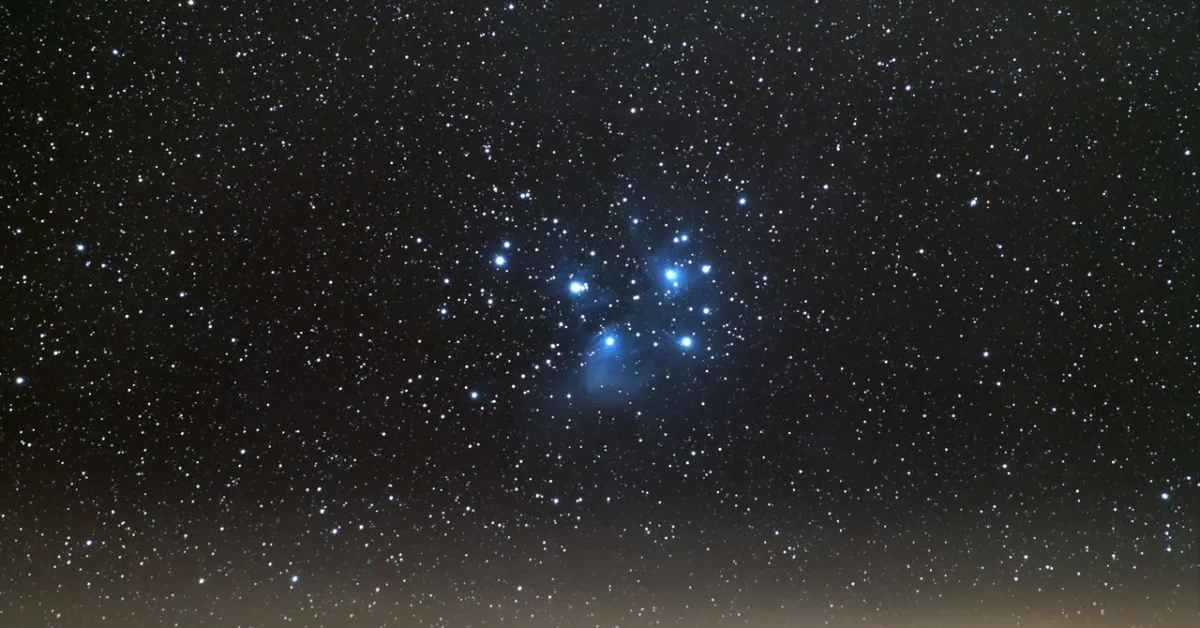
Prepare for a "Diamond Studded Moon" on September 3rd. The moon, about 59% illuminated, will cozy up to the Pleiades star cluster, also known as the "Seven Sisters." This celestial pairing will be close enough (around 1.1 degrees apart) to view in the same binoculars, making the Pleiades look like diamonds scattered near the moon. You'll get a second chance to catch this stunning sight on September 30th, when they'll be just one degree apart.
Don't miss the Epsilon Perseids meteor shower, peaking September 9th and 10th. While it won't be as intense as its August namesake, the timing is perfect. The shower's peak occurs just before the new moon, meaning darker skies for optimal viewing, especially from the Northern Hemisphere. You might catch up to eight meteors per hour.
By September 22nd, Venus will reach its yearly peak brightness, shining at a magnitude of -4.8. Look for this dazzling planet low on the western horizon after sunset, with the Southern Hemisphere offering the best views. The astronomical event of the month is the September Equinox on the 23rd, signaling the official start of fall in the Northern Hemisphere and spring in the Southern Hemisphere as the Sun crosses the equator.
For those with a telescope, September 26th is a big night. Neptune will be at opposition, meaning Earth is directly between Neptune and the Sun, making the distant planet exceptionally visible for much of the night and at its closest approach to us for the year. Even with a telescope, Neptune will appear as a small, bluish disk among the stars of Pisces. Ending the month on a traditional note is the Harvest Moon on September 26th, the full moon closest to the equinox, a name tied to the bounty of the northern hemisphere's harvests.