For the first time on record, Iran has ceased significant crude oil exports through the Strait of Hormuz for approximately seven weeks, a result attributed to a U.S. naval blockade that has proven more effective than prior sanctions in disrupting Tehran's primary foreign currency revenue stream.
Unlike previous sanctions regimes, which saw Iranian crude continue to reach buyers, the current blockade has effectively halted fresh crude shipments to China, Iran's sole major oil customer. This development is intensifying pressure on Iran's government finances and foreign currency reserves.
Data from Kpler, Vortexa, and TankerTrackers.com indicates that since the U.S. reimposed its blockade on July 14, no Iranian crude cargoes have successfully transited the Strait of Hormuz to China. Consequently, Iran can only supply crude to China from its existing floating storage in Asia, as new shipments are unable to replenish these reserves. Vortexa analyst Claire Jungman noted that this sustained near-zero flow is unprecedented, even during the peak of maximum-pressure sanctions in 2019-20, when some Iranian crude departed Hormuz monthly.
Estimates from Vortexa and Kpler suggest Iran's crude oil and condensate exports in August fell to approximately 220,000 to 255,000 barrels per day, a substantial decrease from roughly 740,000 bpd in July and about 2 million bpd in March. Homayoun Falakshahi, an analyst at Kpler, warned that this decline in exports is depleting a critical source of foreign currency income and may compel Tehran to resort to printing money, potentially exacerbating its already high inflation rate, which the International Monetary Fund projects at nearly 70% for the current year.
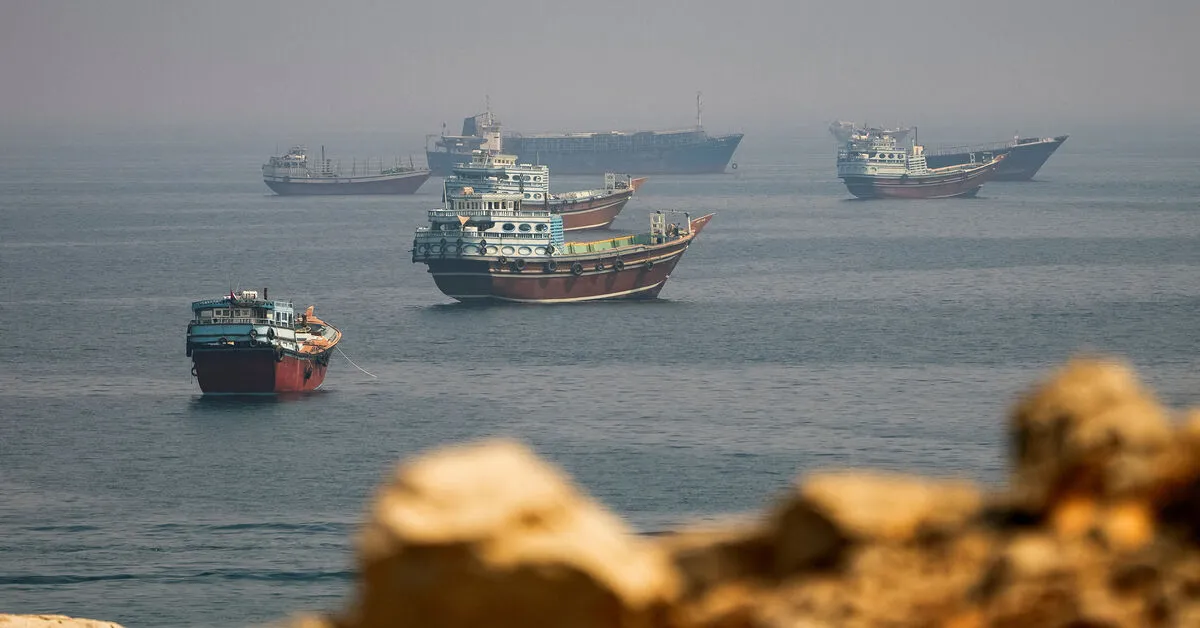
The U.S. has recently escalated its efforts by threatening penalties against countries continuing trade with Tehran, though immediate sanctions have been avoided. Concurrently, Iran reportedly holds 29 tankers laden with 36.11 million barrels of crude within the Strait of Hormuz. The U.S. blockade is strategically positioned south of Iran's main ports, between the Gulf of Oman and the Arabian Sea, where U.S. naval vessels monitor maritime traffic. Despite this, a network of Iran-linked "shadow fleet" tankers remains operational outside the immediate blockade zone.
Traders report that Iranian crude remains available for September and October deliveries to China, albeit in reduced volumes due to dwindling floating storage as new supplies are prevented from reaching them. While Iranian crude in floating storage west of the blockade has increased, the total volume of Iranian crude at sea has decreased. Samir Madani, co-founder of TankerTrackers.com, commented that China can only access existing reserves, as empty tankers are unable to return to Iranian ports due to the blockade, leaving them idle offshore. Reports indicate 27 sanctioned tankers linked to Iran's oil trade are currently waiting off Sri Lanka, unable to return to Iran.