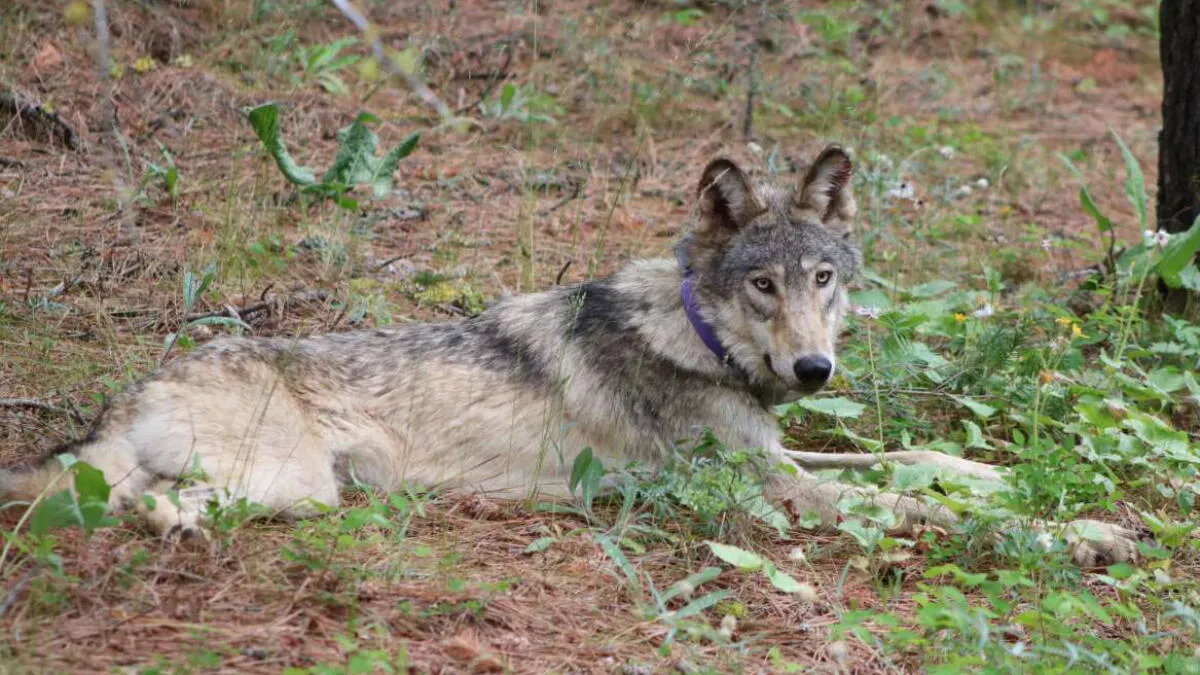
A rare gray wolf sighting in Lake County, California, has ignited optimism among wildlife officials regarding the endangered species' potential expansion and recovery within the state.
The California Department of Fish and Wildlife confirmed the sighting after receiving two reports, accompanied by photographic evidence, in late August. The animal was observed in an area bordering Mendocino, Glenn, and Lake counties. A wolf biologist validated the photos and subsequently confirmed the presence of wolf tracks at one of the sighting locations.
This event is considered a significant development for the gray wolf's resurgence in California, where the species had largely disappeared by the 1920s. Gray wolves have been gradually returning in recent years, with the first documented presence since 1924 being the wolf known as OR7, who arrived from Oregon in 2011. The Department of Fish and Wildlife estimates that at least 50 wolves are now known to inhabit California. Historical factors contributing to their decline, such as hunting and agricultural activities, remain subjects of study, though a definitive cause is not established.
Gray wolves are protected under California law, with prohibitions against hunting, pursuing, harassing, capturing, or killing them. Their diet primarily consists of elk and deer, but they may also consume reptiles, birds, and occasionally livestock. While wolves are territorial and can pose a risk to domestic dogs and coyotes, they generally avoid human contact. Wildlife officials advise individuals who encounter a wolf to remain calm, make noise, maintain eye contact, and slowly retreat, rather than fleeing.
The appearance of the wolf west of Interstate 5 in Lake County is particularly noteworthy, as much of the species' recovery efforts have been concentrated east of the highway. This western region offers more abundant prey, such as elk and deer, presenting a more favorable habitat for wolf populations. Experts describe the sighting as "incredibly exciting news" and a long-awaited development for wolf recovery advocates.
This hopeful sign for gray wolf populations in California occurs amidst a federal review of the species' protections. The White House is examining whether to alter or remove endangered species protections for the gray wolf and Mexican wolf under the federal Endangered Species Act, a move intended to support U.S. ranchers. Previous attempts to delist the gray wolf were made, but in 2022, following a court order, the species regained endangered status across most of the United States and Mexico, excluding the Northern Rocky Mountains.