Yemeni coast guard forces have intercepted an Iranian oil tanker, the NEREIDA, listed under U.S. sanctions, after it allegedly entered Hodeidah's Ra's Issa port without authorization and offloaded its cargo. The incident highlights ongoing efforts to pressure Houthi financing networks and brings renewed attention to maritime activities in Houthi-controlled ports.
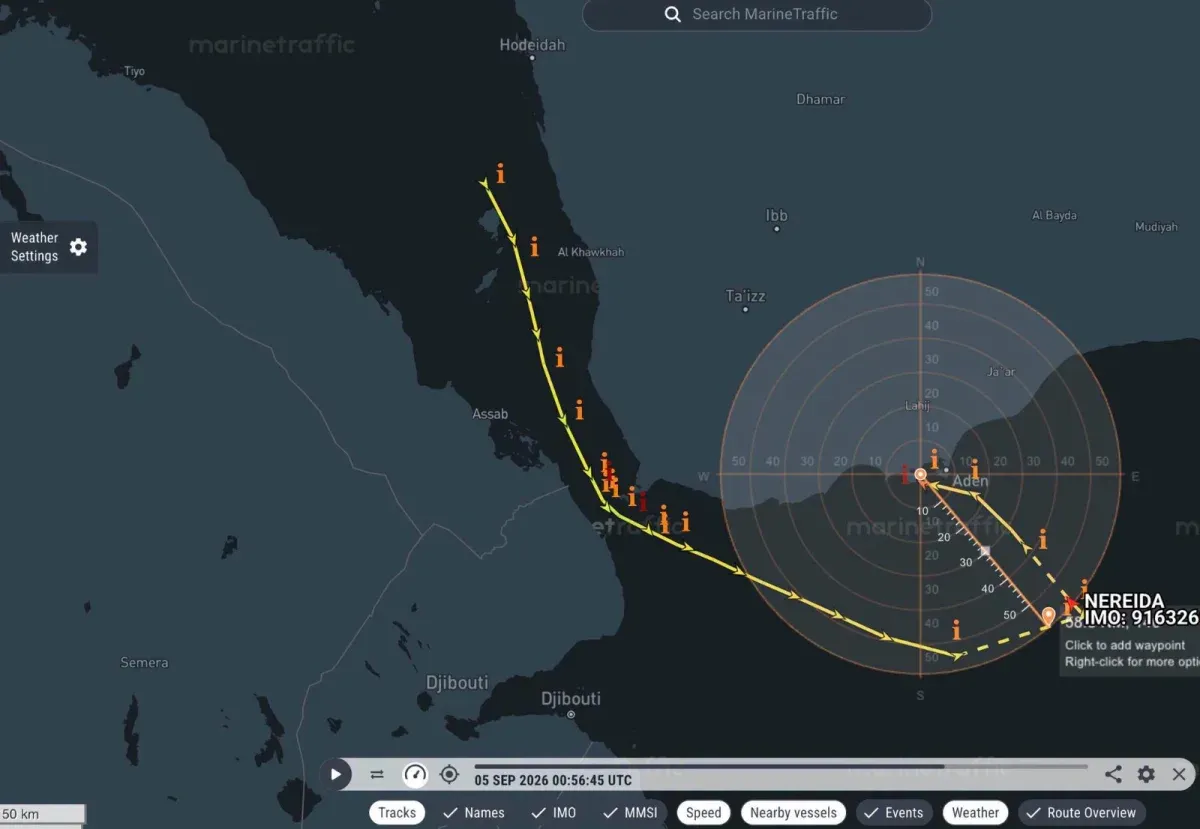
According to officials from the Yemeni Coast Guard, the NEREIDA, which flies the Comoros flag, was apprehended after departing from the Ra's Issa oil port. The tanker reportedly ceased its Automatic Identification System (AIS) during parts of its journey, raising suspicions about its movements and any transactions conducted at the Houthi-controlled port. Sources indicate the vessel briefly reappeared south of Hodeidah while heading towards Bab el-Mandeb.
Investigative reports suggest the NEREIDA is part of Iran's "shadow fleet" and had its tracking signal disabled on August 13 while near Bab el-Mandeb, having arrived from Fujairah, UAE. The tanker reportedly reappeared near the Hanish Islands on September 3 before its interception approximately 58 nautical miles from Aden port on September 5. Authorities were alerted to its unlicensed entry into Ra's Issa port.
This pattern of disabling tracking systems during sensitive parts of a voyage complicates maritime surveillance and fuels concerns about the exploitation of such routes to circumvent international sanctions. Initial information suggests the tanker offloaded its cargo without coordination with the Yemeni government or passing through the United Nations Verification and Inspection Mechanism (UNVIM).
The tanker's status under U.S. sanctions amplifies the significance of this incident. The presence of a sanctioned vessel at a Houthi-controlled oil port intensifies scrutiny of oil shipments through this facility, especially given recurring accusations that the Houthis leverage their control over economic outlets to finance their operations.
During the interception, the NEREIDA initially failed to respond to coast guard orders and reportedly experienced armed guards on board firing at a patrol boat before eventually complying. Yemeni authorities have launched an investigation into the vessel's journey, cargo, documentation, its entry into Ra's Issa, the disabling of its tracking system, and the non-compliance during the interception. The Coast Guard has notified international maritime forces operating in the region.
The interception occurs amid heightened international measures against Houthi financing networks. The Houthi group is accused of using oil and commercial activities as a revenue stream outside official channels. Monitoring vessels entering Houthi-controlled ports is therefore crucial not only for navigation safety but also for disrupting the financial resources that support the group's military activities.
This incident brings Ra's Issa port, a key oil export terminal in Houthi-controlled areas, back into focus. It raises questions about the Houthis' capacity to receive sanctioned tankers and offload their cargo without government oversight or international inspection mechanisms.