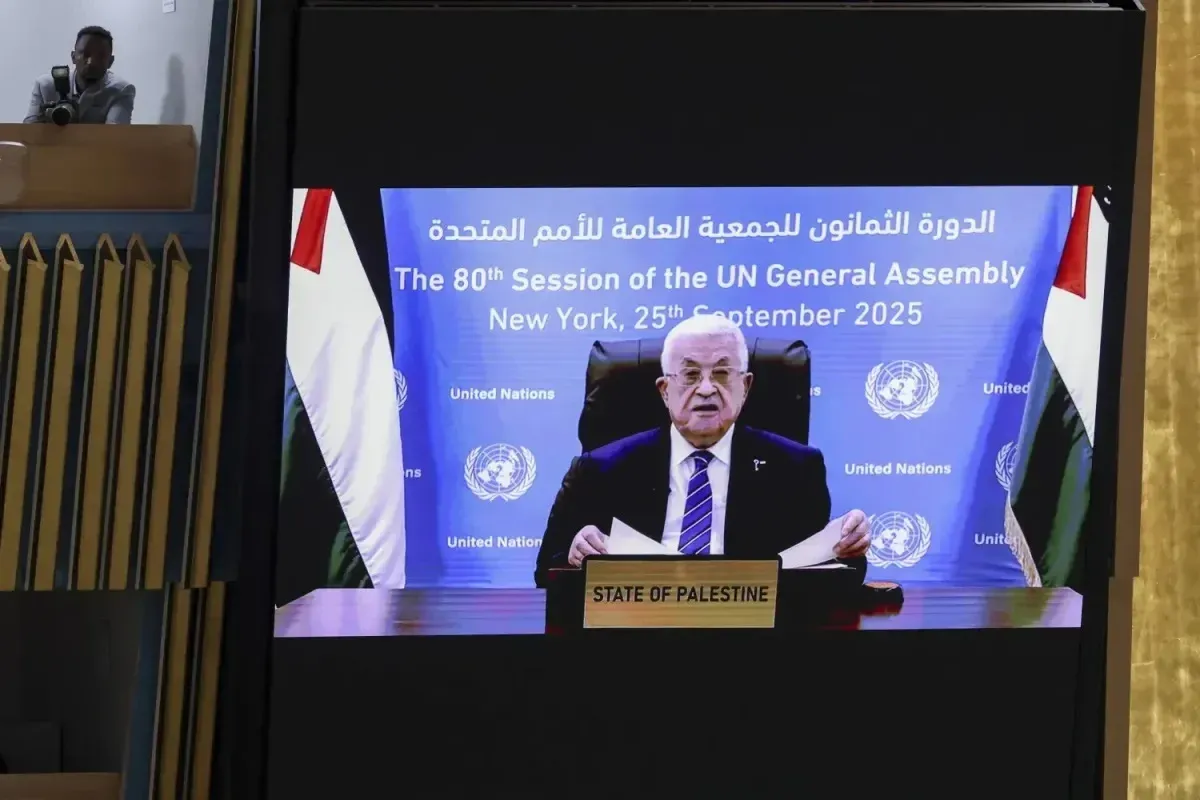
The United States has denied entry visas to Palestinian President Mahmoud Abbas and members of the Palestinian delegation for the second consecutive year, preventing their physical participation in the upcoming United Nations General Assembly meetings in New York.
The U.S. Department of State stated that Washington has decided to extend restrictions on issuing visas to officials of the Palestine Liberation Organization (PLO) and the Palestinian Authority. The justification provided by the U.S. cited the Palestinian side's failure to fulfill commitments related to reforms and their engagement in "activities that undermine the prospects for peace."
The ministry elaborated that, according to its assessment, Palestinian actions within international organizations that allegedly conflict with prior commitments tied to UN Security Council Resolutions 242 and 338 were among the reasons for the decision. This also includes what the U.S. termed "attempts to internationalize the conflict" through the International Criminal Court and the International Court of Justice, as well as efforts to unilaterally gain recognition for a Palestinian state.
Furthermore, the U.S. Department of State accused the Palestinian Authority and the PLO of continuing to provide stipends to individuals described as "terrorists" and of "glorifying terrorism" in statements and educational curricula. The department asserted that these measures, from its perspective, are part of holding both sides accountable and protecting American national interests.
In response, the Palestinian Ministry of Foreign Affairs rejected the U.S. decision. It urged Washington to reverse its stance and engage in direct dialogue with the Palestinian side, considering the move detrimental to efforts aimed at restoring trust and creating the necessary political conditions for a two-state solution and regional peace and stability. The Palestinian Foreign Ministry reaffirmed the PLO and the Palestinian National Authority's commitment to peace, international legitimacy resolutions, and a two-state solution based on the June 4, 1967 borders, while emphasizing the Palestinian right to participate in UN proceedings.
The denial of entry for President Abbas does not preclude Palestinian participation in the General Assembly, as accredited Palestinian diplomats to the UN can still attend meetings. In a similar prior U.S. decision last year, President Abbas addressed the General Assembly via video conference. This decision comes amid ongoing disputes between Washington and the Palestinian Authority regarding the trajectory of the Israeli-Palestinian conflict, as the General Assembly prepares to discuss critical issues including the war in Gaza, the future of political settlements, and the Palestinian cause.