As California braces for a potentially wet El Niño season, state and local officials are focused on maximizing the capture of stormwater to replenish dwindling water supplies, despite ongoing flood risks.
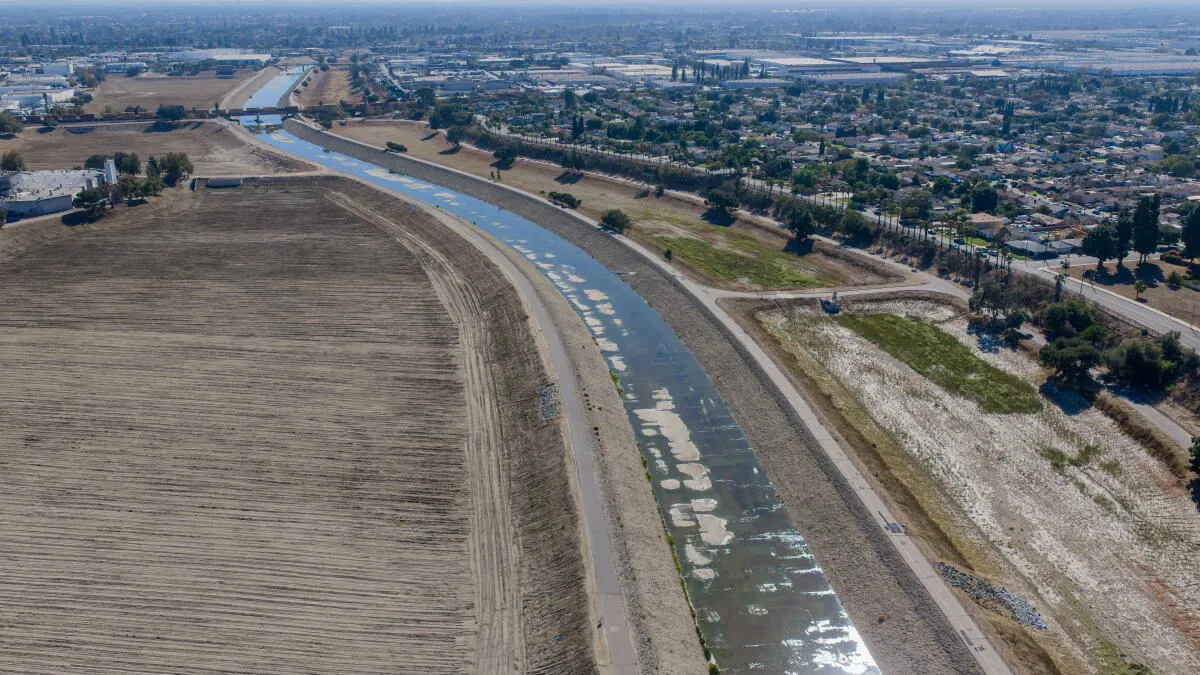
Experts indicate that California has made strides in stormwater management, but significant opportunities remain to enhance its capacity to harness water during periods of heavy rainfall. Los Angeles County, for instance, utilizes a network of 27 spreading grounds designed to absorb large volumes of water flowing from mountainous regions into valley basins. This water percolates into the soil, replenishing groundwater reserves. Sterling Klippel, assistant deputy director of the L.A. County Public Works Department, emphasized the critical role of these wet seasons in capturing water, stating, "The water that we capture during these wet storm seasons really helps to bridge the gap in water supply." The county's system has demonstrated its effectiveness, capturing enough water during the 2025-26 storm season to meet the annual needs of approximately 3.3 million residents.
Significant efforts are also underway in the Central Valley, where restoration of natural floodplains, construction of recharge basins, and diversion of floodwaters to agricultural fields are key strategies. Julie Rentner, president of the nonprofit group River Partners, described the current El Niño year as a "huge opportunity for our water system," adding, "We know that we can capture huge volumes of that water." Her organization has been instrumental in repurposing thousands of acres of farmland to facilitate water absorption and groundwater replenishment. The restoration of areas like Dos Rios, a former floodplain near Modesto, exemplifies this approach, transforming farmland back into spaces capable of absorbing substantial flood pulses.
Governor Gavin Newsom's administration has taken proactive steps, including declaring a statewide emergency to prepare for the anticipated El Niño storms. This declaration mobilizes state agencies to manage potential flooding and support local initiatives for runoff capture and groundwater recharge. Following the 2023 floods, an executive order was issued to suspend permit requirements, enabling irrigation districts and farms to divert floodwaters to fields and basins. The state also provided essential equipment, such as diesel-powered pumps, to local agencies to facilitate water transfer from rivers to canals.
The El Niño phenomenon, characterized by warming ocean waters in the central and eastern Pacific, increases the likelihood of substantial storms in California. Research suggests that El Niños have intensified in recent decades due to global warming. Farmers and irrigation districts are preparing for the potential return of long-dry lakes, such as Tulare Lake, which reappeared in 2023. Don Cameron, a grower near Fresno, has pioneered the practice of flooding farmland to recharge groundwater and is enhancing his infrastructure with high-capacity electric pumps to capture more floodwater. Similarly, growers in the Tulare Irrigation District acted collectively during the 2023 floods, effectively functioning as a "big sponge" to absorb excess water.
Beyond localized capture efforts, state agencies are investing in infrastructure and programs to enhance water storage and management. The Department of Water Resources is funding local agencies to acquire pumps, construct basins, and clear land for additional water-catching sites. Furthermore, proposals like the Sites Reservoir and more flexible dam operations, which involve releasing water proactively based on precise weather forecasts to accommodate incoming deluges, are being explored. Experts at UC San Diego’s Scripps Institution of Oceanography have demonstrated the efficacy of such adaptive dam management, estimating it could yield enough additional water for over a million households annually. As climate change intensifies both droughts and extreme precipitation events, effectively leveraging periods of abundant rainfall has become paramount for California's water security.