Scientists are exploring a surprising connection between ancient magnetic fields and the ongoing mystery of the universe's expansion rate, known as the Hubble tension. New research suggests that faint magnetic fields from the universe's infancy might help reconcile conflicting measurements of cosmic expansion.
The Hubble constant, a measure of how fast the universe is expanding, is at the center of a major cosmic disagreement. Two primary methods for calculating this constant yield stubbornly different results. One method relies on the cosmic microwave background, the afterglow of the Big Bang, predicting a rate of about 67 km/s/Mpc. The other, more direct method using supernovae as "standard candles" to measure the speed of distant galaxies, suggests a higher rate of around 73 km/s/Mpc. This discrepancy implies our current understanding of cosmology might be incomplete.
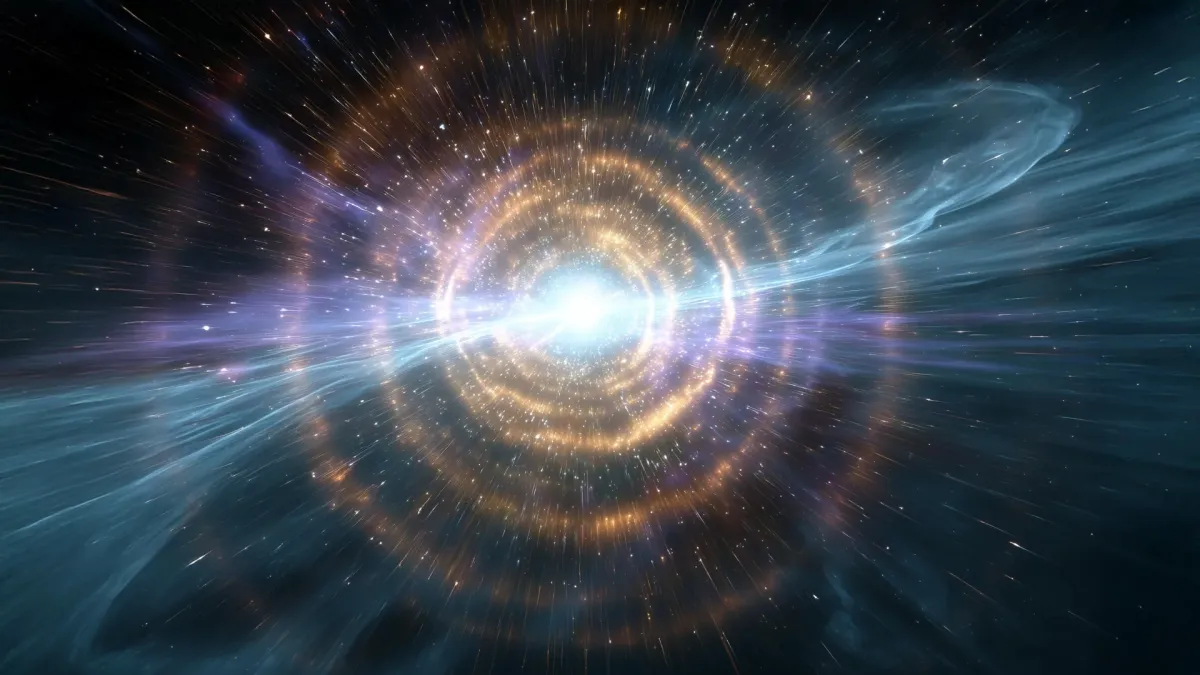
The new study delves into the origin of cosmic magnetic fields, which are prevalent throughout the universe but whose large-scale presence remains puzzling. A long-standing theory suggests these fields, known as primordial magnetic fields, may have originated in the very early universe, even before stars and galaxies formed. Researchers previously theorized that these fields could have influenced the "recombination" era, when the universe transitioned from opaque to transparent, by making matter slightly clumpy.
This shift in transparency, if influenced by primordial magnetic fields, could subtly alter the "cosmic ruler" used to measure distances. By changing this ruler, the inferred value of the Hubble constant would also change, potentially easing the Hubble tension. Previous simplified models indicated this effect could help resolve the discrepancy.
Utilizing advanced 3D simulations of the early universe's plasma with embedded magnetic fields, the researchers tracked hydrogen formation. Their findings, when compared against cosmic microwave background observations, showed a consistent, though not yet conclusive, preference for the existence of primordial magnetic fields. The strength of these favored fields aligns with what would be needed for them to be the sole origin of galactic and cluster magnetic fields.
If confirmed, the existence of primordial magnetic fields would not only offer a potential solution to the Hubble tension but also provide an unprecedented glimpse into the universe's earliest moments, potentially just split seconds after the Big Bang. This research sets the stage for future observations to determine if these ancient magnetic fields played a crucial role in shaping the cosmos and resolving one of modern cosmology's biggest puzzles.