Get ready for a cosmic spectacle this November! The night sky is set to dazzle with multiple meteor showers, a close encounter between Mars and Jupiter, a historic milestone for NASA's Voyager 1, and the start of a supermoon trilogy.
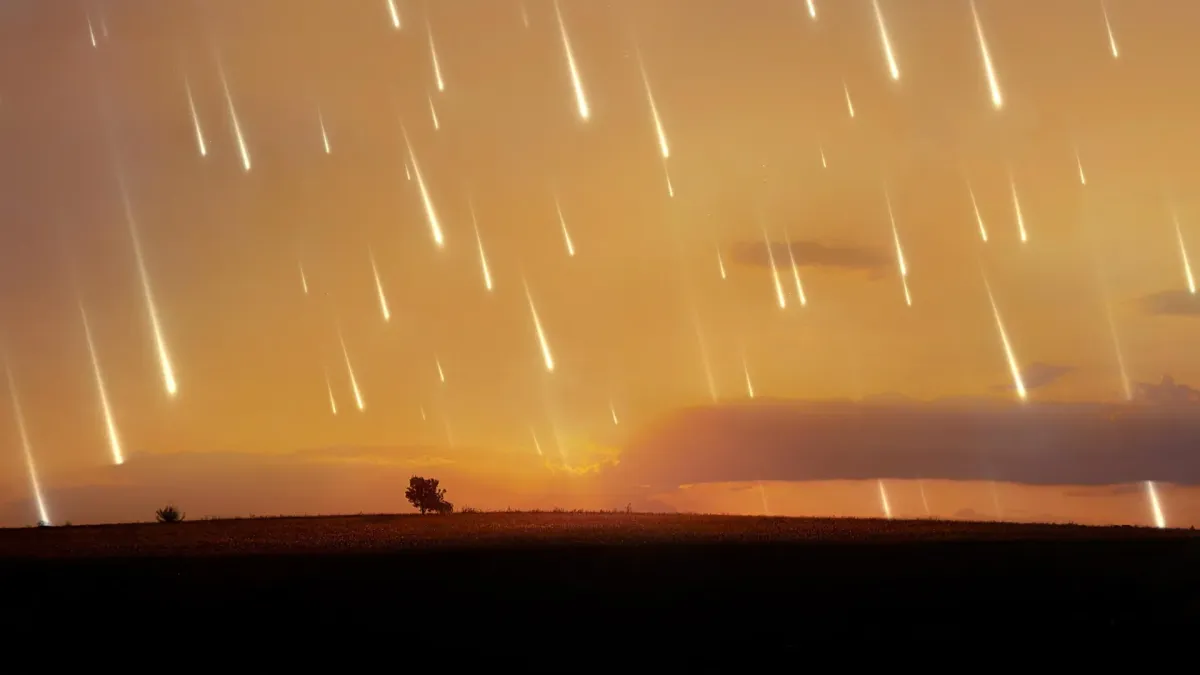
Skywatchers have plenty to celebrate this month, with opportunities to catch shooting stars from three different meteor showers. The Taurid showers, both Northern and Southern, peak around November 5th and 12th respectively. While not the most active, they're known for occasional bright fireballs that can light up the night. Later, the Leonid meteor shower offers another chance, with its peak viewing expected on November 17th and 18th during the early morning hours, especially after the moon has set.
But it's not just about meteors. Before dawn on November 15th and 16th, Mars and Jupiter will put on a show, appearing incredibly close together in the southeastern sky. You won't need any special equipment to spot them; Jupiter will be the brighter of the pair, with Mars showing its distinct reddish hue nearby. Watching them over a few mornings will reveal their apparent movement closer and then farther apart.
Meanwhile, humanity's furthest reach into space is marked by Voyager 1 hitting an extraordinary milestone: it's now one light-day away from Earth. This means radio signals take a full 24 hours to travel between us and the pioneering spacecraft, highlighting the immense distances involved in its deep-space exploration. NASA is celebrating this achievement on November 17th with a special event.
Rounding out the celestial calendar, November 24th brings the first of three consecutive supermoons. When a full moon coincides with the moon's closest approach to Earth, it can appear slightly larger and brighter. This particular supermoon kicks off a series, with two more expected in December and January, offering multiple chances to witness this stunning lunar event.