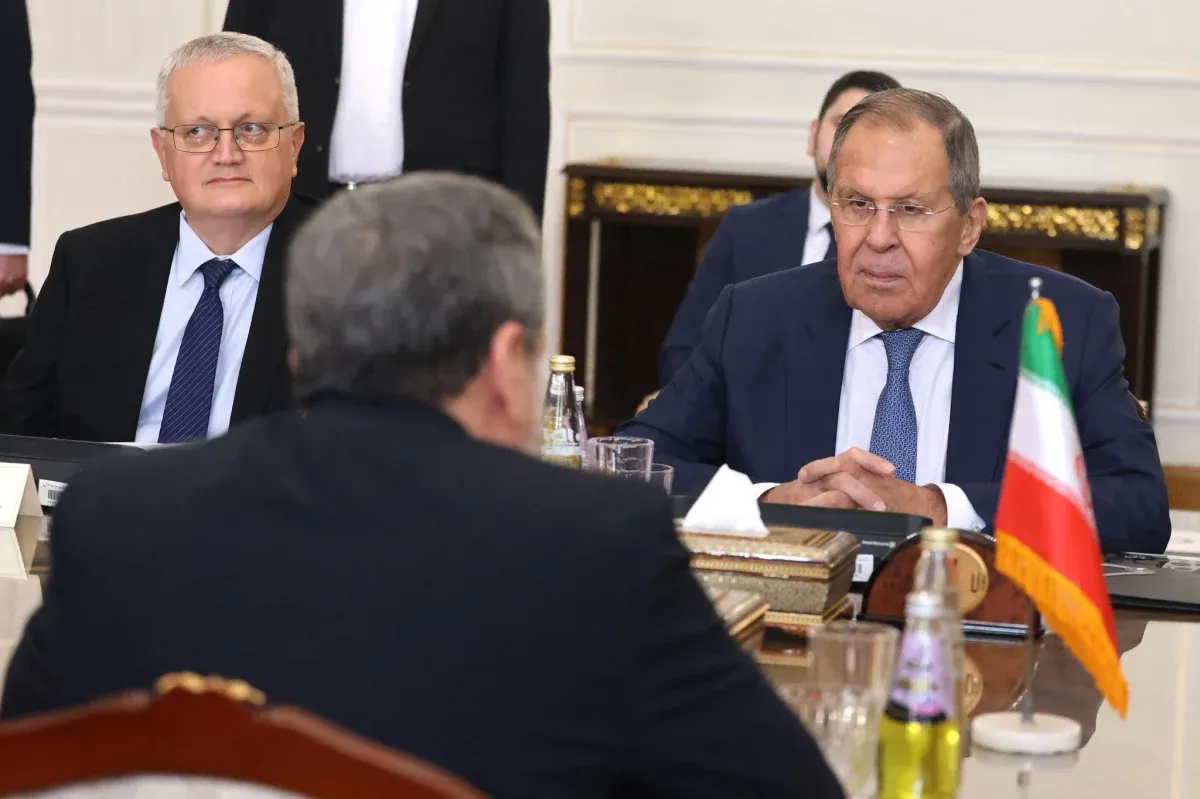
Russian Foreign Minister Sergey Lavrov arrived in Tehran on Monday, his first visit to Iran since the outbreak of hostilities in February, carrying a mediation proposal between Tehran and Washington. This move follows Lavrov's participation in the Russia-GCC strategic dialogue in Bahrain, amid escalating concerns over regional security, navigation, and energy supplies.
The visit holds particular significance due to the stalled diplomatic track between Iran and the United States, and increasing calls from Gulf nations for a cessation of Iranian attacks and engagement in serious dialogue to ensure regional security. This positions Moscow to test its ability to balance its strategic partnership with Tehran against its relations with Gulf states.
According to Russian news agencies, Lavrov arrived from Manama and is scheduled to meet with Iranian President Masoud Pezeshkian and hold discussions with his counterpart, Abbas Araghchi, on regional and international developments, as well as bilateral relations. During a joint press conference in Tehran, Lavrov stated Russia's readiness to assist in finding mutually acceptable solutions between the United States and Iran, emphasizing Moscow's pursuit of a resolution to the crisis and prevention of a wider conflict.
The Russian minister reiterated that Gulf littoral states should play a primary role in defining mechanisms for the region's secure development, stressing that Moscow aims for oil market stability and does not benefit from price volatility. On the economic front, Lavrov affirmed Russia's commitment to its economic and investment agreements with Iran, despite challenging circumstances, indicating Moscow's resolve to continue cooperation while proposing de-escalation initiatives.
Prior to his Tehran visit, Lavrov participated in the ministerial meeting of the Russia-GCC strategic dialogue in Manama, where regional security, navigation, and energy supplies were paramount. During the meeting, GCC Secretary-General Jassim Al Budaiwi urged Moscow to leverage its influence at the UN Security Council to pressure Iran to halt its attacks on Gulf states and engage in dialogue, reflecting the Gulf Cooperation Council's insistence on addressing security threats rather than relying solely on general calls for de-escalation.
In contrast, Lavrov presented an updated Russian concept for collective security in the Gulf, endorsing diplomatic efforts to prevent the recurrence of comprehensive warfare. The proposed Russian mediation faces clear challenges, as it must not only bridge the gap between Washington and Tehran but also address Gulf concerns regarding attacks on vital infrastructure, maritime routes, and energy market stability. Russian initiatives are underpinned by close ties with Iran, strengthened by military and economic cooperation.
While the strategic partnership treaty between Russia and Iran, signed in January 2025, includes expanded security and military cooperation, it does not contain a mutual defense clause obligating either party to military intervention. President Putin had previously informed President Pezeshkian of Moscow's willingness to contribute to mediation efforts, as Russia seeks to solidify its diplomatic presence amidst a crisis with far-reaching implications for the Gulf, international navigation, and energy markets.
Araghchi, in turn, attributed regional tensions and insecurity in the Strait of Hormuz to the United States, advocating for diplomatic resolution of regional issues and welcoming initiatives that achieve regional security without foreign military presence. The visit highlights Russia's parallel approach: maintaining its strategic partnership with Tehran while attempting to enhance its role as a mediator, juxtaposed with explicit Gulf demands for Russia to exert pressure on Iran. As US-Iran talks remain stalled, the effectiveness of Russian mediation hinges on its capacity to translate diplomatic statements into concrete actions, including de-escalation, ensuring Gulf security and maritime passage, and addressing regional anxieties about the potential escalation of the confrontation.