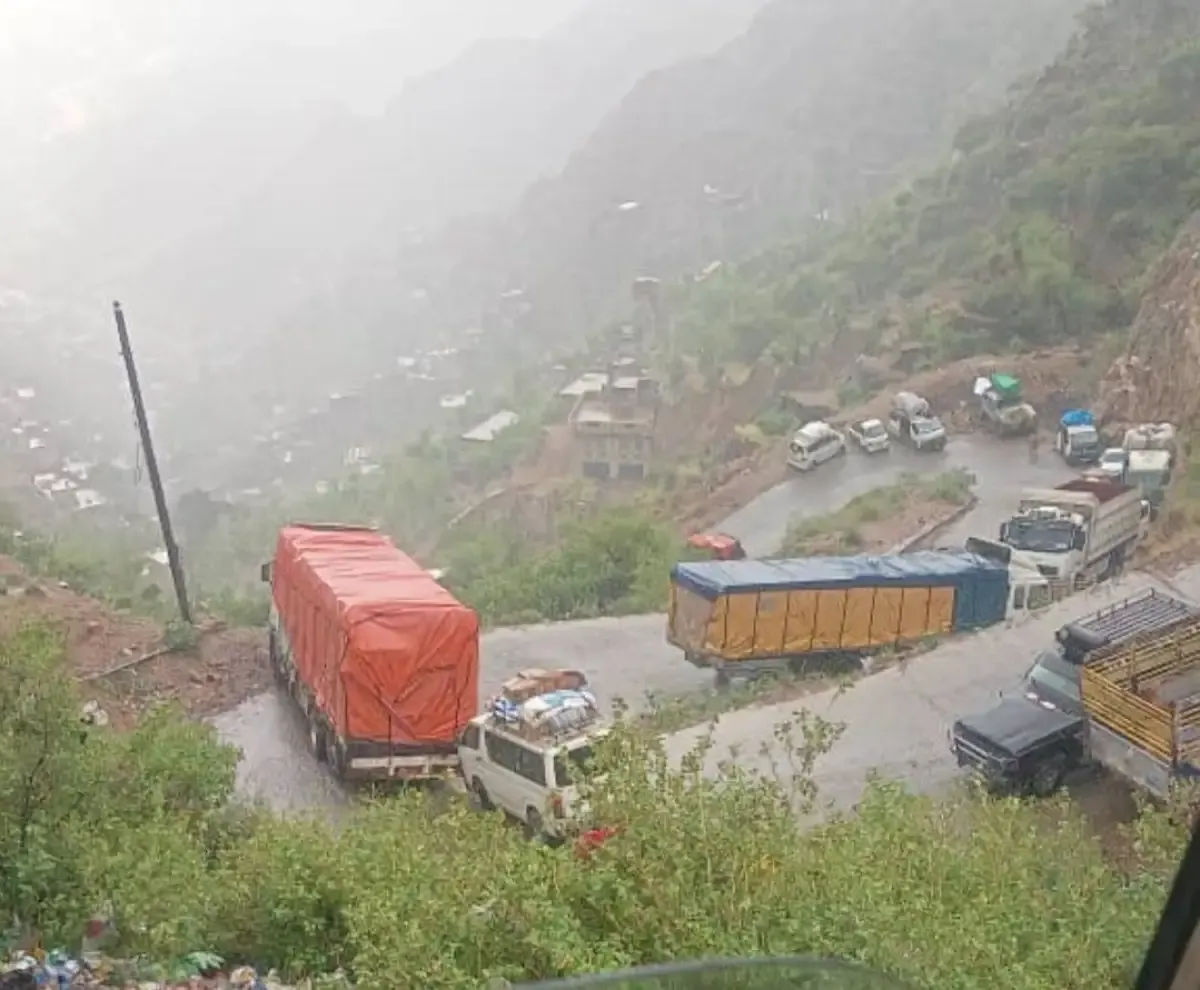
Roads in Yemen are no longer mere transit routes but have become weapons of war, utilized by warring factions to assert control and shift power dynamics. The strategic importance of the Hija Al-Abd road in rural Taiz underscores the reliance of residents on vital arteries, while repeated bombings by Houthi militants turn infrastructure into targets, exerting military and humanitarian pressure. These practices, coupled with treacherous mountain terrain, highlight how road safety and continuity profoundly impact civilian lives and military calculations, particularly in areas lacking safe alternatives.
Hija Al-Abd, situated in the Al-Maqatirah district of Lahj Governorate, holds critical strategic and humanitarian significance. It serves as a vital corridor connecting Taiz to areas in Lahj and Aden, facilitating the transport of passengers, goods, and essential supplies, as well as supporting logistical movements. With limited alternatives on some routes, this mountain road has become indispensable for thousands of citizens, despite its inherent dangers due to sharp turns, steep inclines, and rugged terrain, which pose particular risks to drivers of trucks and heavy vehicles. The dangers are amplified by the conflict, as violence targeting roads and their surroundings adds new burdens to civilian movement, increasing the likelihood of disruption, isolation, and higher transportation costs. In a war-torn country, the closure of a vital road means more than just a rerouted journey; it can signify delays in the arrival of food, medicine, and fuel, leading to price hikes, complications in accessing hospitals and markets, and added hardship for residents dependent on limited pathways.
Field evidence from various Yemeni fronts indicates that Houthi bombings of roads extend beyond direct damage to vehicles and infrastructure. The destruction of roads, the planting of explosives on routes, or the targeting of transit can disrupt supply lines, impede troop movements, and endanger the lives of civilians using the same paths. These practices are compounded when they occur in areas lacking alternative routes, or where alternatives are longer and more arduous, effectively holding residents hostage to road conditions and travel risks. Such actions transform roads into instruments of pressure that transcend military confrontation, impacting not only forces on the front lines but also civilians, traders, the sick, and truck drivers, who are forced to pay extra in time, money, and safety. Targeting or disrupting roads also weakens the capacity of local communities to sustain their economic activities, exacerbates the isolation of villages and rural areas, and complicates the delivery of essential aid and services, amidst already deteriorating living conditions and services for Yemenis.
During conflicts, roads are primary arteries for military operations, essential for transporting fuel, ammunition, and equipment, reinforcing positions, evacuating the wounded, and redeploying forces. Control over a road or its disruption can grant a strategic advantage or force an adversary to use time- and resource-intensive alternative routes. In Yemen, this significance is amplified by its mountainous geography, the distances between cities, damaged infrastructure, and limited movement options in many regions. Consequently, bombing a road or blocking a vital corridor becomes an event with repercussions extending far beyond the immediate impact zone. Therefore, bombings targeting roads and transit routes should not be viewed solely as localized damage but must consider their broader consequences on civilian movement, supply chains, and the continuity of services, especially when occurring in areas of military engagement. While responsibility for each incident is linked to its specific facts and available evidence, intentionally targeting civilians or protected civilian objects invokes legal responsibility under the rules of international humanitarian law.
Behind the military calculations, civilians bear the most severe humanitarian cost. Patients forced to travel longer distances to reach hospitals, families postponing travel for fear of an explosion or attack, and traders increasing prices to offset transportation costs—all suffer the consequences of turning roads into open battlefields. In rural areas, where residents rely on a limited number of routes to access services, the disruption of a main road can lead to the isolation of entire communities, hinder the delivery of food, medicine, and fuel, and deepen economic and livelihood crises. The danger posed by mines and improvised explosive devices planted on or near roads, when proven to exist, is as grave as direct shelling, as their effects can persist long after hostilities cease, posing a long-term threat to civilians, farmers, and travelers. This underscores the importance of documenting bombing and targeting incidents, verifying responsible parties, holding perpetrators accountable, and ensuring the protection of civilian roads and pathways essential for daily life.
The Yemeni conflict reveals that territorial control is not solely achieved through seizing high ground and military positions but extends to the routes that ensure movement, supply, and connection to livelihoods and services. While warring parties seek to leverage roads for their battlefield strategies, the protection of civilians and the assurance of their freedom of movement remain non-negotiable responsibilities, not subject to military pressure or collective punishment. The bombing of roads and the disruption of vital corridors not only alter travel maps but also have direct impacts on people's lives, economies, and their ability to access basic necessities. In a country whose infrastructure has been ravaged by war, maintaining and securing roads becomes a humanitarian and economic imperative, not merely a military concern. A road that should connect cities and facilitate life between them becomes an instrument of isolation and fear when it is targeted for bombing and disruption, with civilians bearing the heaviest burden in a conflict whose effects extend far beyond the front lines.