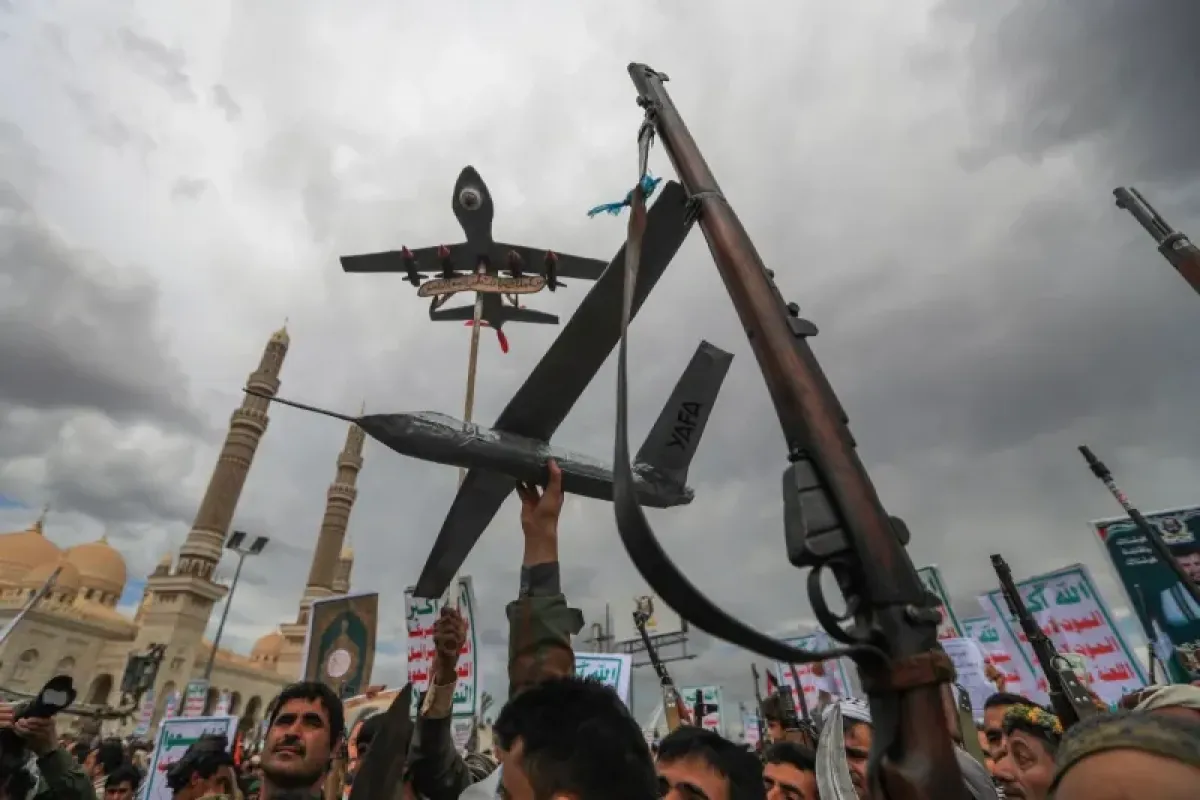
A recent investigative report suggests that the Iran-backed Houthi militia may be leveraging intelligence gathered by Russian spy satellites to identify and target strategic locations in Saudi Arabia and Yemen. The findings, detailed in an Associated Press analysis, point to a potential expansion of external support for the group, including the utilization of advanced space-based capabilities for attacks on critical infrastructure.
The report, citing geospatial intelligence firm Aurora Insights, identified recurring patterns of Russian government and military satellite activity over areas subjected to missile and drone attacks between July 1 and October 19. These incidents encompassed Houthi operations within Yemen and attacks by Iran-aligned militias in Iraq against Saudi targets. Aurora Insights examined 40 attacks and found that Russian satellite activity coincided with all of them, including reconnaissance flights in preceding and subsequent days.
Nawaf Obaid, the founder of Aurora Insights, stated that the number of Russian satellites observed over certain targets increased by 50 percent in the 72 hours before and after attacks, compared to July's monitoring levels. The report highlighted specific attacks, including one in September targeting oil pipeline pumping stations in eastern Saudi Arabia and another on King Fahd Air Base in Taif, which reportedly damaged an Italian Eurofighter Typhoon fighter jet. Analysis indicated significant Russian satellite activity prior to and following these strikes, suggesting intelligence gathering on strategic objectives.
While the firm did not observe direct data transfer from satellites to Iran or its allies, suggesting the nature of the relationship requires further evidence, the patterns were also noted over Houthi targets within Yemen. These included an alleged attack on the presidential palace in Aden and a nearby command center used by the Saudi-led coalition, as well as an assault on a government recruitment center in Shabwah Governorate that reportedly killed 75 recruits. These findings are particularly significant given that attacks within Yemen have targeted not only military objectives but also government facilities and gathering points, increasing risks to security and stability.
The report further quotes a senior Houthi leader, who requested anonymity, claiming that Iranian advisors on the ground in Yemen provide the group with intelligence derived from Russian satellite data for target selection. An anonymous security analyst monitoring Iran-backed groups corroborated this, stating that Iranian advisors use this data for target lists and operational planning. A Saudi official also indicated that investigations into recent attacks suggest the Houthis and Iraqi militias benefited from Russian intelligence.
These assertions align with previous statements by Saudi Deputy Minister of Foreign Affairs for Public Diplomacy, Rayed Al-Malki, who stated that Iran and the Houthis receive intelligence from parties in Russia and China. The report links these developments to long-standing military cooperation between Russia and Iran, including drone technology and alleged intelligence exchanges. Saudi investigators also reportedly found Russian and Chinese-made components in Houthi missiles and drones, though the report did not provide evidence of Moscow or Beijing's direct knowledge of their use in attacks. Russian officials have not yet commented on the report's allegations.