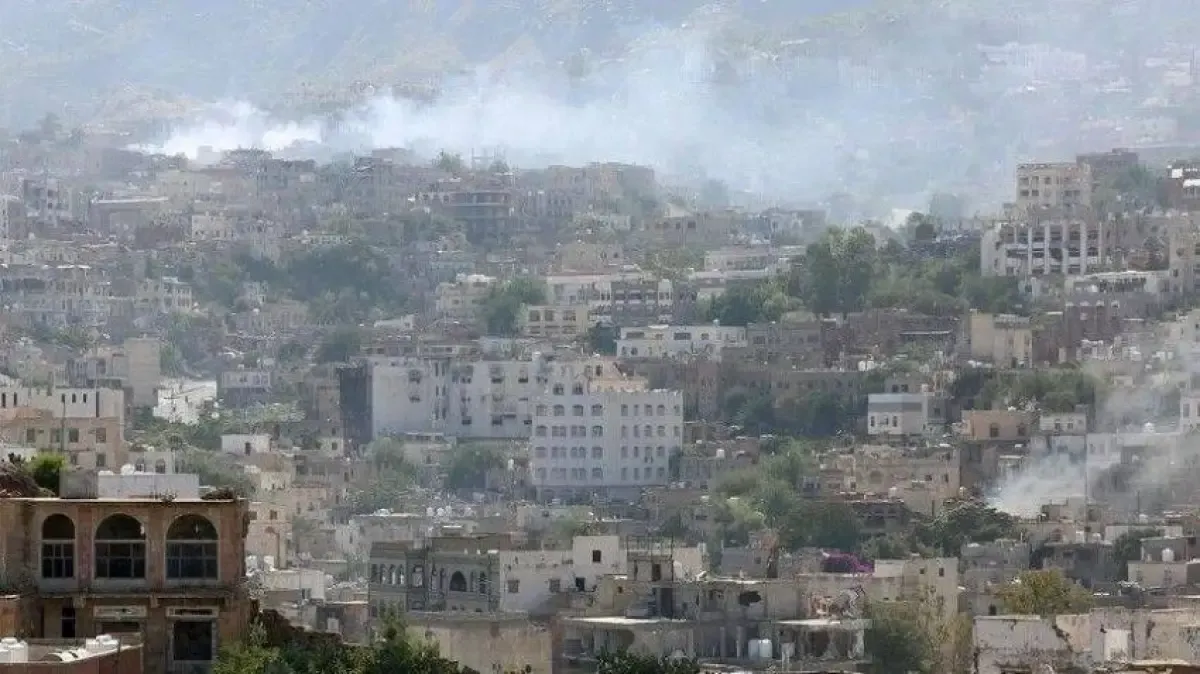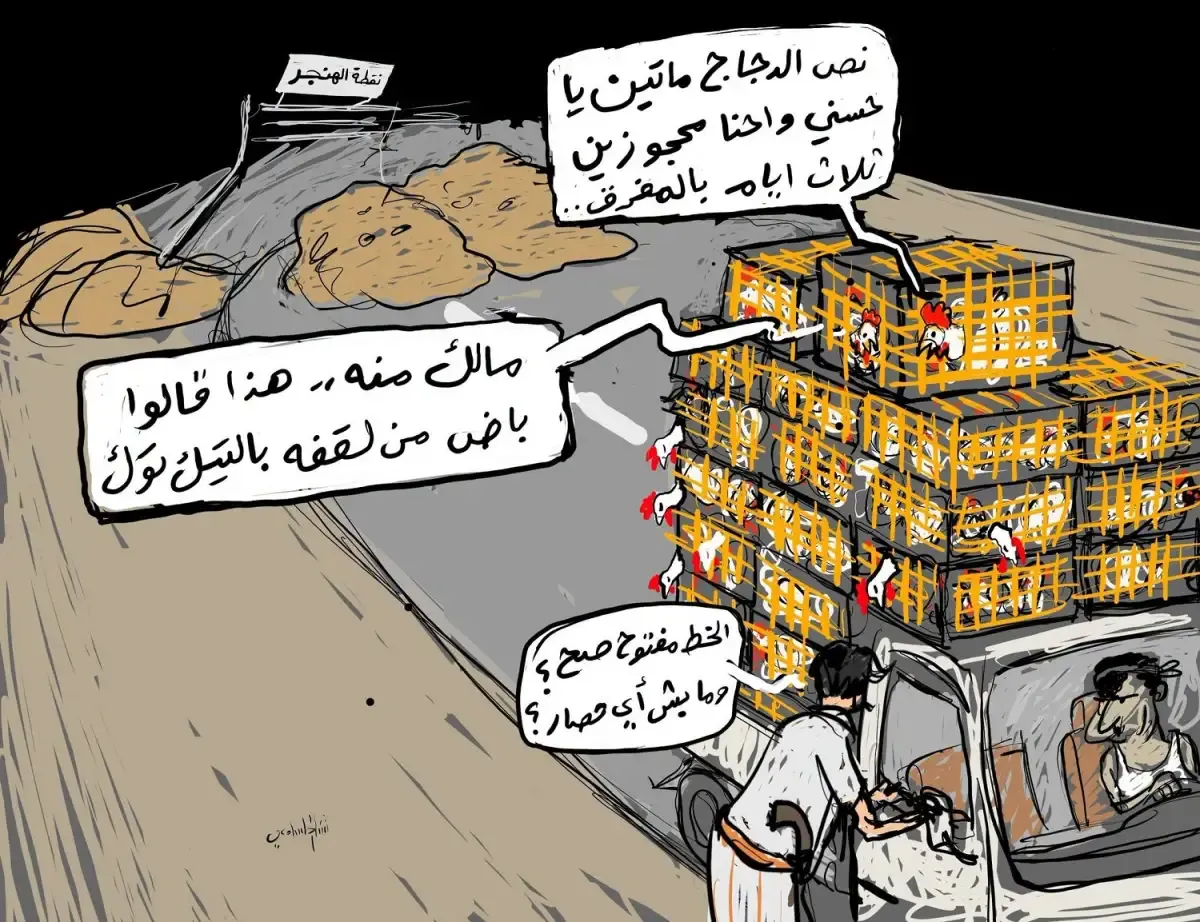
Photographic evidence and social media posts featuring several prominent online personalities visiting areas west of Taiz city, under the control of Houthi militias, have ignited widespread outrage. These influencers appeared at the Al-Hangar checkpoint, controlled by the militia, promoting a narrative that denies the existence of a Houthi siege on the city.
According to activists, these visits were part of coordinated efforts by the Houthi militia to disseminate their version of events in Taiz. The militia aims to leverage the popularity of content creators to reach a broader audience, attempting to portray the routes leading to the city as open and the movement of citizens and goods as normal, despite residents and activists reporting significant restrictions on movement and supplies.
The videos have provoked angry reactions from activists and influencers within Taiz and in southern governorates. They have condemned the appearance of these celebrities in Houthi-controlled areas and their adoption of the militia's narrative as a "moral and professional collapse," especially since some of these influencers have previously received public support and sympathy from the people of Taiz for various causes and campaigns.
Influencers from Taiz stated that the city, which "stood by many celebrities and supported them in their causes, now finds itself facing individuals who come to film a Houthi-controlled checkpoint and then speak of no siege," questioning the discrepancy between what these celebrities present and the daily reality of the residents. They added that the talk of open roads "cannot be reduced to filming at the Al-Hangar checkpoint," given the difficulties residents describe in obtaining food, fuel, and gas, as well as complications for truck movement and supplies, in addition to the deteriorating health services and scarcity of medicine.
Activists pointed out that fuel and gas prices have sharply increased recently, with a 20-liter gasoline container reportedly costing around 50,000 Yemeni Rials, compared to approximately 25,000 Rials before the tightening of restrictions. A gas cylinder now exceeds 30,000 Rials, having previously cost around 9,000 Rials, according to shared testimonies from city residents. Activists strongly criticized attempts to present these conditions as "normal life," emphasizing that a siege is measured not only by the closure of a gate or preventing a person's passage but also by the resulting difficulty in accessing food, medicine, and fuel, the increased transportation and living costs, and the decline in residents' ability to obtain basic services.
In shared comments, influencers from Taiz stated that some social media celebrities have "stabbed the city in the back" by appearing in Houthi-controlled areas and promoting a narrative that denies the siege, considering their appearance a revelation, in their words, of their alignment with the Houthi narrative. One influencer said, "Taiz supported many of these when they needed people's voices and support, but some of them have now become a free tool to polish the Houthi militia." He added, "Whoever wants to know the truth about the siege should ask the city's residents, shopkeepers, hospital staff, and truck drivers, not just stand at the Al-Hangar checkpoint in front of a camera."
Another influencer added that "trucks carrying food are not the only measure of the siege; there is also fuel, gas, medicine, waste, and the movement of citizens, all linked to the residents' ability to enter and leave the city," considering that filming a single scene and presenting it as a complete picture of the situation is "an attempt to mislead public opinion." Activists questioned the message these celebrities intend to convey to the people of Taiz, at a time when residents, according to their testimonies, suffer from rising prices of essential goods, fuel, and gas, and difficulties in obtaining medical services and medicines. Criticism has not stopped at denying the siege; activists noted that some pro-Houthi content creators have even called on the city's residents to leave and hand it over to the militia, which they considered further evidence that the "siege denial" campaigns are inseparable from the attempt to impose the Houthi narrative on the city and its inhabitants.
Activists view the Houthi militia's use of social media celebrities as a transition from traditional propaganda to employing faces with greater audience reach, especially amid declining trust in the militia's media outlets. According to activists, content creators are no longer mere conveyors of events but some have become part of the narrative war, by traveling to Houthi-controlled areas, filming specific scenes, and presenting them as evidence of the absence of a siege, while ignoring, according to their critics, the economic and humanitarian consequences that Taiz residents link to the restrictions imposed on the movement of supplies. These actions coincided with escalating debate over the humanitarian situation in Taiz, turning social media into a new arena of conflict, not limited to reporting facts but extending to shaping public perception about the reality within the city.
In response to these campaigns, activists have called for boycotting accounts they believe promote Houthi propaganda and unfollowing them, denying content that serves the militia further reach and engagement. They emphasized that "an influencer who uses their popularity to cover up civilian suffering is not playing an media role but is becoming part of the propaganda machine." The escalating wave of anger reflects that the battle for Taiz is no longer confined to the ground but has moved to the digital space, where the Houthi militia, through the use of celebrities and content creators, attempts to reshape the image of the siege before public opinion, while the city's residents respond by presenting what they claim are daily details that reveal the difference between "what the cameras capture" and what the residents actually experience.