South Korea has refuted claims of involvement in the ongoing conflict involving Iran, stating that its naval expansion in the Gulf of Aden is solely for maritime security and anti-piracy operations. However, plans to extend the operational scope of its naval unit to waters south of Oman raise significant security and political questions.
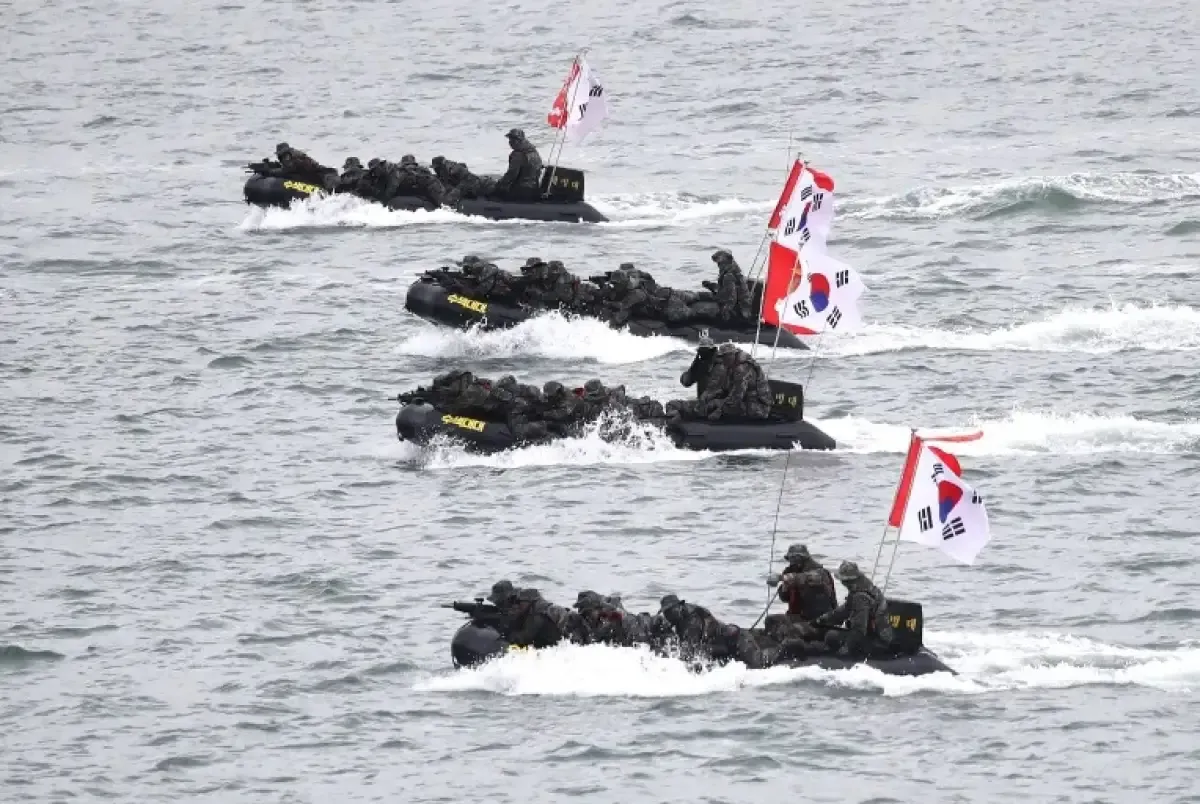
Kang Shin-chul, South Korea's Minister of Defense, informed the parliamentary defense committee that the expanded mission of the "Cheonghae Unit" does not constitute direct or indirect military participation in the conflict. He emphasized that the primary objective is to safeguard Korean vessels and citizens, and to ensure the security of vital maritime trade routes. The minister cited a more than threefold increase in piracy activities in the Gulf of Aden compared to the previous year as justification for extending the unit's deployment and broadening its operational reach.
The proposed plan extends beyond continued anti-piracy efforts off the Somali coast, encompassing operations in the open waters south of Oman, near the Duqm port, and approximately 650 kilometers from the Strait of Hormuz. This geographical shift intensifies scrutiny over the distinction between protecting navigation and engaging in the wider conflict dynamics. Seoul's plan to augment the unit with P-8A maritime patrol aircraft, explosive ordnance disposal teams, and unmanned mine clearance equipment, alongside an increase of approximately 75 personnel to a total of 395, suggests capabilities exceeding routine anti-piracy duties.
The expanded deployment, enhanced surveillance, and mine-clearing capabilities place the unit within a more sensitive region, closer to the Strait of Hormuz, a critical global energy and trade conduit. Furthermore, the inclusion of supporting international navigation freedom broadens the unit's mandate beyond traditional anti-piracy roles. A notable discrepancy arises from the minister's justification: citing increased piracy in the Gulf of Aden to explain the expansion towards southern Oman, while reports indicate no recent piracy incidents in the proposed new operational area. This fuels speculation about the true security motivations behind the expansion and its potential connection to military developments around the Strait of Hormuz.
These developments occur amid persistent U.S. pressure on allies to increase their naval contributions to counter the repercussions of the conflict with Iran. South Korea has previously resisted direct combat involvement and expressed reservations about deploying forces to the confrontational theater. President Lee Jae-myung had previously pledged to avoid actions that could draw the nation into war, while keeping the door open for an enhanced role in maritime security. Domestically, the plan faces political and popular opposition, with concerns that the expanded naval operations could inadvertently lead to indirect participation, particularly if reconnaissance and surveillance tasks extend to gathering intelligence that could benefit U.S. forces.
Critics also warn of the risks of unintended military friction in an increasingly volatile region marked by escalating tensions and reciprocal threats. These concerns are amplified as the proposal moves to the legislative phase. The National Assembly's defense committee has referred the bill for extending the unit's deployment and expanding its operational scope to a subcommittee for legislative review, with further discussions anticipated in the coming days. The proposal includes extending the mission for an additional year, until the end of 2027, and nearly doubling the operational area from the Gulf of Aden to the open waters south of Oman.
In response, Tehran has cautioned Seoul against deploying naval or military forces near the Strait of Hormuz, interpreting any participation in maritime operations there as support for U.S. actions. This stance presents South Korea with a delicate balance between its security commitments to Washington, its significant reliance on energy imports passing through the Gulf, and the risks to its vessels and maritime interests from potential Iranian retaliation. These circumstances highlight Seoul's effort to maintain political distance from the conflict while simultaneously increasing its military presence in a region where maritime security duties intersect with broader military calculations of the conflict.
Official assurances of non-participation do not fully allay concerns that the expanded operational scope and enhanced capabilities for reconnaissance and mine clearance could inadvertently place South Korean forces at the heart of the conflict's repercussions, even without declared combat engagement.