A 345-million-year-old fossil found in Scotland, long hailed as one of the earliest reptiles, has been debunked by new research. Scientists now believe "Westlothiana lizziae," nicknamed "Lizzie," actually belongs to a much more ancient lineage, resembling a fish more than a lizard.
Discovered in 1984, Lizzie was thought to be an early amniote – the group including reptiles, birds, and mammals – adapted for land. Its apparent four limbs with claw-like tips, unlike the fin-like limbs of many contemporary creatures, supported this theory. For decades, Lizzie has been a cornerstone for understanding how these land-dwelling vertebrates evolved.
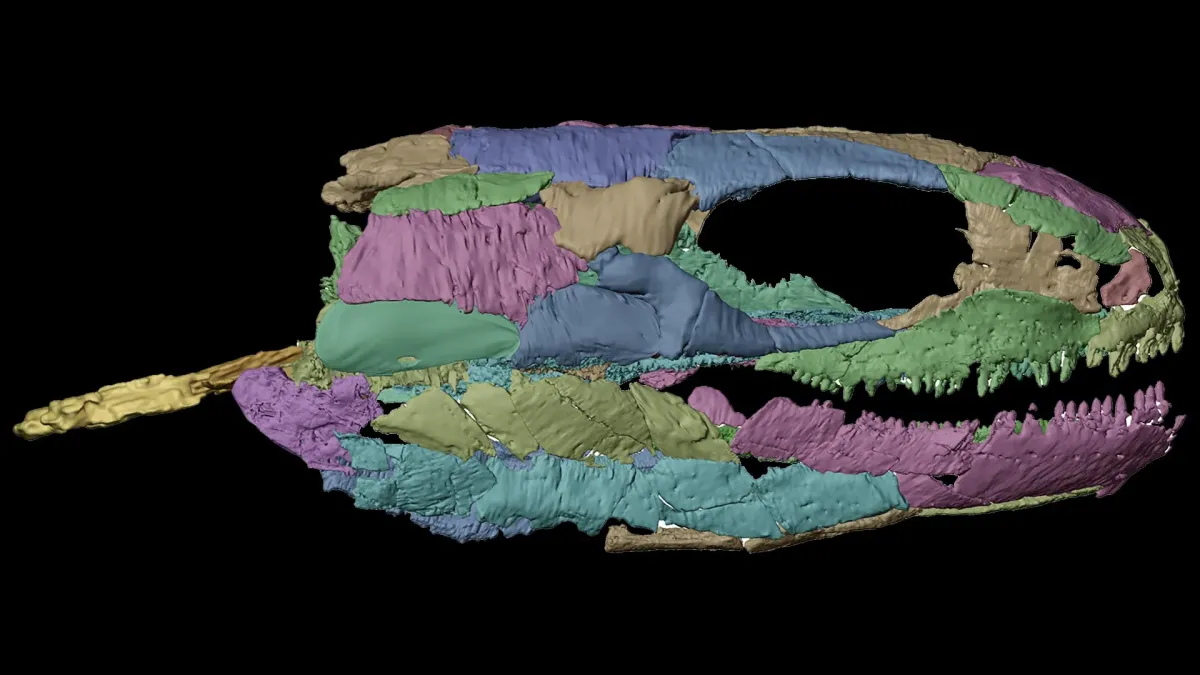
However, cutting-edge X-ray imaging technology has allowed researchers to see beyond the rock's surface. What they found was a primitive skull, internal gills with bone, and a fish-like mouth filled with tiny teeth. These characteristics strongly suggest Lizzie was aquatic or amphibious, not primarily terrestrial as previously assumed.
"The surprisingly primitive features of the skull show us that Lizzie was not only not a reptile but belonged to a much more ancient lineage," said co-lead author Ben Igielman. "It turns out looks can be deceiving, and Lizzie lived a completely different lifestyle than we previously thought."
This reclassification also shakes up our understanding of when key features like claws and the five-digit pattern (pentadactyly) evolved. The study suggests these traits were already present in early tetrapod ancestors still closely tied to water. This implies that characteristics we associate with land life emerged gradually in creatures that moved between aquatic and terrestrial environments.
The findings could also impact how we interpret ancient fossil footprints. Previously thought to be evidence of early amniotes, some trackways with clawed digits might actually belong to more primitive, amphibious tetrapod relatives like Lizzie, rather than exclusively early reptiles.