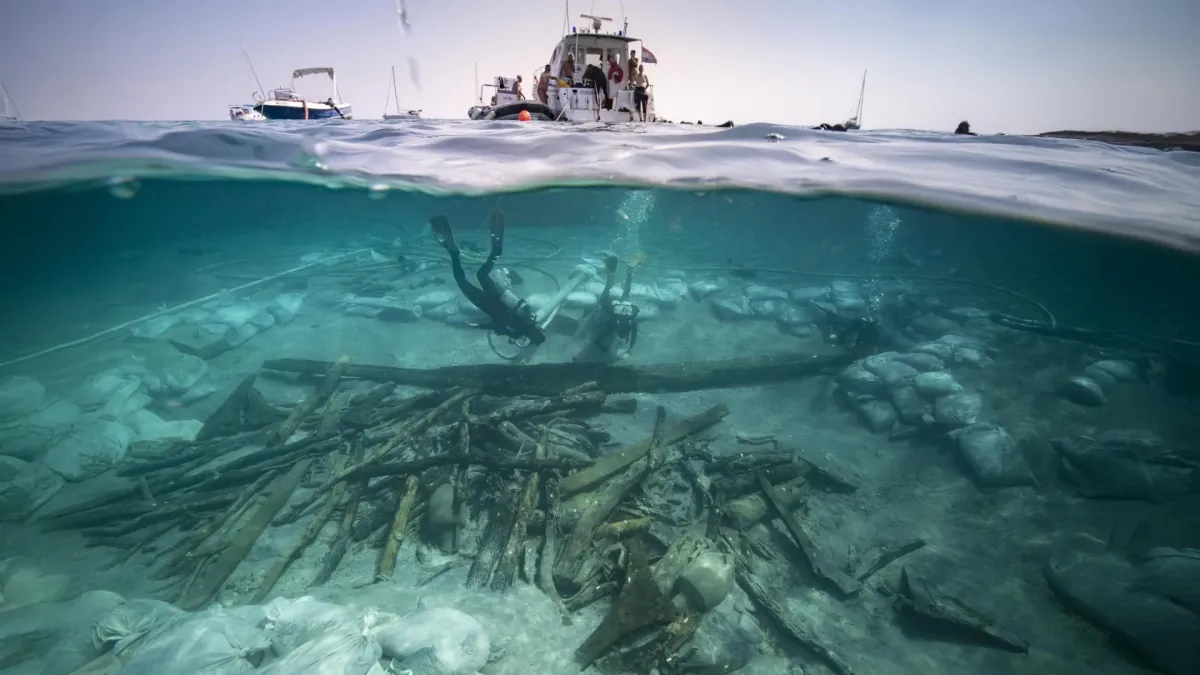
A 2,200-year-old Roman shipwreck found off Croatia's coast is shedding light on ancient shipbuilding ingenuity, specifically how mariners kept their vessels seaworthy. Researchers have uncovered two unique waterproofing recipes, including a mix of pine tar and beeswax, with microscopic pollen grains preserved in these coatings providing clues to the ship's construction and repair locations.
For millennia, shipbuilders have battled the sea's corrosive effects, tackling saltwater, marine organisms like destructive shipworms, and the constant threat of leaks. While ancient vessels' wooden structures have been a focus of archaeological study, the protective materials that ensured their journeys have largely been overlooked until now.
A recent study published in Frontiers in Materials delved into the protective coatings of Ilovik-Paržine 1, a Roman Republic-era ship that sank around 2,200 years ago. Researchers discovered two distinct coatings: one made purely of pine tar (pitch) and another that combined pine tar with beeswax. The remarkable part? Microscopic pollen grains trapped within these ancient coatings offer a detailed environmental snapshot, hinting at where the ship was built and repaired.
"In archaeology, little attention is paid to organic waterproofing materials. Yet they are essential for navigation at sea or on rivers and are true witnesses of past naval technologies," explained lead author Dr. Armelle Charrié, an archaeometrist involved in the study. "Studying the coatings, we found two different kinds on this vessel: one made of pine tar, also called pitch, and the other of a mixture of pine tar and beeswax. Analysis of pollen in the coating made it possible to identify the plant taxa present in the immediate environment during the construction or repairs of the ship."
The sticky nature of the pine tar proved to be a natural preservative for airborne pollen. By analyzing the types and amounts of pollen found, scientists were able to identify the surrounding vegetation, suggesting locations with Mediterranean coastal forests, shrublands, and even riverside or mountainous environments. This botanical evidence, combined with chemical analysis, indicates the ship likely received multiple repairs using materials sourced from different regions across the Mediterranean, possibly including its likely place of construction, Brundisium (modern Brindisi, Italy), and areas along the northeastern Adriatic coast.
"While it seems obvious that ships sailing long distances need repairs, it's simply not easy to demonstrate this," Charrié concluded. "Pollen has been very useful in identifying different coatings where the molecular profiles were identical." This research highlights how even the smallest biological traces can unlock significant insights into ancient maritime practices and trade routes.