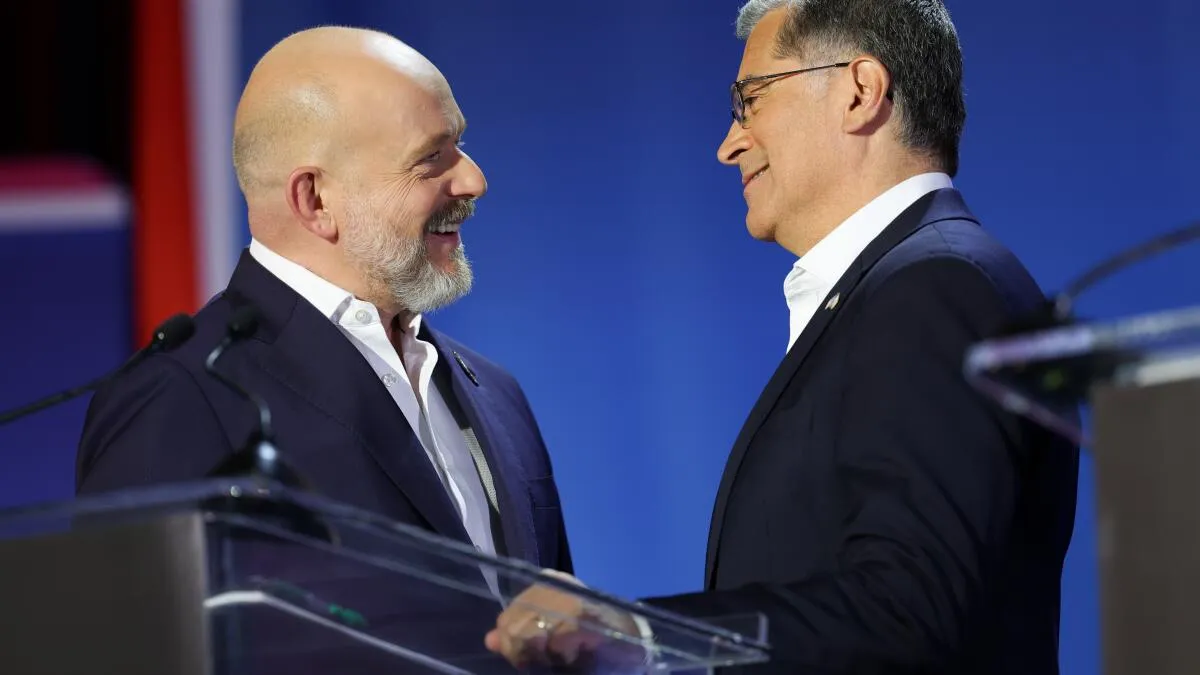
The top-two primary in California points towards a November showdown between Democrat Xavier Becerra and Republican Steve Hilton, with third-place finisher Tom Steyer's hopes diminishing as vote counts conclude. Despite California's significant Democratic advantage, the outcome remains subject to voter decisions rather than pundit predictions.
Columnists Mark Z. Barabak and Anita Chabria discussed the primary's blend of voter apathy and last-minute tension. Chabria anticipates a general election victory for Becerra, suggesting the incumbent would need to actively campaign poorly to lose. She expressed concern that Hilton might prioritize bolstering his "MAGA" credentials and promote voter fraud conspiracies, potentially diverting attention from substantive policy debates on critical issues like gas prices and housing development. This focus, she warned, could provide President Trump with a platform for false propaganda and undermine democratic processes and voting rights nationally.
Barabak's primary focus for the upcoming months is on how Becerra conducts his campaign. He advises against complacency, urging Becerra to use the period to build a mandate and prepare voters for the significant challenges ahead. These challenges include a substantial structural budget deficit likely requiring difficult fiscal decisions, potential natural disasters exacerbated by climate change, and ongoing friction with the federal administration. Barabak also noted the demanding nature of the governor's office, referencing Tom Steyer's considerable personal expenditure in his unsuccessful bid.
Chabria defended Steyer's campaign, interpreting his performance as an indication of a significant voter segment desiring bold ideas and dissatisfaction with the status quo, particularly regarding healthcare and environmental policy. She acknowledged that while elections are heavily influenced by money, the source of funding (self or corporate) is less concerning than the overall impact of decisions like the Citizens United Supreme Court ruling. Regarding the prolonged ballot counting process in California, Chabria argued that the delay is not indicative of fraud but rather a consequence of prioritizing accuracy, accommodating mail-in ballots, and addressing understaffed, underfunded elections offices. She stressed that efficiency requires adequate funding.
Barabak concurred that California's efforts to facilitate voting are commendable but agreed that the extended counting period is a solvable problem. He suggested, citing Kim Alexander of the California Voter Foundation, that improved funding for county election offices could expedite the process while maintaining accessibility. Barabak placed some responsibility on Governor Gavin Newsom and the Democratic-led Legislature for not adequately addressing this issue prior to the election.
In their concluding remarks, both columnists reflected on the perceived shortcomings of the current field of gubernatorial candidates, with Barabak wryly noting the persistent desire for an idealized candidate who embodies contradictory qualities. Chabria reiterated her stance on universal healthcare as a critical issue, emphasizing that the pursuit of inclusion, even through a single-payer system, is a vital goal for the state's well-being.