Physicists might finally have cracked one of the universe's biggest head-scratchers: why the "cosmological constant" is so tiny. A new theory suggests that the very fabric of space-time, with its underlying "shape," could be preventing this cosmic expansion force from going wild, aligning observations with quantum physics.
The cosmological constant is the mysterious energy driving the universe's accelerating expansion, and it's at the center of a huge clash between two major physics theories. Quantum field theory predicts that empty space should be brimming with energy, making the cosmological constant astronomically huge. But, surprise surprise, observations show it's incredibly small.
Researchers at Brown University have proposed a potential fix, drawing a surprising link between quantum gravity and the quantum Hall effect – a phenomenon in condensed matter physics where electrical conductance takes on super-precise values, even with material flaws.
They found that the math for a simple quantum gravity approach looks a lot like the math describing the quantum Hall effect. This stability in the Hall effect comes from topology, which deals with a system's fundamental "shape." The team argues that a similar topological feature in space-time could be keeping the cosmological constant stable and preventing it from exploding to the massive levels quantum physics expects.
"What we've shown is that if space-time has this non-trivial topology, then it resolves one of the deadliest problems of the cosmological constant," explained co-author Stephon Alexander. "All the quantum perturbations that should blow up the value of the cosmological constant are rendered inert by this topology, which keeps the constant's value stable."
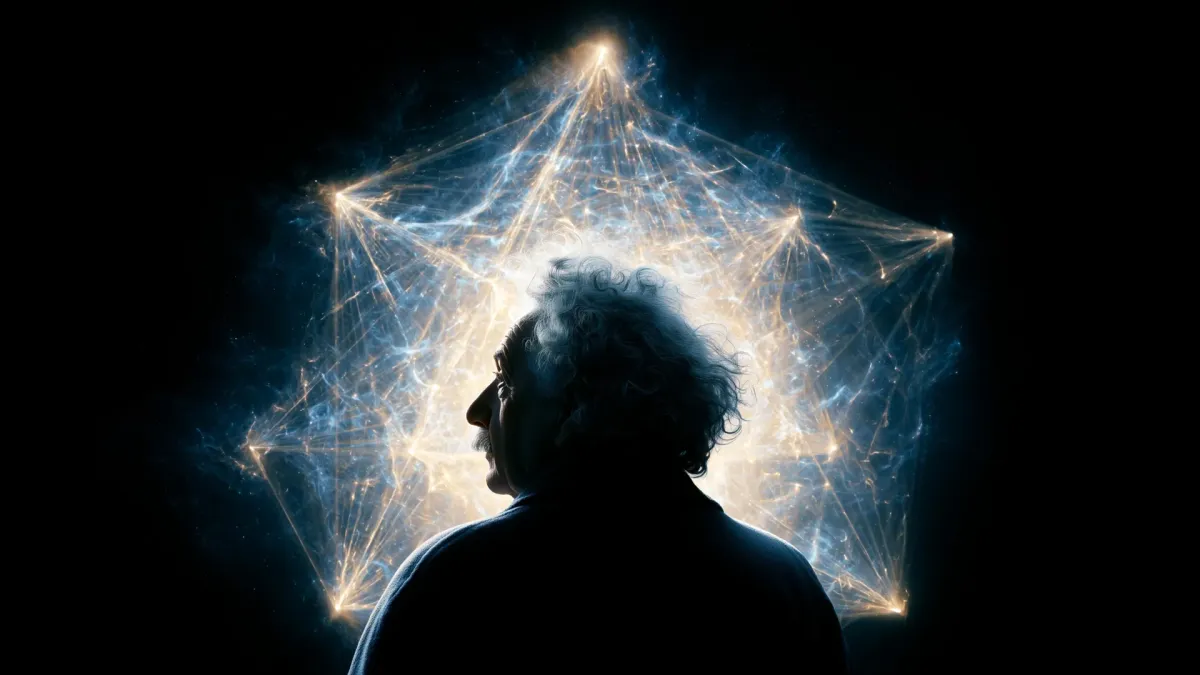
This idea revisits Einstein's initial concept of the cosmological constant, which he later famously called his "biggest blunder." While he introduced it to counteract gravity in a static universe, its importance surged again after astronomers discovered the universe's expansion is speeding up. However, this revival highlighted the massive discrepancy between theoretical predictions and actual observations, a puzzle that has baffled scientists for decades.