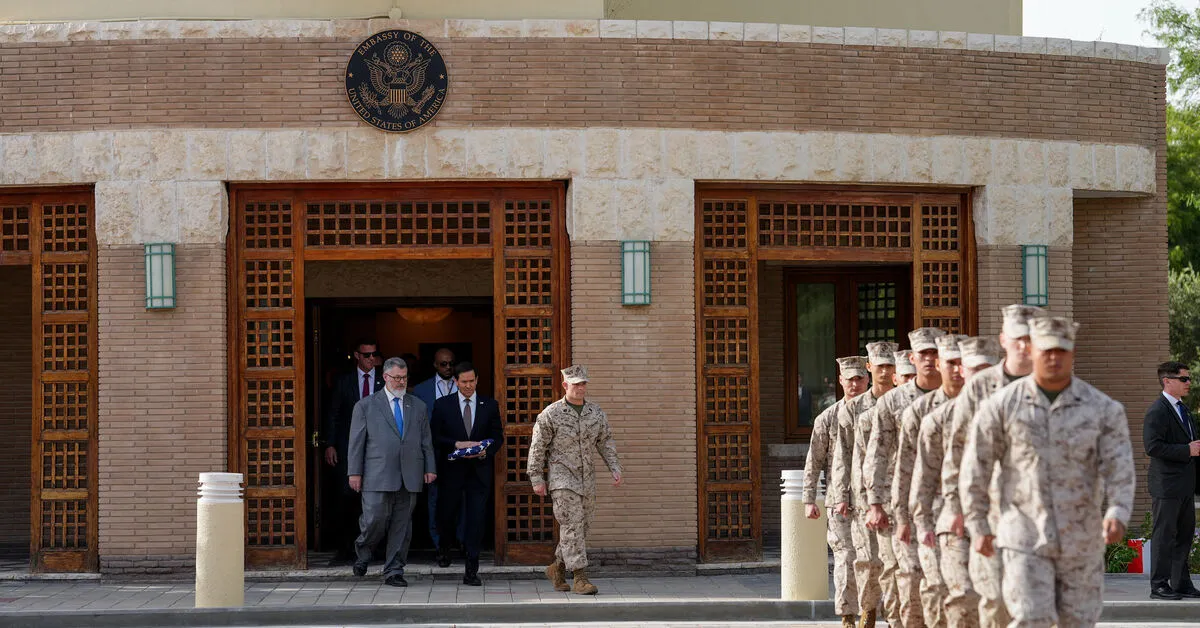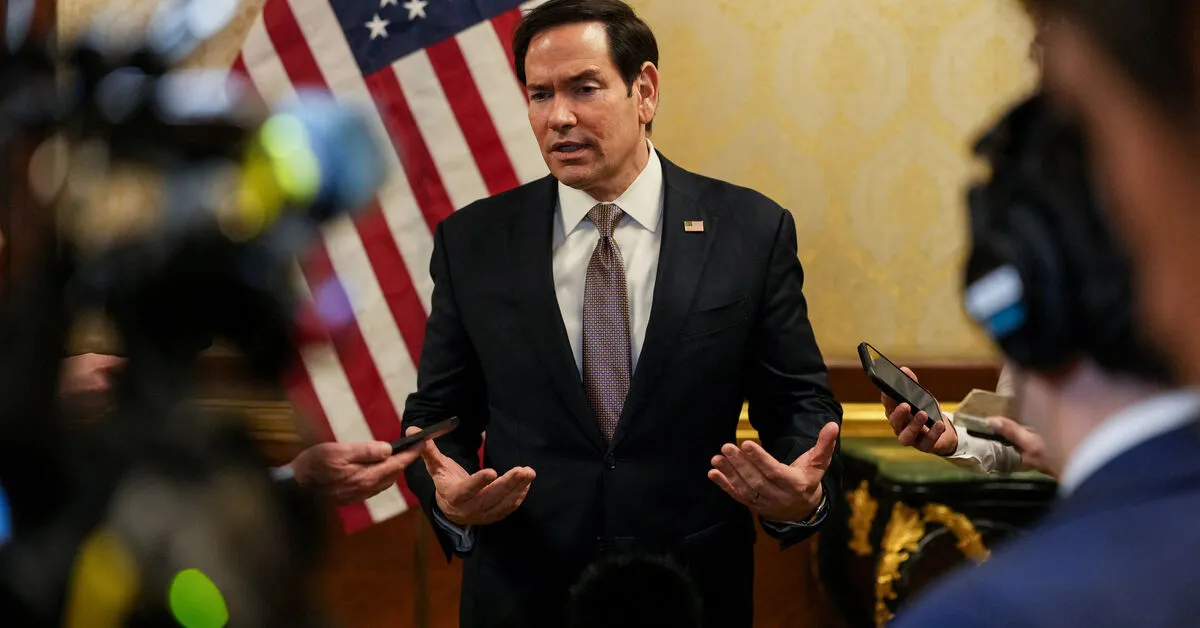
U.S. Secretary of State Marco Rubio arrived in Bahrain on Thursday, the final stop of a Middle East tour aimed at garnering support for the Trump administration's preliminary nuclear agreement with Iran from skeptical Gulf Arab allies.
Rubio acknowledged the delicate nature of his mission, as he seeks to persuade Gulf Arab leaders that the accord will not unduly strengthen Tehran or disrupt the region's security dynamics and oil markets. His visit to Manama, home to the U.S. Navy's Fifth Fleet headquarters, also includes discussions with the Gulf Cooperation Council (GCC), comprising Saudi Arabia, Qatar, Oman, the United Arab Emirates, and Kuwait.
This three-day diplomatic engagement represents the first high-level mission since the framework agreement between the U.S. and Iran was reached last week. During previous stops in the UAE and Kuwait, Rubio assured officials that the proposed deal was not excessively favorable to Iran, which had targeted several Gulf states during the recent U.S.-Israeli conflict.
"We're not going to do anything that undermines the security of our allies, our longstanding allies in the region," Rubio told reporters in Kuwait. However, conflicting statements have emerged, with U.S. President Donald Trump asserting Iran's commitment to indefinite nuclear inspections, while Tehran denies making such a concession, raising questions about the deal's stability.
The GCC nations are crucial U.S. allies, having provided logistical support during the conflict and subsequently facing Iranian airstrikes. These states form a cornerstone of America's regional security strategy, and any reconsideration of their security relationships could significantly impact U.S. military planning.
Details of the draft agreement suggest a lack of limits on Iran's ballistic missiles, a proposed $300 billion reconstruction fund, and provisions that could enhance Tehran's regional influence and control over vital oil shipping routes. While Rubio stated he would not request contributions to a reconstruction fund, the memorandum of understanding implies regional responsibility for financing.
Several U.S. Gulf allies privately express disappointment with the interim deal, which could lead to U.S. normalization with Iran, a Shi'ite nation viewed by most Sunni-led GCC states as their primary adversary. Bahrain's Sunni monarchy, ruling over a Shi'ite majority, harbors concerns that a financially empowered Tehran could incite unrest within its borders.