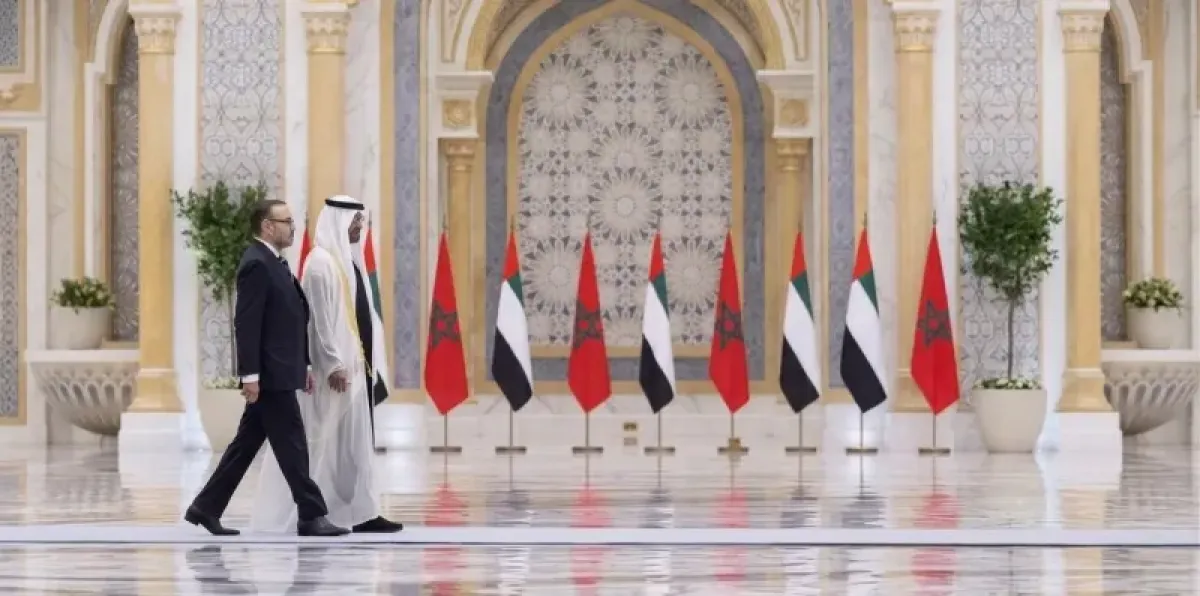
The United Arab Emirates has reiterated its steadfast support for Morocco in confronting escalating terrorist threats, following the Moroccan authorities' announcement of thwarting ISIS-linked terror plots in the Sahel region. This development underscores the robust security cooperation between the two nations and highlights the critical importance of Arab partnerships in addressing growing transnational security challenges.
Sheikh Abdullah bin Zayed Al Nahyan, UAE Minister of Foreign Affairs and International Cooperation, strongly condemned the terrorist schemes aimed at undermining Morocco's security and stability. He reaffirmed Abu Dhabi's complete solidarity with Rabat and its unwavering support for all measures taken by Morocco to safeguard its national security and the well-being of its citizens and residents. He also commended the vigilance and effectiveness of the Moroccan security agencies in uncovering and neutralizing the plot before its execution.
The Moroccan security operation holds particular significance, as initial investigations revealed that the perpetrators received logistical support and operational coordination from an ISIS branch in the Sahel. This indicates the persistent efforts by extremist organizations to exploit the fragile security situations in certain regional states to rebuild their networks and expand into North Africa. Analysts observe that the security developments in the Sahel over recent years, coupled with political unrest, military coups, and the erosion of some security institutions' capabilities, have created a conducive environment for terrorist organizations to reposition themselves, thus making regional cooperation an imperative rather than merely a political option.
The UAE's stance is emblematic of a deepening strategic partnership with Morocco, wherein security and intelligence cooperation have emerged as a cornerstone of their bilateral relations, alongside political, economic, and investment collaborations. Over the past years, both countries have significantly enhanced their coordination on counter-terrorism and counter-extremism initiatives, driven by a shared understanding that terrorism constitutes a borderless threat requiring intelligence sharing, coordinated security efforts, and the development of proactive response mechanisms to mitigate risks before they escalate into direct threats.
This collaboration extends beyond mere political alignment on security events; it encompasses the establishment of institutional partnerships in areas such as training, expertise exchange, and the enhancement of capabilities within specialized counter-terrorism agencies, thereby bolstering both nations' readiness to address emerging challenges. Both countries advocate for a multi-faceted approach to counter-terrorism, recognizing that security measures alone are insufficient. This approach necessitates combating extremist ideologies, disrupting funding channels, and countering recruitment and propaganda networks that exploit digital platforms to disseminate hate speech and attract new recruits.
Both sides consistently emphasize the importance of respecting national sovereignty, supporting state institutions, and fostering stability as the fundamental basis for undermining terrorist group activities and preventing them from exploiting political and security crises. The UAE's swift response reflects the nature of their bilateral relations, which have evolved from traditional diplomatic solidarity into an integrated strategic partnership spanning security, defense, investment, energy, infrastructure, digital transformation, and food security. The UAE is a prominent Arab investor in Morocco, with investments in strategic sectors, while Morocco views Abu Dhabi as a key partner in supporting development projects, reinforcing the bilateral relationship with an economic dimension that complements security efforts in confronting shared challenges.
Analysts suggest that the UAE's prompt reaction to Morocco's announcement carries political and security implications that transcend mere condemnation, signifying the high level of trust and coordination between the two countries and affirming that Morocco's security is integral to collective Arab security. It sends a clear message that addressing threats emanating from the Sahel region requires more cohesive Arab and African partnerships, especially as terrorist organizations continue to exploit security vacuums for redeployment. The evolving dynamics in the Sahel compel Arab and African nations to strengthen security and intelligence cooperation, particularly given the increasing interconnectedness between extremist groups, organized crime syndicates, and smuggling networks, which further complicates the region's security landscape. The UAE-Morocco coordination stands as a model for proactive partnership, information exchange, and expertise sharing, enhancing the two countries' capacity to counter risks before they materialize into direct threats and underscoring that regional security is a collective responsibility demanding sustained coordination that moves beyond reactive measures in a rapidly shifting and increasingly challenging security environment.