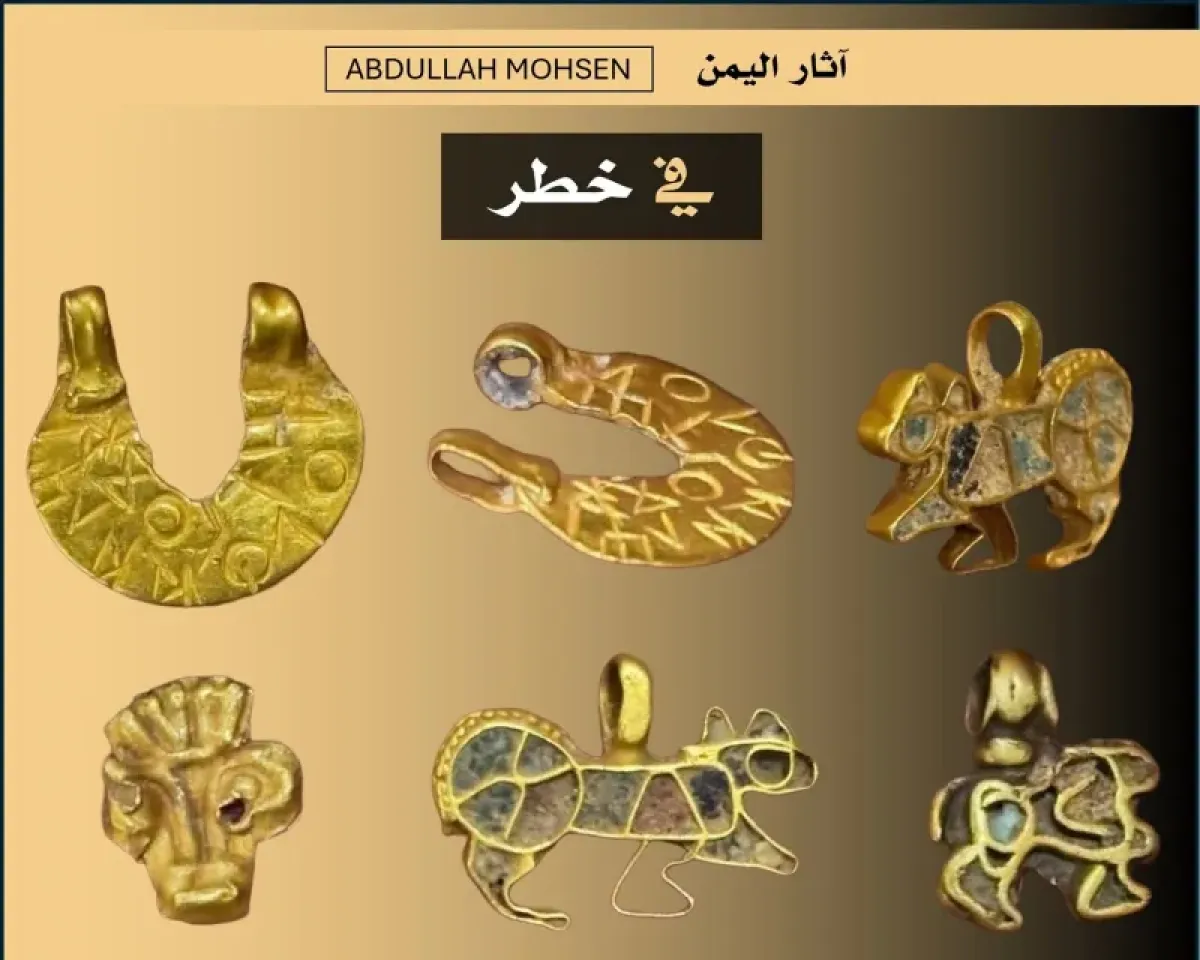
A Yemeni antiquities expert has warned of a significant escalation in the smuggling of the nation's cultural heritage, following the recent surfacing of three distinct groups of ancient gold jewelry within a single week. This alarming development underscores the ongoing depletion of Yemen's historical legacy, exacerbated by a lack of effective official intervention to safeguard remaining treasures.
Abdullah Mohsen, a researcher specializing in trafficked Yemeni antiquities, described the recent appearance of these artifacts as a dangerous trend. He highlighted that the latest collection represents the third group of Yemeni gold jewelry to be circulated or exhibited in just seven days, a pace he characterized as unprecedented since the beginning of the year. Mohsen questioned the scale of pieces being illicitly sold and smuggled out of the country, given that such a substantial quantity has become visible in such a short period.
The researcher detailed that the displayed pieces exhibit authentic Yemeni characteristics, mirroring artifacts previously seen in international auctions and private collections. These include a gold necklace in the form of a lion, sold in September 2022, a crescent-shaped amulet housed at the Dar al-Athar al-Islamiyyah in Kuwait, and a bull-head amulet similar to an item sold from the Shlomo Moussaieff collection at an auction in Jaffa (Tel Aviv).
Mohsen explained that these artifacts exemplify the high level of artistry achieved in ancient Yemen. He noted that the lion necklace was crafted using the cloisonné technique, a precise decorative method involving the creation of metal partitions filled with colored glass or ornamental materials, which is a recognized style in ancient Yemeni art. Similar decorative elements have been found in botanical motifs preserved at the Aden Museum and were prevalent during the Roman and Sasanian periods.
He further elaborated that the crescent amulet is recognized as one of the most significant religious symbols in ancient Yemen, often inscribed with prayers for protection and holding profound spiritual meaning. The bull's head, conversely, is identified as one of the most common ancient Yemeni amulets, depicted in a recurring artistic style that reflects the cultural identity of Yemeni civilization. This stylistic approach is consistent with stone and bronze carvings discovered at various Yemeni archaeological sites.
Mohsen concluded that the repeated appearance of these artifacts in such a short timeframe has moved beyond a cause for concern to an issue demanding urgent official intervention. He called upon the relevant authorities to initiate thorough investigations into the origins and smuggling routes of these items, and to implement practical measures to halt the drain of the national heritage. He emphasized that the continued outflow of antiquities represents the loss of critical chapters in Yemen's history, warning that each passing day without concrete action provides further opportunity for smuggling networks to illicitly traffic more treasures that Yemen may be unable to recover in the future, given the growing illegal trade in its cultural heritage.