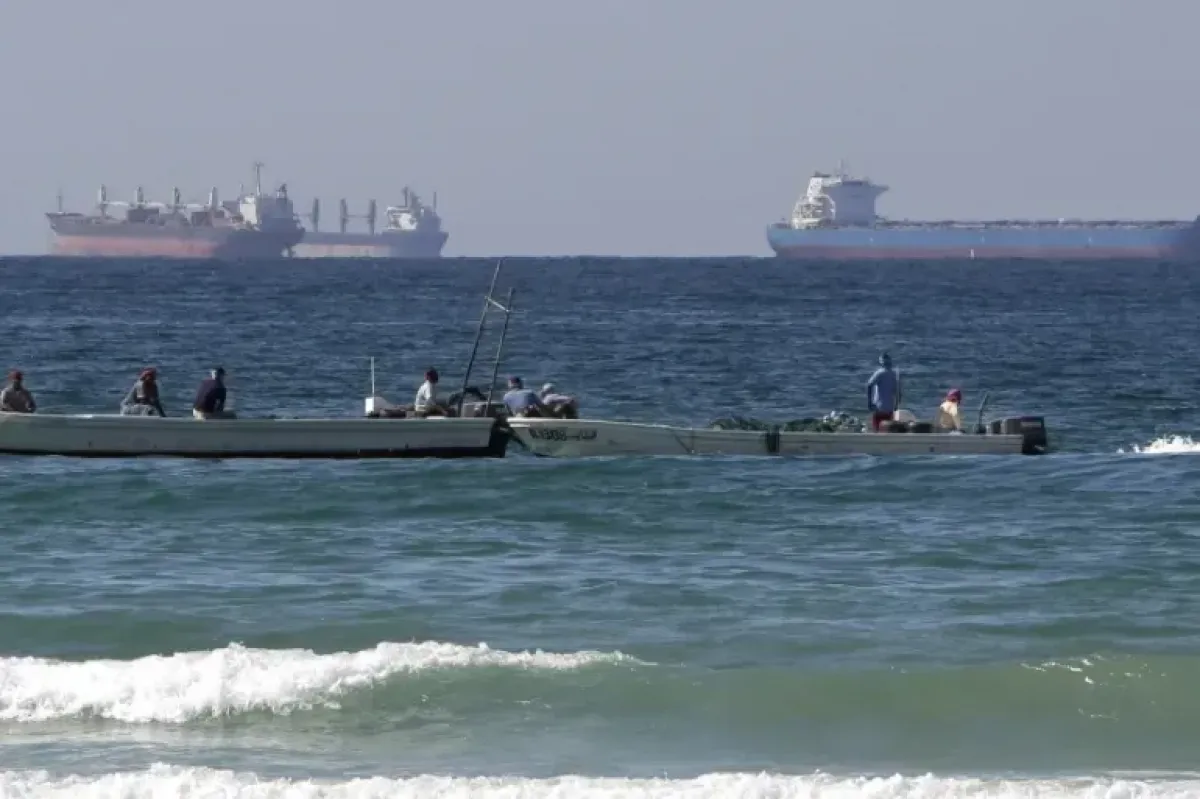
International concerns are escalating over the potential economic repercussions of Houthi militia threats to close the Bab al-Mandab Strait, amidst heightened tensions between the United States and Iran. This situation signals Tehran's potential use of the militia to jeopardize one of the world's most critical maritime routes, potentially triggering a new crisis in energy markets and international trade.
The current escalation follows shipping data indicating the increasing importance of the Bab al-Mandab Strait for global oil trade in recent months. Kpler reported that average oil flows through the strait reached 7.4 million barrels per day in June, a significant increase from 4.2 million barrels per day in the same period last year. This surge reflects the recovery of some maritime traffic after security disruptions and accounts for approximately 7 percent of global oil production. The Bab al-Mandab is a strategic artery connecting the Red Sea to the Gulf of Aden and the Indian Ocean, used daily by hundreds of commercial vessels and oil tankers traveling from the Arabian Gulf to Europe and North America. It also represents the shortest route between Asia and Europe via the Suez Canal, making any disruption directly impactful on the global economy.
Fears have intensified following reports of direct Iranian instruction to the Houthi militia to prepare for closing the strait if Iranian energy facilities are targeted by American attacks. This coincides with threats made by U.S. President Donald Trump to target Iran's energy infrastructure as part of the escalating military exchanges between the two nations. Analysts suggest that the threat to Bab al-Mandab is no longer confined to the Yemeni conflict but has become an integral part of a broader regional struggle. Iran appears to be expanding the confrontation by utilizing its allied armed groups to threaten international trade and energy routes, shifting the crisis from a military dimension to a global economic one.
Experts emphasize that any attempt to disrupt navigation in the strait would not only affect Saudi Arabia or regional states but the entire global economy, given the international markets' reliance on the stability of this vital maritime passage. Wael Makarem, Chief Financial Market Strategist at Exness, warned that simultaneous disruptions in both the Strait of Hormuz and Bab al-Mandab would impose unprecedented pressure on global supply chains. He anticipates a direct consequence of increased oil prices, reduced crude tanker availability, higher maritime insurance costs, and escalated shipping freight rates.
Makarem explained that shipping companies would be compelled to reroute vessels via the Cape of Good Hope in South Africa, a significantly longer journey than transiting the Red Sea and Suez Canal. This would extend transit times by over two weeks in some cases, increasing fuel consumption and operational costs, ultimately affecting consumer prices globally. Dr. Anas Al-Hajji, an energy economics expert, believes the real danger lies not in a formal declaration of closure but in a limited security incident targeting an oil tanker. Energy markets price in risk levels, not just actual damage. He posited that an attack on one or two tankers by drones or explosive boats could trigger panic in global markets, leading to a sharp rise in oil prices, even without an official Houthi directive.
Al-Hajji referenced past experiences where market reactions often exceeded the events themselves, as investors and shipping companies react to the potential for escalating risks. He highlighted that a more critical factor would be the decisions of global insurance companies. The previous Strait of Hormuz crisis, he noted, was not due to direct military closure but to European insurers refusing to issue policies for vessels operating in the region, effectively paralyzing navigation. He cautioned that a repeat scenario in Bab al-Mandab could be more severe, with insurers withdrawing coverage based on rising security risks, forcing many shipping companies to suspend voyages or change routes, even without an official closure order. Maritime insurance costs could surge to record levels, doubling the expenses for transporting oil and goods, impacting global commodity prices and exacerbating inflationary pressures on energy-importing economies.
Al-Hajji indicated that Saudi Arabia would be among the most affected if Western insurers cease covering vessels transiting Bab al-Mandab, despite possessing the East-West pipeline capable of transporting approximately seven million barrels per day to its Red Sea ports. He clarified that nearly five million barrels per day from these quantities are shipped from western ports to Asian markets, making continued navigation through Bab al-Mandab essential for supply delivery. Conversely, Russian oil is expected to be a primary beneficiary, as it relies on non-Western insurance and shipping systems, enabling it to continue exports even if European insurers withdraw. It would also benefit from higher global prices without needing to increase production.
The implications of any disruption in Bab al-Mandab extend beyond oil trade, as a significant volume of container and general cargo trade between Asia and Europe passes through the strait. Any closure or reduction in maritime traffic would increase shipping costs and delay the arrival of goods and raw materials in global markets. This would also affect trade through the Suez Canal, further straining global supply chains still recovering from successive international crises, including the COVID-19 pandemic and the war in Ukraine. Observers view the Houthi threats to close Bab al-Mandab as an escalation that transcends the Yemeni arena, posing new risks to the global economy. They assert that the security of this maritime passage is no longer just a regional issue but a pivotal element in the stability of global energy markets and trade. Any future battlefield escalation will determine the direction of oil prices and the future of navigation in one of the world's most sensitive strategic chokepoints.