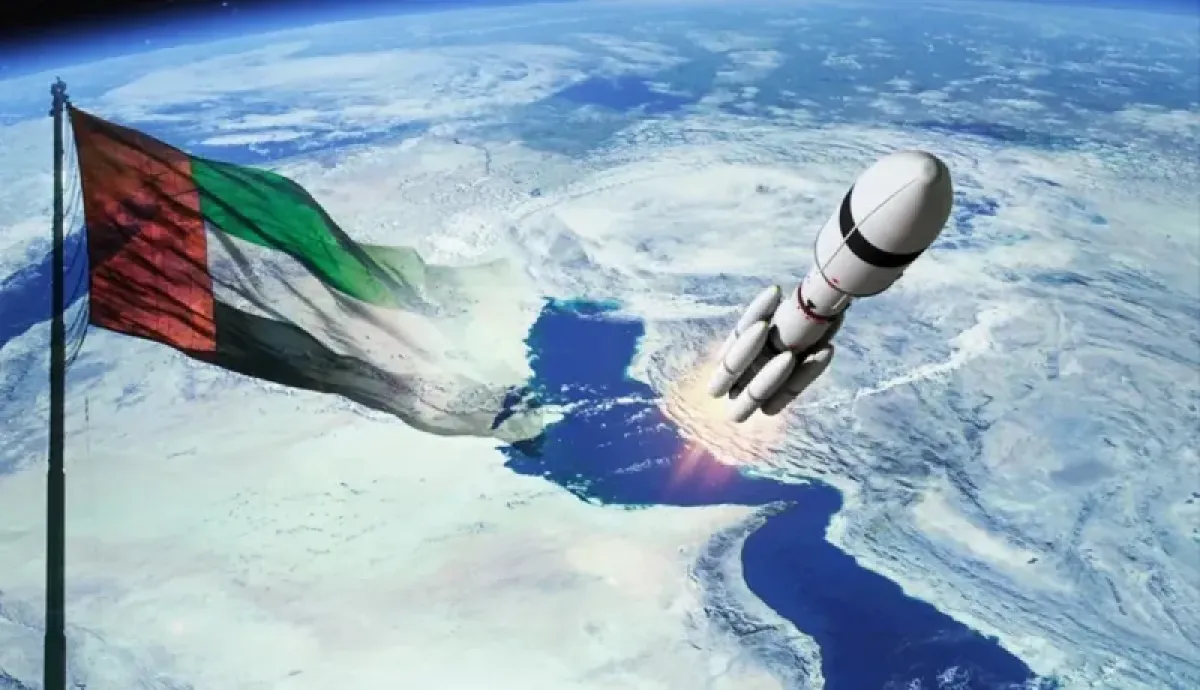
The United Arab Emirates has significantly bolstered its global standing in the space sector following the successful completion of a key operational phase for its LEO-NAV-1 satellite mission. This achievement underscores the UAE's rapid transition from executing space missions to developing advanced space navigation technologies and establishing a comprehensive national system led by Emirati experts and engineers.
The National Space Science and Technology Center at the UAE University announced on Monday that the LEO-NAV-1 satellite, launched on July 7th with support and funding from the UAE Space Agency, has successfully verified its navigation payload's performance. The satellite has demonstrated its capability to receive and process signals from low Earth orbit, marking its progression from initial operations to achieving its technical objectives. This success paves the way for the development of a new generation of navigation and positioning technologies.
This accomplishment represents a significant step in the UAE's strategy to solidify its presence in the space industry. The nation's space program is evolving beyond satellite launches and exploration missions to focus on developing advanced technological solutions. These solutions aim to support sectors such as transportation, communications, aviation, logistics, and disaster management, while also enhancing national autonomy in space navigation services.
The LEO-NAV-1 mission exemplifies the UAE's move towards investing in future technologies, particularly in developing navigation systems from low Earth orbit. These technologies are anticipated to play a crucial role in enhancing the accuracy of positioning services and expanding their applications across civilian, military, and economic sectors in the coming years.
This success is part of a continuous progression in the UAE's space endeavors, which began with establishing research institutions, developing scientific infrastructure, and implementing programs for national talent development. These efforts have led to significant achievements, including the exploration of Mars, the dispatch of Emirati astronauts to the International Space Station, and the development of scientific and developmental satellites.
The LEO-NAV-1 mission's success extends beyond its technical aspects, carrying significant national importance. Emirati engineers and researchers played a pivotal role in leading the project, with national cadres at the National Space Science and Technology Center taking responsibility for the satellite's design, operation, and performance monitoring from development and testing through to orbital deployment.
This reflects the success of the UAE's strategy in investing in its human capital, recognizing it as the fundamental pillar for sustainable space achievements. By empowering national researchers and engineers with practical experience in managing complex space projects, the nation is building a scientific and technical foundation capable of leading future programs. This approach indicates that the UAE is not only aiming to acquire modern technologies but also to localize knowledge and transfer technology, thereby strengthening its capacity to develop national space projects with strategic and economic value.
The LEO-NAV-1 project also served as a successful model for international cooperation, executed in partnership with several French institutions and companies specializing in space technologies. This collaboration facilitated the exchange of expertise, accelerated the development of technical solutions, and provided practical training opportunities for Emirati talent on the latest applications in the sector. These partnerships align with the UAE's approach of combining national capacity building with leveraging global expertise, thereby speeding up technology transfer and fostering a comprehensive space ecosystem capable of competing internationally.
Specialists view the LEO-NAV-1 mission's success as an additional step in diversifying the UAE's economy, which is increasingly relying on knowledge-based and innovative sectors, prominently including space. This sector offers extensive opportunities in scientific research, artificial intelligence, advanced manufacturing, telecommunications, and data analysis. The development of space navigation technologies also contributes to the nation's self-sufficiency in space services and reduces dependence on traditional systems, granting greater flexibility in developing national applications that serve its developmental and strategic needs.
In the context of accelerating global competition in the space sector, the success of LEO-NAV-1 highlights the maturity of the UAE's space program and its transition to developing advanced technologies rather than merely utilizing them. This enhances the UAE's position as a contributor to the space technology industry, supported by a favorable legislative environment, continuous investment in scientific research, and a broad network of international partnerships. This achievement represents more than just a technical success; it embodies a long-term Emirati vision aimed at building an integrated space industry led by national talent, supporting an innovation-driven economy, and strengthening the nation's standing among key players in the global space economy in the coming decades.