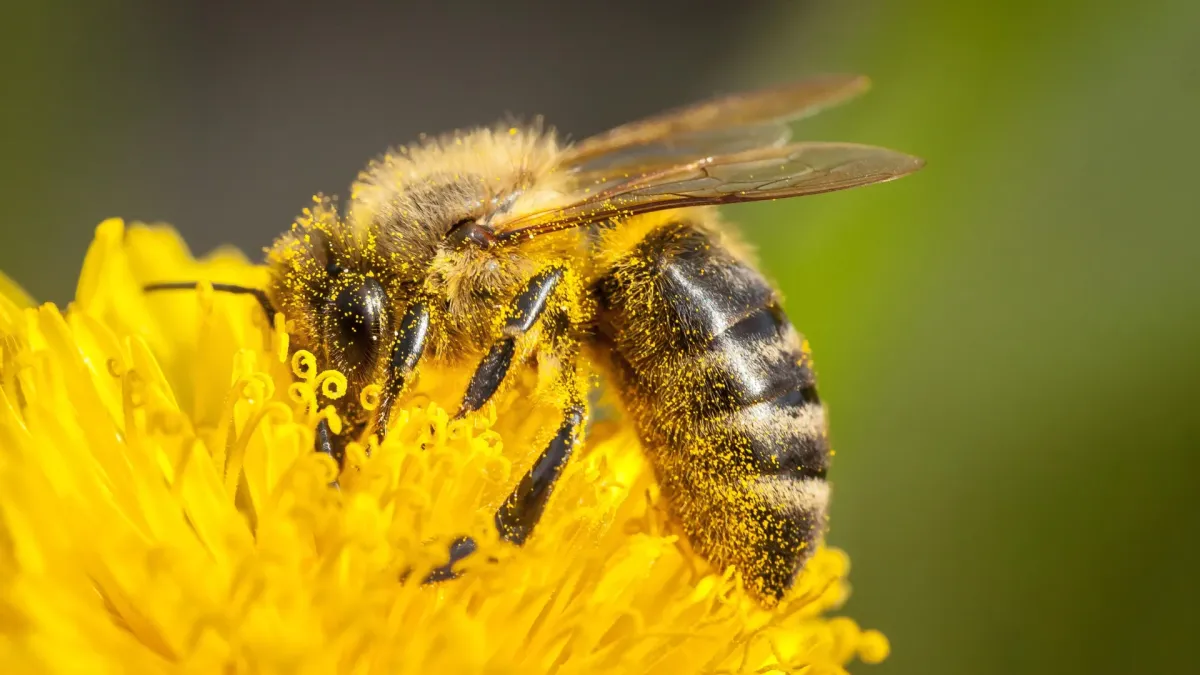
Honeybees possess a surprising ability to fine-tune their eating habits based on the balance of essential amino acids in their diet, a new University of Oxford study has found. This self-regulating feeding behavior could be a key mechanism for protecting themselves when pollen, their primary protein source, doesn't offer the ideal nutritional mix.
Published in Current Biology, the research highlights a significant disconnect: many types of pollen simply don't provide the essential amino acids – the protein building blocks that bees can't produce themselves – in the proportions needed for optimal bee health. This discovery has major implications for conservation efforts, potentially guiding how we plant flowers to better support pollinator populations.
Researchers compared the amino acid makeup of honeybee tissues with pollen from numerous UK plant species. They also created artificial diets mimicking either the pollen's nutrition or the bees' own tissue composition. In lab experiments, bees fed diets closer to their own tissue's nutritional profile ate more, gained more weight, and prioritized protein-rich food.
The study zeroed in on histidine, an essential amino acid required by bees in smaller amounts. When artificial diets had high levels of histidine relative to other crucial amino acids, bees significantly cut back their food intake, including both protein and carbohydrates. This suggests a post-digestive feedback system might be at play, preventing bees from consuming potentially harmful excesses of certain nutrients, rather than just overeating to compensate for deficiencies.
Honeybees also appear to have a clever workaround for nutritional shortcomings, especially when feeding their young. By collecting pollen from various sources to create "bee bread," and then processing it into nutrient-rich secretions like royal jelly via nurse bees, they create a more balanced meal. This processed food offers a much closer match to the essential amino acid needs of larvae, maximizing their growth.
However, this sophisticated system isn't universal. Many wild bee species, like bumblebees and solitary bees, feed pollen directly to their offspring. In environments with limited plant diversity, these bees may struggle to secure the right amino acid balance, facing a greater nutritional challenge. The findings emphasize that planting for pollinators should go beyond just providing abundant flowers; a diverse range of pollen sources is crucial for bees to get the balanced diet they need to thrive.