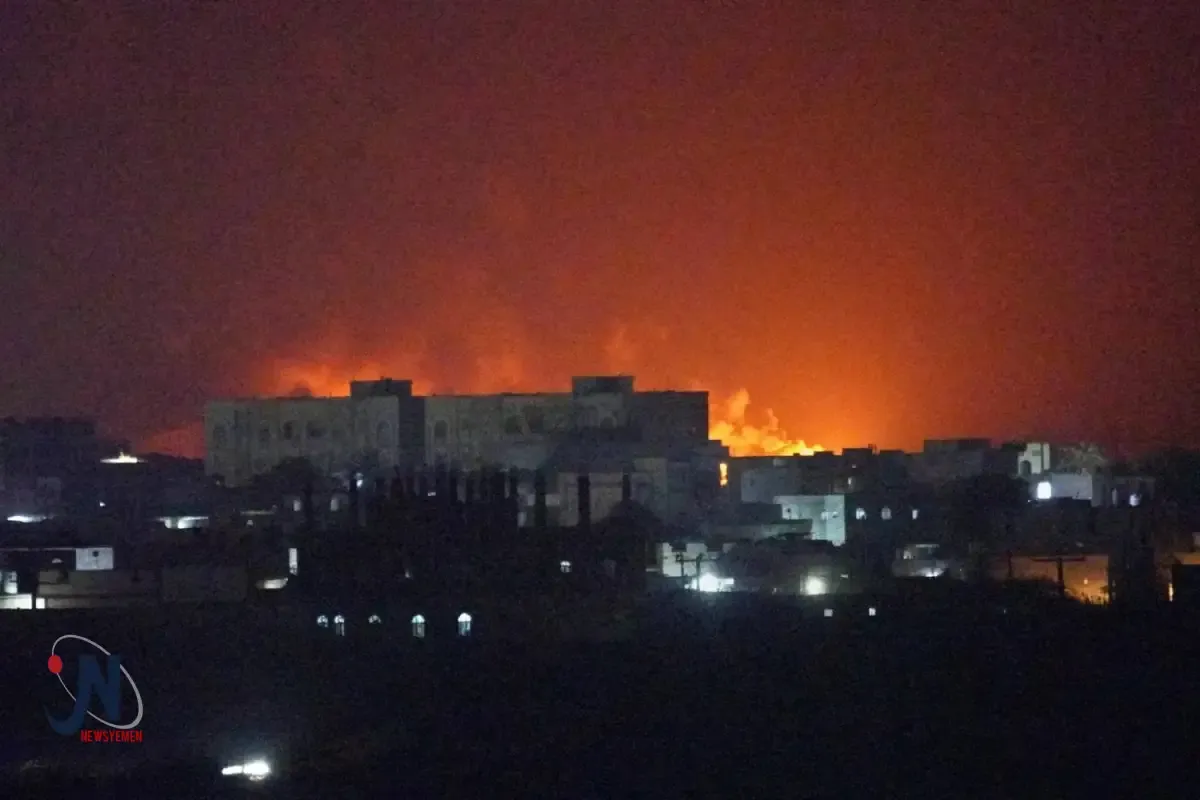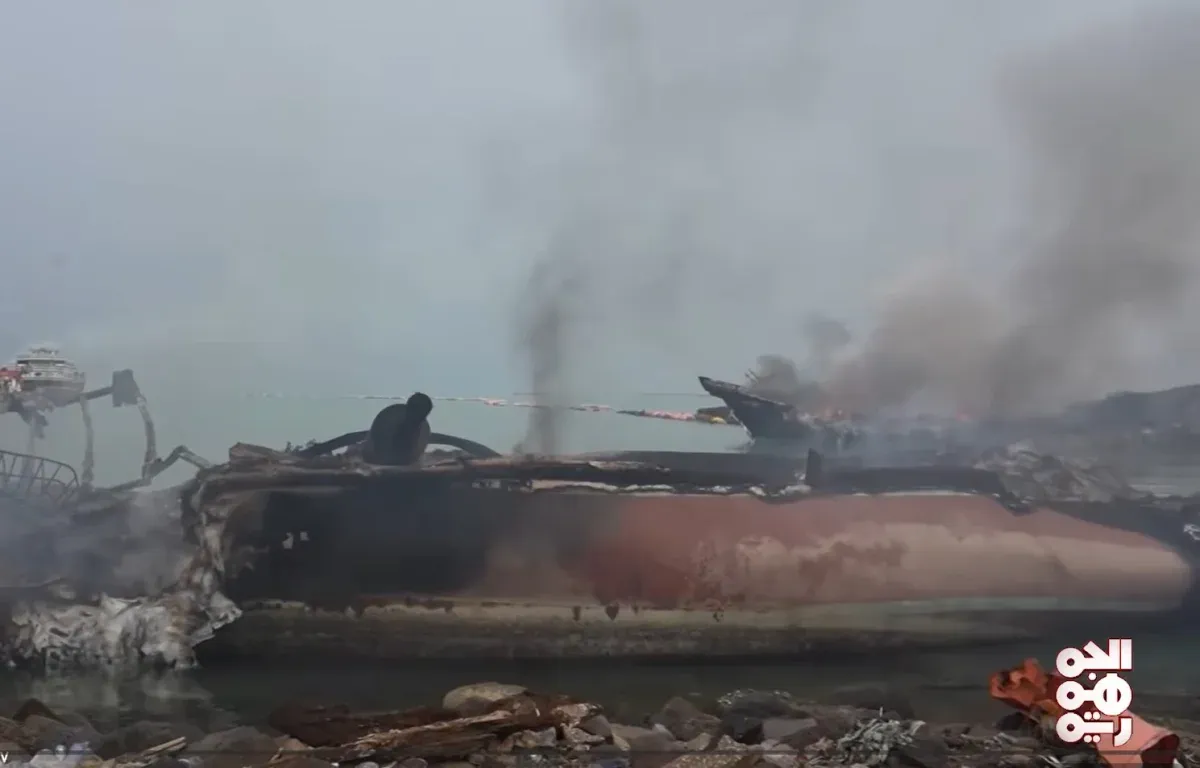
Houthi attacks in recent days have escalated beyond specific military targets, now encompassing a more perilous strategy of striking the economic and service lifelines of Yemeni government-controlled areas, including ports, ongoing development projects, commercial vessels, and maritime routes. The port of Mokha has been at the forefront of these assaults, enduring a concentrated series of missile and drone attacks that have rendered it non-operational and halted its commercial and navigational activities.
The director of Mokha port, Abdulmalik Al-Sharaabi, confirmed extensive damage to the facility, affecting its docks, offices, residences, and service workshops. Reuters reported that the port ceased all commercial and maritime operations following the attacks, with initial damage estimates reaching approximately $16 million. Mokha's significance extends beyond its port; its proximity to the Bab al-Mandab strait means any disruption to its activities has repercussions that transcend the city, impacting trade and supply movements along the western coast. Previous Houthi attacks on the city on August 9 resulted in seven deaths and 30 injuries, according to the Yemeni army cited by Reuters. While the Houthi group claimed to have targeted military gatherings and weapons depots, civilian areas and infrastructure also sustained damage.
Al-Sharaabi further detailed that Mokha port had been subjected to seven consecutive ballistic missile and drone attacks since last Sunday, resulting in the deaths of three civilians and four port security personnel, in addition to significant damage to its infrastructure. The strikes reportedly targeted commercial offices, employee housing, warehouses, and the port's dock, before expanding to include a multi-service maritime vessel, leading to its sinking. The central logistics workshop, residential facilities, and the dock were also repeatedly targeted. On the third day, an attempt to strike a dredger used for port development hit the dock instead, coinciding with renewed attacks on employee housing. The economic impact is substantial, affecting the daily wages of approximately 1,300 workers and displacing 128 port employees and 75 staff from state institutions whose housing was damaged.
This pattern of targeting raises questions beyond the Houthi narrative of military objectives within the port. The distribution of attacks across offices, warehouses, residences, workshops, docks, and service facilities suggests a broader intent. The escalation has not been confined to Mokha port; the Bab al-Mandab airport in the Dhubab district was also targeted by two ballistic missiles, an attack occurring near one of the world's most sensitive maritime passages. While the director general of the district, Abd al-Qawi Al-Wajih, reported no casualties or material damage, the targeting of a civilian facility linked to transport and services adds a new dimension to the escalation. Infrastructure intended to form the bedrock of economic recovery and service improvement in liberated areas now faces direct threats, hindering development opportunities and increasing investment and reconstruction risks. The targeting of a facility undergoing development for civilian transport sends a message that even nascent projects can become targets simply by being located in areas outside Houthi control.
This strategic targeting coincides with attacks on commercial shipping in the Red Sea and Bab al-Mandab. A Houthi attack on the commercial vessel "Tohama" in Bab al-Mandab resulted in casualties among foreign sailors and Yemeni rescue personnel. This forms a cohesive pattern: attacks on ports, threats to civilian facilities near Bab al-Mandab, and assaults on commercial ships in the same maritime corridor. The consequences extend beyond physical damage to trade, insurance, transport, and supply chains. Reuters has already documented increased navigation risks and shifts in shipping company strategies, with major tankers avoiding the Bab al-Mandab strait due to escalating threats.
The targeting of Mokha is intrinsically linked to its geographical location and growing importance on the western coast. As a commercial maritime outlet near Bab al-Mandab, it has become a significant hub for economic and service activities in areas outside Houthi control. These strikes can be interpreted as an attempt to increase the cost of stability in Mokha and weaken its potential to evolve into a more effective commercial and service center. The disruption of the port affects not only merchants but also the livelihoods of thousands of workers in related sectors, increasing the cost of goods and making new investment projects riskier. Thus, the potential economic objective of these attacks is as significant as any stated military aim: to destabilize adversarial regions, raise the cost of commercial activity, and demonstrate that economic stability on the coast can be undermined by missiles and drones.
Military analyst Waddah Al-Dubeish suggests that the intensity of attacks on Mokha challenges the Houthi narrative regarding military targets, noting that the visible results are concentrated on civilian and economic infrastructure. He posits that the targeting of Mokha is tied to its strategic and economic importance and its proximity to Bab al-Mandab. From this perspective, Mokha is more than a coastal city for the Houthis; it is a vital center on the western coast, with a port that serves as an economic gateway potentially reducing the reliance of liberated areas on Houthi-controlled ports. Furthermore, the city is a center of national resistance, making economic and service pressure a potential tactic to disrupt this center and weaken its growth and stability. Regardless of the Houthi claims about military targets, the tangible outcomes are clear: a non-operational port, damaged economic facilities, a targeted airport project, and commercial vessels becoming targets in Bab al-Mandab. These outcomes distinguish Houthi escalation from mere military engagement, directly impacting citizens, traders, workers, and ship owners before any military or political calculus.
The United Nations has warned that Yemen faces its most significant risk of returning to full-scale war since the 2022 truce, amid escalating military activity and renewed attacks on commercial shipping in the Red Sea and Gulf of Aden. Journalist Majed Al-Daari interprets the destruction of Mokha port as having dimensions beyond military action, potentially driving ships, traders, and shipping companies to shift their activities to Houthi-controlled Hodeidah port. Regardless of intent, the economic outcome remains consistent: damage to Mokha port increases the cost of trade for beneficiary regions and intensifies pressure on alternatives. This elevates the destruction of economic infrastructure beyond a mere military strike, as it reshapes the landscape of commercial activity based on power dynamics, turning ports, roads, and service facilities into instruments of conflict. Ultimately, the Yemeni citizen bears the brunt of port destruction and navigation disruptions. When the port ceases operations, shipments are delayed. When ships are endangered, insurance and transport costs rise. When service projects become potential targets, investors hesitate, and development opportunities recede. When trade is disrupted, the cost of goods increases, and job prospects dwindle. Therefore, the targeting of economic and service infrastructure cannot be considered collateral damage; the repeated attacks on ports, facilities, and navigation render the economy itself a battlefield. If this approach persists, the greatest danger will not be the number of damaged facilities but the transformation of Yemeni regions into environments hostile to trade, investment, and development, trapping the population in a war economy. The battle for the western coast, in this context, is no longer solely for military positions but for ports, ships, roads, airports, and employment opportunities. This situation necessitates a more serious international response to protect civilian facilities and commercial navigation and prevent Yemeni infrastructure from becoming hostage to the military conflict.