Recent United Nations calls for de-escalation in Yemen coincide with rapid field developments and repeated Houthi attacks, sparking governmental criticism and warnings of a scenario similar to the 2018 Hodeidah agreement, which halted government advances.
Yemeni officials and commentators perceive the UN's current approach, through generalized calls for calm without identifying the instigator of escalation, as potentially leading to a repetition of the Stockholm Agreement's outcome. In 2018, international intervention ceased military operations in Hodeidah, allowing Houthi militias to maintain control of the city and its ports, which they subsequently used to regroup and bolster their military capabilities.
The Hodeidah experience of 2018, where government forces were on the verge of capturing the city and its strategic ports before UN-led mediation resulted in the Stockholm Agreement, is a stark precedent. This agreement halted military operations but left the Houthis in effective control, a situation widely seen in Yemen as an opportunity for the group to reorganize and strengthen its military and economic presence.
The Yemeni government accuses the Houthi militia of exploiting resources from controlled ports and areas to finance their military activities, including smuggling weapons and military equipment from Iran and Africa. Government sources view current UN actions as a test of the international community's ability to address the root causes of escalation rather than equating attackers with defenders.
Yemeni Minister of Information, Muammar Al-Eryani, questioned the timing of the UN envoy's latest statement, asking why calls for restraint were absent during weeks of Houthi escalation, which included shelling civilian areas and consolidating forces. He criticized the narrative that equates government forces with the Houthi militia, stressing that the Yemeni state was compelled to defend its citizens and territory.
In a more direct critique, Minister of Legal Affairs, Ishraq Al-Maqtari, warned against repeating the Hodeidah scenario, which she argued stalled government progress and prolonged Houthi violations. She urged the UN envoy to acknowledge the human cost and property damage resulting from Houthi attacks, rather than issuing general diplomatic statements that could compromise perceived impartiality.
Journalist and writer Nashwan Al-Othmani called on the Yemeni leadership not to allow national and military decisions to be held hostage by international and regional mediations. He argued that past truces have benefited the Houthi project by allowing them to consolidate influence and rearm, emphasizing the need for unified political and military action to recapture Sanaa and restore the state.
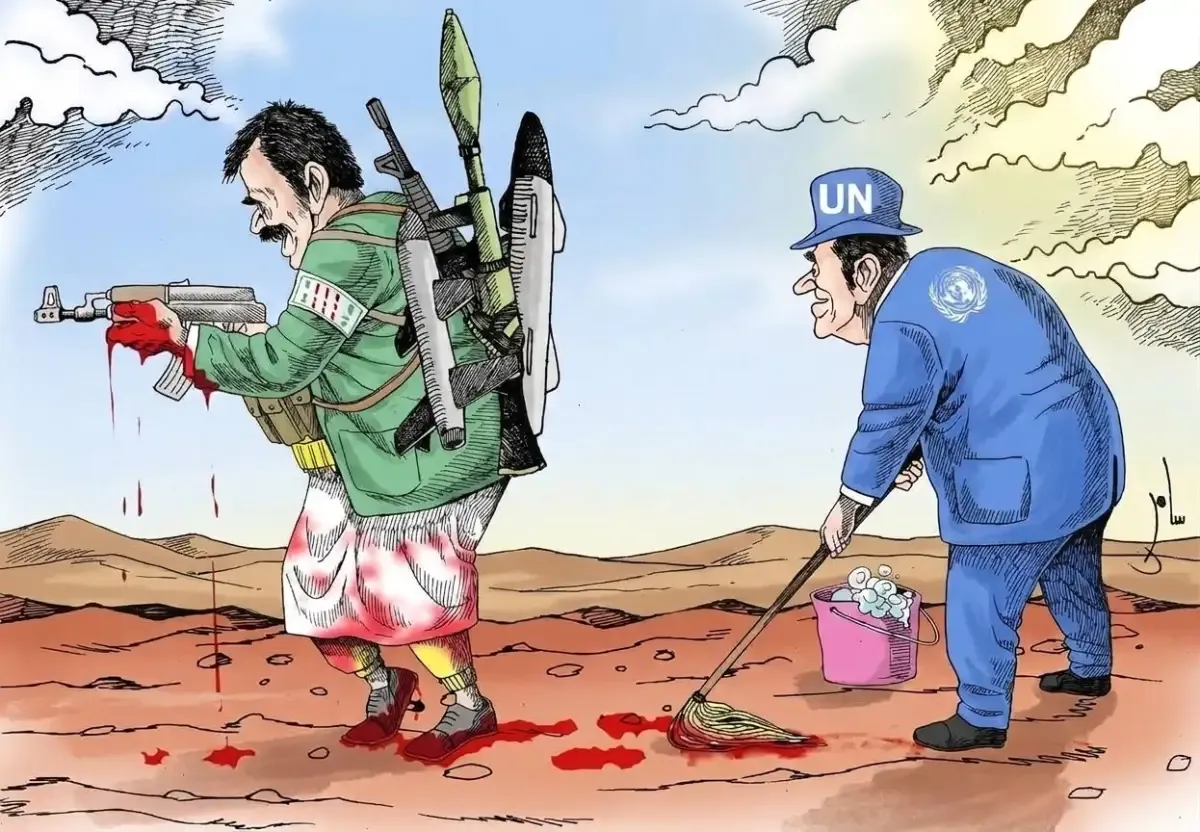
These differing perspectives place the UN at a critical juncture in the Yemeni conflict. While international mediation typically prioritizes de-escalation and civilian protection, the Yemeni government and various political and media figures argue that blanket calls for calm are insufficient without clearly identifying the aggressor and applying direct pressure. The enduring memory of the Hodeidah agreement amplifies concerns that any new de-escalation could inadvertently empower the Houthis. The UN's credibility hinges on its ability to move beyond general appeals and address the specific drivers of escalation, identify responsibility, and exert pressure on those threatening civilian lives and international navigation, especially as field dynamics evolve and the goal of restoring the state gains momentum.