Recent developments along Yemen's western coast suggest the Houthi militia may be establishing a new, multifaceted supply network, extending from Sanaa to the strategic port of Ras Isa. This shift indicates a potential evolution in their logistical capabilities beyond mere territorial control.
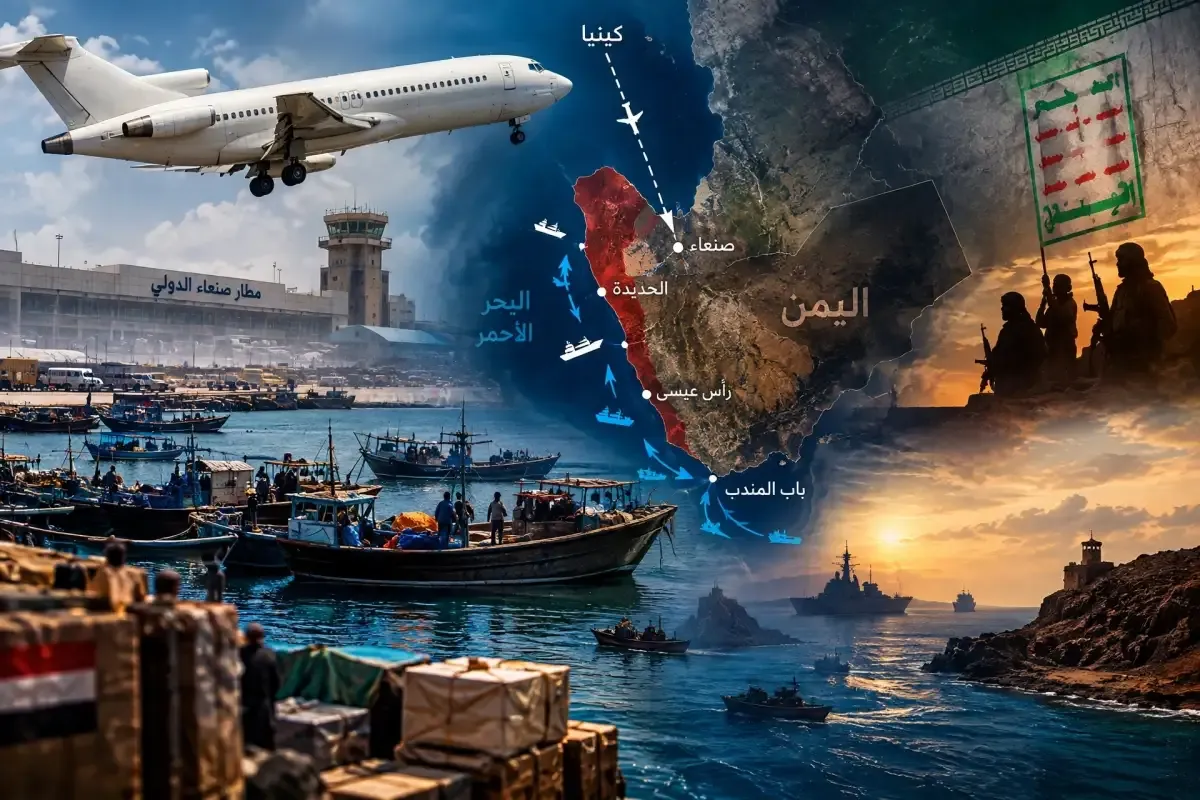
The escalating Houthi presence on the Red Sea coast is prompting questions about how military equipment, fuel, and expertise will be managed and delivered to their controlled areas. Noteworthy recent events include increased air traffic at Sanaa Airport, featuring a cargo plane from Kenya, and reports of heightened activity by wooden vessels off the western coast, delivering shipments to Houthi-held territories in Hodeidah.
While these simultaneous occurrences do not definitively confirm a singular military supply chain or prove every aerial or maritime movement involves arms smuggling, their convergence with the Houthi territorial gains on the western coast amplifies the significance of these logistical questions. The evolving geography imposed by the Houthis on the Red Sea is becoming a critical factor in understanding the future trajectory of the conflict.
The airport in Sanaa has seen a notable increase in air traffic, including a cargo flight from Kenya. This activity, occurring alongside maritime movements, raises concerns about the potential establishment of diversified Houthi supply channels utilizing air, sea, and informal land routes. The focus is not solely on the cargo of a specific flight but on the broader strategy of creating multiple, interconnected supply conduits.
The western coast offers the Houthis greater logistical flexibility than Sanaa Airport, particularly with their expanded control over the coastline. Yemeni military and security sources report the sequential arrival of wooden ships at coastal areas in Hodeidah, unloading cargo at remote locations under tight security. Maritime security data indicates a rise in small vessel traffic associated with smuggling operations towards Houthi territories, possibly originating from Iran and the Horn of Africa. The use of small vessels is strategically advantageous in complex maritime environments, allowing for proximity to multiple coastal areas and evasion of major commercial ports.
Ras Isa emerges as a critical node in this potential network. Its Red Sea location, coupled with existing oil infrastructure and port facilities, positions it as a potential logistical hub. Security reports, supported by satellite imagery, suggest increased vessel activity and newly established coastal installations in the area, with cargo being unloaded away from official ports. If independently verified, these developments could signify a transition from sporadic smuggling to a more organized logistical infrastructure, requiring reception sites, storage, maritime routes, internal transport, and security for the shipments.
The recent military shifts on the western coast are crucial, as any change in control expands the geographical areas the Houthis might exploit for maritime movements. This presents a broader challenge for monitoring and interdiction efforts by governmental forces and regional powers operating along a vast, open coastline, necessitating a comprehensive security approach encompassing ports, natural anchorages, islands, and sea lanes. The geographical factor thus becomes a significant military consideration.
Understanding Houthi supply lines requires acknowledging Iran's role. International reports have consistently pointed to Iranian support for Houthi arms, missile components, drones, and technical expertise, though Tehran denies direct operational control. The G7 has reiterated its criticism of Iranian support, urging Tehran to cease its armament and backing of the group, citing broader implications for international navigation and trade security. Houthi officials have also acknowledged military cooperation with Iran and its regional allies, extending the issue of supply beyond Yemen's borders.
Modern supply methods may not exclusively involve complete weapons shipments. The transfer of components, electronic equipment, spare parts, or dual-use materials that can be assembled or developed locally complicates interdiction efforts compared to intercepting fully loaded arms shipments. The current indicators, if interconnected, suggest a gradual shift from reliance on specific supply points to a more dispersed model involving cargo flights from East Africa, maritime traffic between the Horn of Africa and Yemen, small coastal facilities, official ports for commercial cover, and internal transport networks reaching Houthi-controlled areas.
The proximity of these potential supply routes to the Bab el-Mandeb strait amplifies the sensitivity of the situation. This strait is a vital maritime passage, and any shifts in control on its shores or nearby islands could impact international shipping and trade. Control over the coast grants the Houthis enhanced maritime domain awareness, though not necessarily complete control. Establishing advanced coastal positions provides greater geographical depth and maneuverability.
The current scenario extends beyond conventional military operations. With the evolving territorial control, future efforts may focus more intensely on securing supply routes and maritime access points and preventing their military utilization. If land control is combined with new maritime points, increased small vessel activity, and diversified air and sea routes, the challenge for government forces will involve dismantling a potential logistical system operating through multiple, adaptable channels, rather than merely intercepting individual shipments.