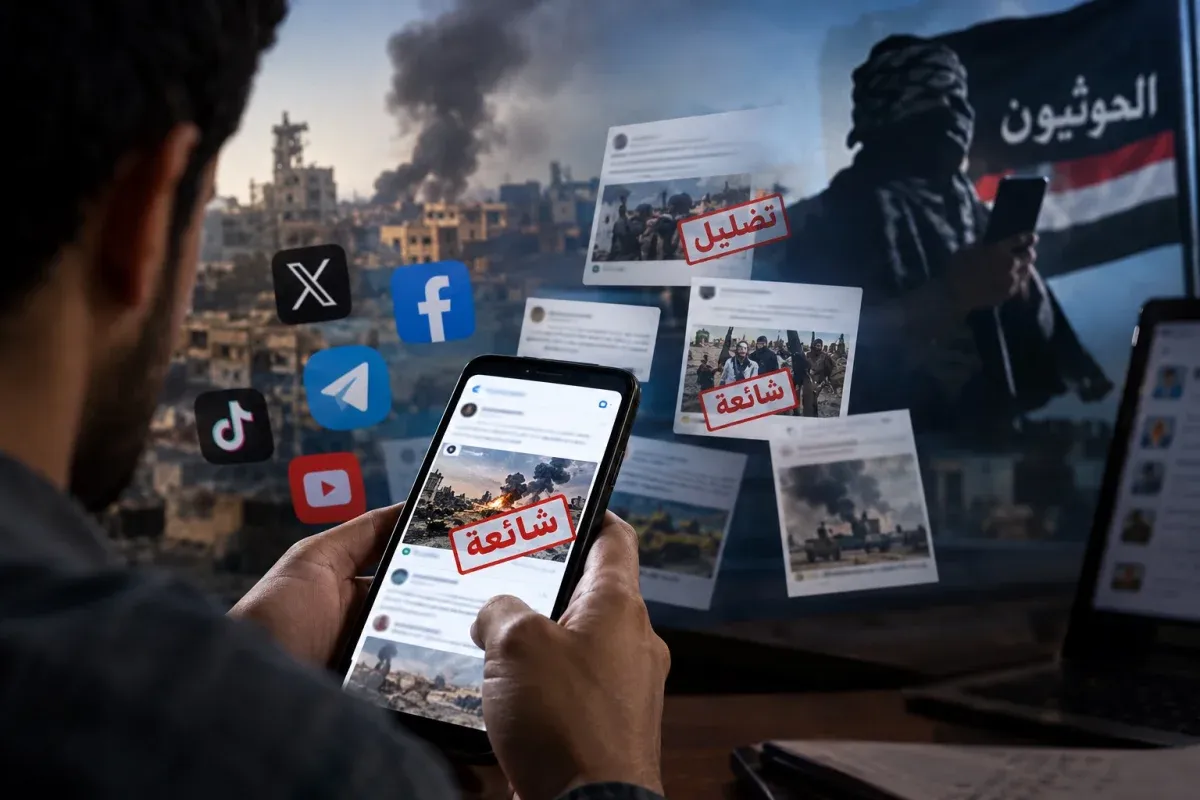
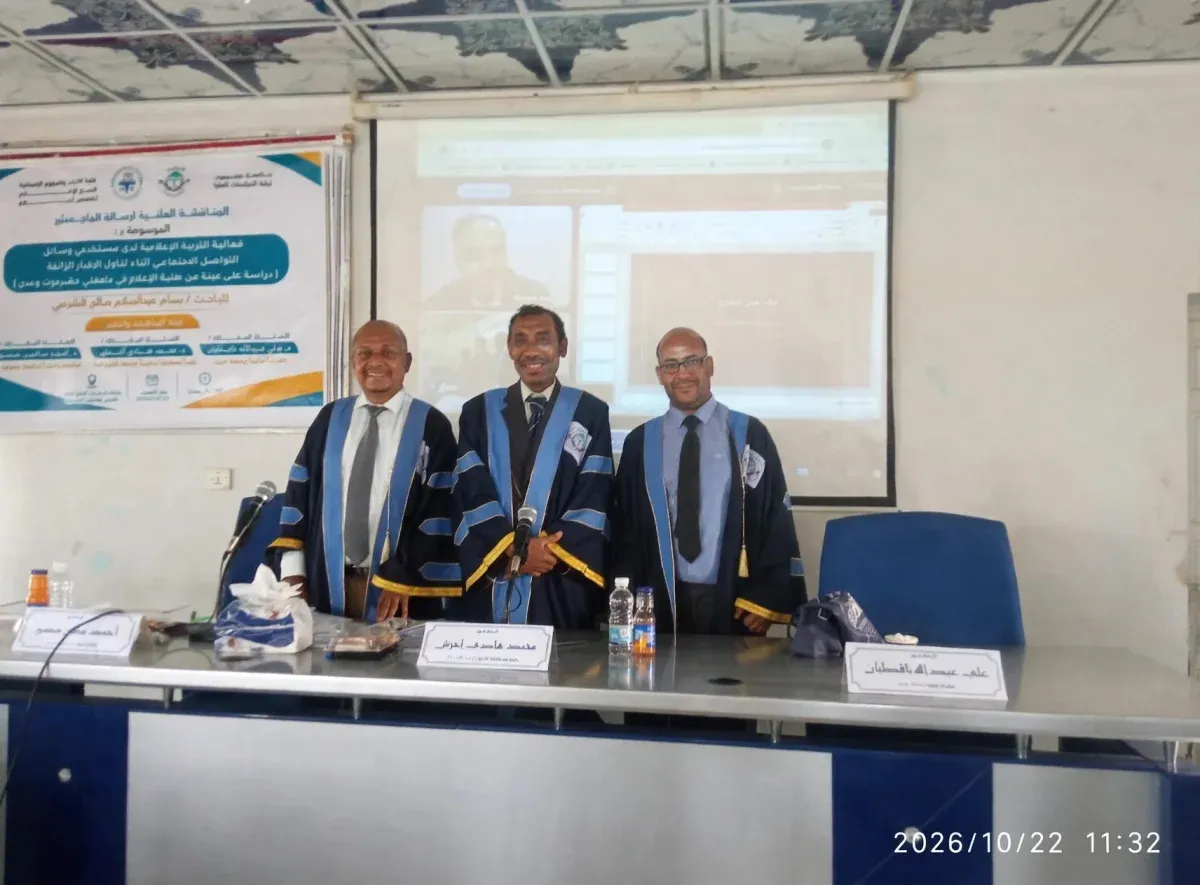
A master's thesis at Hadhramout University has revealed significant challenges facing media literacy in combating the spread of political fake news. The study, presented by researcher Bassam Abdulsalam Saleh, underscored issues such as the lack of oversight on news accuracy, the escalating dissemination of misinformation, and the critical need to enhance users' critical thinking and media verification skills.
The thesis, titled "The Effectiveness of Media Literacy Among Social Media Users When Dealing with Fake News," examined the awareness levels of media students at Hadhramout and Aden Universities regarding mechanisms for handling fake news. It assessed their ability to differentiate between accurate and misleading information and to critically evaluate content circulated on digital platforms.
The research, which involved 241 male and female students from media faculties at Aden and Hadhramout Universities, found that the absence of news accuracy verification was a primary factor contributing to the perceived decline in the credibility of social media platforms. This was followed by the increased prevalence of fake news, indicating the difficulties users face in distinguishing reliable content from misinformation in the digital sphere.
While the study identified an awareness of the dangers of spreading unverified news as a positive indicator, it also noted a concern for content that incites hatred and a cautious approach towards political and sectarian material. This highlights the importance of critical tools for evaluating media messages and exposing misleading or inflammatory content. Furthermore, the research pointed to an understanding of social and media responsibility, including avoiding the dissemination of privacy-infringing visuals, and underscored the role of media literacy in fostering a more informed and responsible digital citizenry.
The findings suggest that mere awareness of fake news is insufficient; it must be coupled with practical skills in source verification, content analysis, and the use of digital fact-checking tools. The study recommends developing media student skills in analyzing content and identifying misinformation, conducting specialized training on digital verification, and integrating media literacy into educational curricula at all levels. It also calls for specialized units to monitor fake news, enforce legal frameworks, and promote professional ethics in content creation and dissemination.
In conclusion, the thesis posits that media literacy is a crucial element in equipping media students with the skills to analyze, critique, and verify information. Enhancing its effectiveness requires integrated academic, training, and awareness efforts to foster media responsibility, thereby reducing the circulation of misinformation and promoting the conscious and responsible use of social media.