The reappearance of Iran's envoy to the Houthi rebels, Ali Mohammad Rezaei, in Sanaa after a nearly two-year absence has ignited significant political and media debate. This development coincides with a notable escalation, including the announcement of a new air route between Tehran and Sanaa.
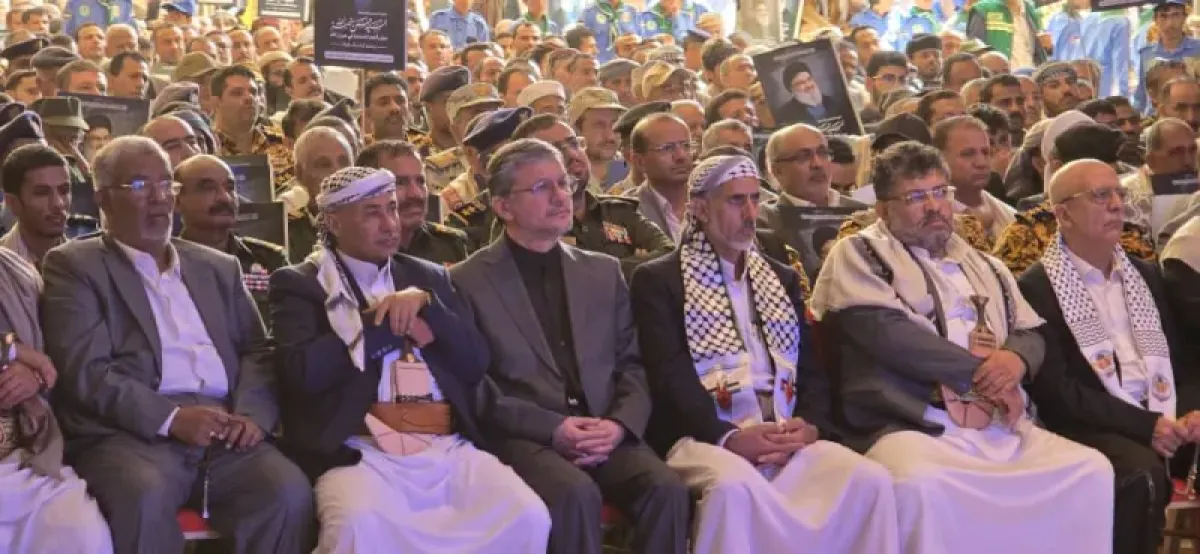
Rezaei's presence is widely interpreted as a signal of a new phase of coordination between Tehran and the Houthi movement. This is occurring amidst growing accusations that Iran's involvement in Yemen has extended beyond traditional diplomatic channels into security and military spheres. His meeting with Houthi official Abdul Wahid Abu Ras, appointed Deputy Foreign Minister in the internationally unrecognized Sanaa government, has further fueled speculation about the nature and objectives of the newly established air link.
Analysts question the potential dual use of Sanaa International Airport, suggesting that the new air route may serve purposes beyond civilian transit, particularly given the absence of robust international oversight on air traffic in the capital. Journalist Adnan Al-Jabri noted that Rezaei's return follows a period of absence since November 2024, and it is speculated he arrived on a recent Iranian flight. Information suggesting his departure last year with Revolutionary Guard experts and his subsequent return to Tehran only deepens the mystery surrounding his movements and role within Yemen.
Political activist Mohammed Al-Shamsi described Rezaei's presence as a reassertion of Iran's "military governor and Revolutionary Guard officer in Sanaa." He emphasized that the timing of Rezaei's visit and the landing of an Iranian aircraft in Sanaa raise serious questions about the existing coordination between Tehran and the Houthis. Al-Shamsi added that the meetings between Rezaei and Houthi leaders were accompanied by praise for the air route, framed as a "breach of blockade." Observers view this framing as an attempt to market a politically contentious move as a humanitarian initiative, despite ongoing international disagreements regarding the management and operation of Sanaa airport.
In parallel, Yemeni military sources assert that the recent Iranian flight to Sanaa was not humanitarian but carried individuals and experts affiliated with the Iranian Revolutionary Guard. Brigadier General Abdo Majli, spokesperson for the Yemeni Armed Forces, stated that this flight constitutes "direct interference in Yemeni affairs" and a clear violation of sovereignty, representing a continuation of Iranian military support for the Houthis. He warned that such flights pose a threat to regional security and maritime safety in the Red Sea and Bab al-Mandab Strait.
The return of Rezaei to the forefront in Sanaa is seen by many as indicative of a new phase in the recalibration of Iranian influence in Yemen, especially in light of regional political and security pressures on Tehran. Analysts point out that Yemen has become a central arena for regional power dynamics, where military and political dimensions intersect. With the ongoing conflict and stalled peace efforts, the situation in Yemen is likely to witness further escalation and complexity in the coming period.