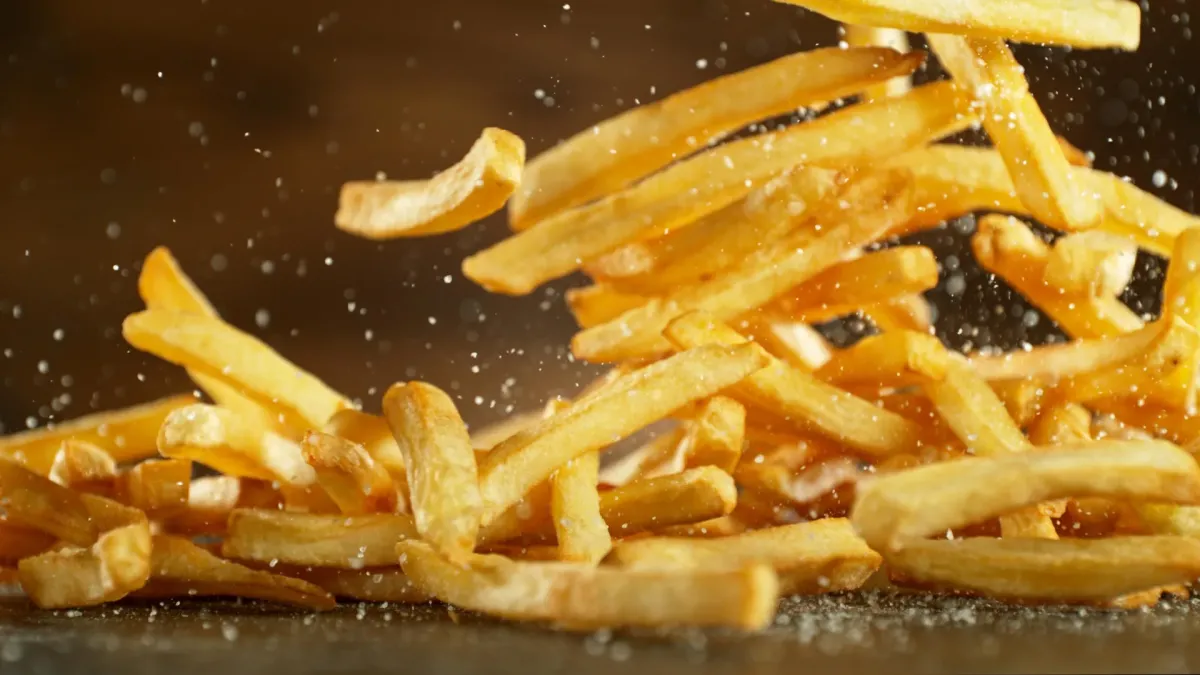
Researchers are cooking up a game-changer for French fries, developing a hybrid microwave-conventional frying method that promises less oil absorption and a healthier snack without sacrificing that irresistible crispiness.
Love French fries but hate the guilt? Scientists at the University of Illinois Urbana-Champaign are tackling this dilemma head-on. Their work explores using microwave energy to make fries that soak up less oil during cooking, potentially cutting down on fat and calories while keeping the classic crunch and flavor we all crave.
Pawan Singh Takhar, a food engineering professor leading the research, explained the core challenge: "Consumers want healthy foods, but at the time of purchase, their cravings often take over. High oil content adds flavor, but it also contains a lot of energy and calories." His team's findings, published in the Journal of Food Science and Current Research in Food Science, suggest a clever combination of microwave and traditional frying could be the answer.
The secret sauce? Pressure. During frying, as water inside the potato turns to vapor and escapes, it creates negative pressure, essentially sucking oil into the spaces left behind. The Illinois team discovered that microwaves heat the potato more uniformly, generating vapor internally and increasing pressure. This higher internal pressure acts like a natural barrier, pushing back against the oil and limiting how much gets absorbed.
While microwave-only frying can reduce oil intake, it often results in soggy fries. That's where the hybrid approach shines. By combining microwave heating for efficient moisture removal and reduced oil absorption with conventional frying for that perfect golden-brown crisp, this new method could allow food manufacturers to create a healthier, more appealing fried potato product.
The innovation isn't just theoretical. The researchers believe existing commercial frying equipment could be adapted to include microwave generators, making this healthier fry potentially accessible on a large scale. This could mean a win-win for consumers seeking healthier options and for the food industry looking for efficient production methods.