In the midst of global commemorations of World Humanitarian Day, Yemen is highlighted as a critical arena exposing the disparity between international rhetoric on protecting humanitarian workers and the UN's capacity to provide genuine security for its staff. An analysis published by 'The New Humanitarian' poses a pointed question: What does it signify when aid organizations fail to protect the very individuals risking their lives to serve war-affected populations?
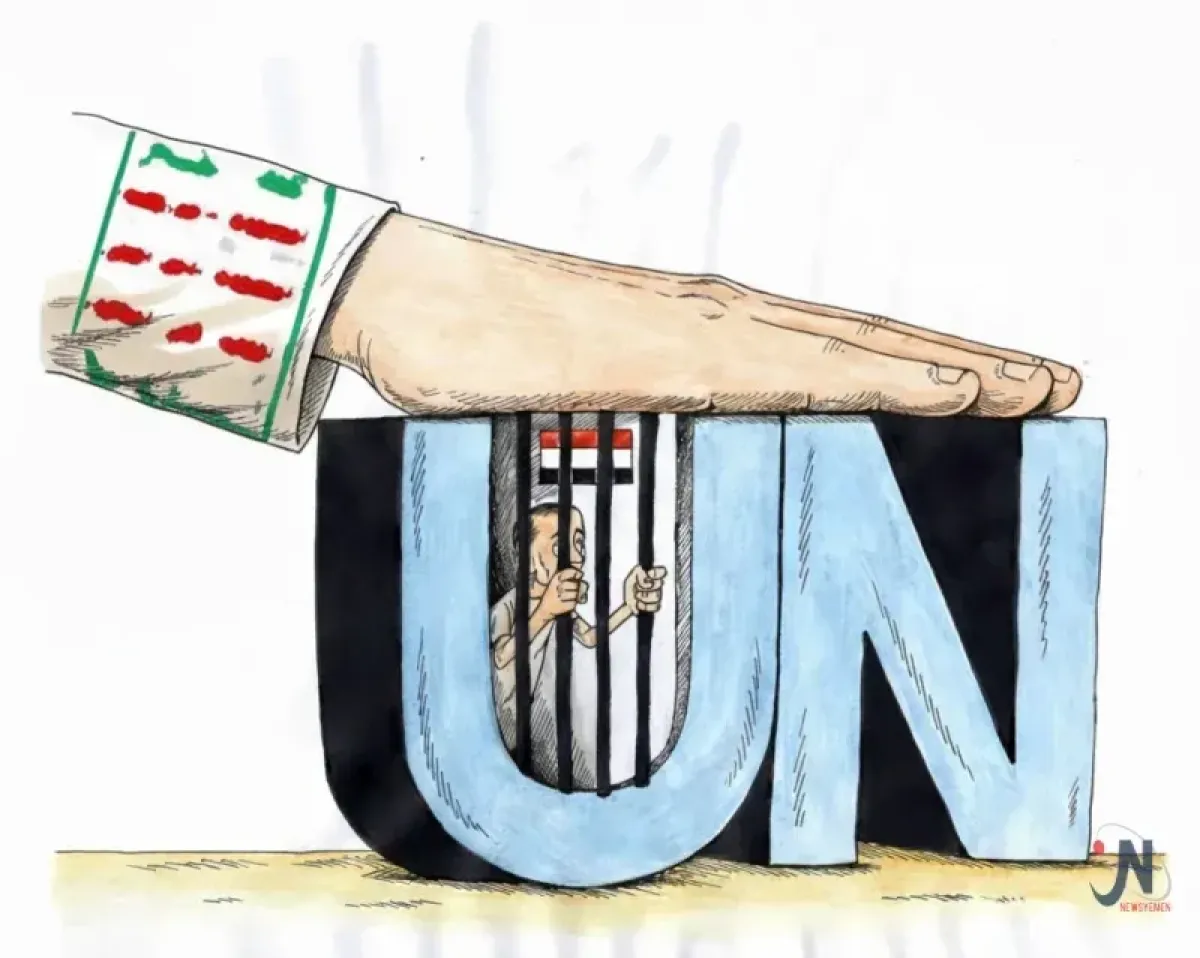
The analysis, titled "When Aid Agencies Fail Their Own: The Ethical Test Revealed by Yemen," places the detention of UN personnel by Houthi militias at the forefront of a broader crisis concerning the shrinking space for humanitarian work and the increasing vulnerability of aid workers to arrest, extortion, and judicial proceedings. The gravity of the issue is amplified by the analysis's assertion that these detentions are no longer isolated security incidents but are instead symptomatic of a more hostile environment for humanitarian operations in Houthi-controlled territories. Human rights and UN reports have documented the detention of UN staff and humanitarian aid workers, with Houthi authorities referring a number of detainees to their courts.
The Yemeni crisis unfolds within a context of profound global risk for humanitarian professionals. In May 2024, the UN Security Council adopted Resolution 2730, urging states and conflict parties to respect and protect UN and humanitarian personnel, and calling for enhanced accountability mechanisms for attacks and violations against them. However, the continued detentions and abuses in Yemen raise practical questions about the efficacy of these international commitments in translating from resolutions into tangible on-the-ground protection.
The paradox becomes more pronounced when considering national staff, who form the backbone of humanitarian operations. These individuals possess invaluable local knowledge and understanding of the language and society, without whom international organizations' ability to reach millions of Yemenis is severely hampered. The detention of these staff members prompts painful questions about whether institutional treatment of national personnel aligns with that of international staff, especially given that the majority of those detained in the Yemeni case are Yemeni citizens.
The most alarming aspect of this crisis is its escalation beyond detention to include trials and death sentences. In November 2025, a Houthi-affiliated court issued death sentences to 17 individuals accused of espionage, with reports indicating that the case involved individuals connected to humanitarian work and the UN. According to human rights reports, these trials reportedly lacked fair trial guarantees, amid accusations of relying on confessions extracted under duress and insufficient defense provisions. This situation transcends the fate of detained staff to challenge the fundamental principle of humanitarian immunity itself. If aid workers become susceptible to arrest, trial, and potentially execution due to their professional duties, the message conveyed to other aid workers, both within Yemen and internationally, is that humanitarian work no longer affords the minimal protection stipulated by international law.
The issue is not a lack of legal or political instruments. UN Security Council Resolution 2730 provides a clear framework for protecting humanitarian workers, and UN officials have previously called for an end to attacks on aid personnel and for accountability for those responsible. In April 2025, the UN emphasized to the Security Council that protecting humanitarian workers necessitates concrete actions and accountability, not mere condemnation. However, the analysis directs criticism towards the slow institutional response, suggesting that the proliferation of procedures, committees, and bureaucratic pathways can serve as a substitute for decisive political leadership. This presents the UN with a most uncomfortable reality: the existence of an international resolution does not guarantee protection, nor does the availability of data ensure a detainee's return home. For a detained staff member and their family, the response is measured not by the volume of statements issued from New York or Geneva, but by the application of genuine political and diplomatic pressure leading to their release.
In the Yemeni context, the Houthi militia appears to be continuously testing the limits of what can be done to the UN and humanitarian workers without incurring an international cost commensurate with the severity of their actions. Repeated detentions, raids on premises, movement restrictions, and the referral of detainees to courts all indicate a shrinking operational space for humanitarian efforts in areas under the group's control. The Sana'a Center for Strategic Studies has documented a surge in detentions of UN personnel during 2025, noting that the number of detained UN staff exceeded 30 at one point during an escalation. The risk here extends beyond the staff themselves; each detained aid worker effectively diminishes the organizations' capacity to reach populations in need, thereby transforming the targeting of aid workers into an indirect means of pressuring communities reliant on assistance.
What is most concerning in the analysis is its attribution of responsibility to UN leadership that extends beyond mere negotiation for the release of detainees, to encompass rebuilding staff confidence that the organization they serve will not abandon them in their most difficult circumstances. Humanitarian workers accept employment in dangerous environments with the assumption of an institutional support system, believing the risks they undertake are not solely personal responsibilities. When this trust erodes, the damage inflicted is deeper than the detention of individuals; it can impact staff morale, an organization's ability to attract talent, and the continuation of humanitarian operations in the most perilous environments. The analysis's call to elevate the issue to the highest political levels within the UN, including the consideration of appointing a special envoy focused on securing the release of detained humanitarian workers, is therefore logical.
The broader message conveyed by the analysis is that the events in Yemen should not be treated merely as a local security matter or solely as a dispute between the Houthis and the UN. This issue touches upon a fundamental international principle: can a humanitarian worker perform their mission without becoming a hostage to conflict parties? Resolution 2730 itself underscores that the protection of UN and humanitarian personnel is a responsibility that must be respected, while the UN acknowledges that the risks faced by workers are escalating in conflict zones, particularly for national and local staff. Consequently, the unresolved detention crisis in Yemen sends a message of weakness not only to UN personnel but may also embolden other parties in different conflicts to test similar boundaries. On World Humanitarian Day, the analysis presents a starker message than mere celebration: it is insufficient for the UN to honor workers risking their lives if it is incapable of protecting those working in its name when they themselves become victims. The true challenge for the international organization lies not in issuing another statement, but in demonstrating that protecting its staff is an integral part of its core responsibility, and that the arbitrary detention of humanitarian workers will not become an accepted norm managed through statements and bureaucratic procedures.