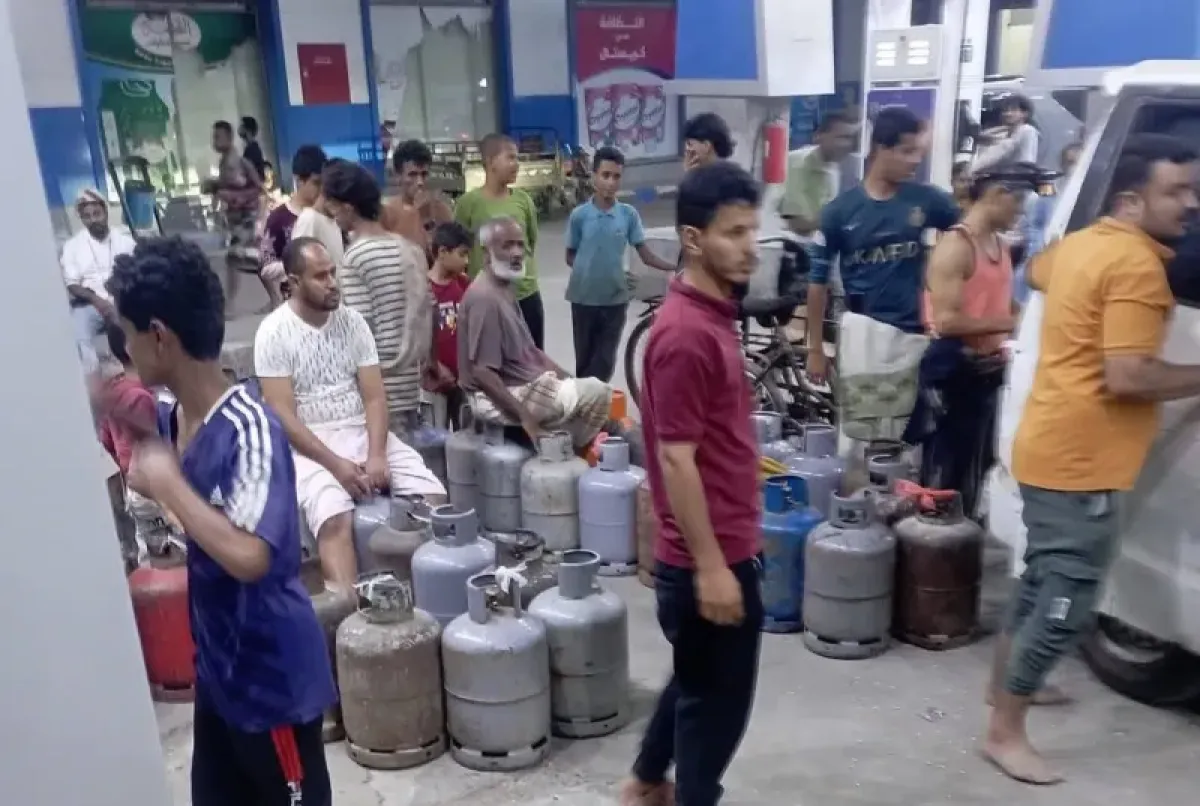
The ongoing domestic gas crisis in Yemen's interim capital, Aden, and liberated provinces is escalating, marked by persistent queues at filling stations and widespread public complaints of profiteering and a black market. This situation is exacerbated by contradictory official statements regarding the crisis's causes and production levels at the Safir gas facilities.
Questions are mounting over the management of the gas sector following conflicting announcements from the Yemen Gas Company. Initially, the company declared the completion of periodic maintenance at the Safir production plants and an expected gradual increase in output. However, this was soon followed by news of a production unit shutdown, resulting in a daily loss of approximately 6,000 barrels of gas, equivalent to about 20 gas tanker trucks.
A formal memo from the Yemen Gas Company's executive director, Eng. Mohsen bin Hamad bin Waheet, to the Minister of Oil and Minerals confirmed the stoppage of the domestic gas production unit (CPU-2) on Tuesday, August 18th. The memo indicated that the unit had only transferred 240 barrels before its shutdown, leading to an estimated daily deficit of 6,000 barrels, further straining an already tight market.
The most striking aspect of this crisis is that the shutdown announcement came just days after official assurances of completed maintenance and rising production. The executive director had previously announced the end of maintenance that began on June 26th, affirming that production was gradually increasing and efforts were underway to stabilize the local market. The subsequent declaration of a complete unit shutdown and a deficit of nearly 20 tanker trucks daily has plunged the crisis back into a more complex state, raising serious doubts about the accuracy of data provided to the public and the nature of technical and administrative issues plaguing the gas sector.
Adding to the concern, the official memo lacked a clear explanation for the sharp decline in the unit's production prior to its shutdown. Data reveals a drop from 5,816 barrels on August 7th to a mere 240 barrels just before the stoppage. This significant decrease necessitates a transparent technical explanation, especially given that the shutdown was announced after official confirmations of the production plants' readiness and improving supply.
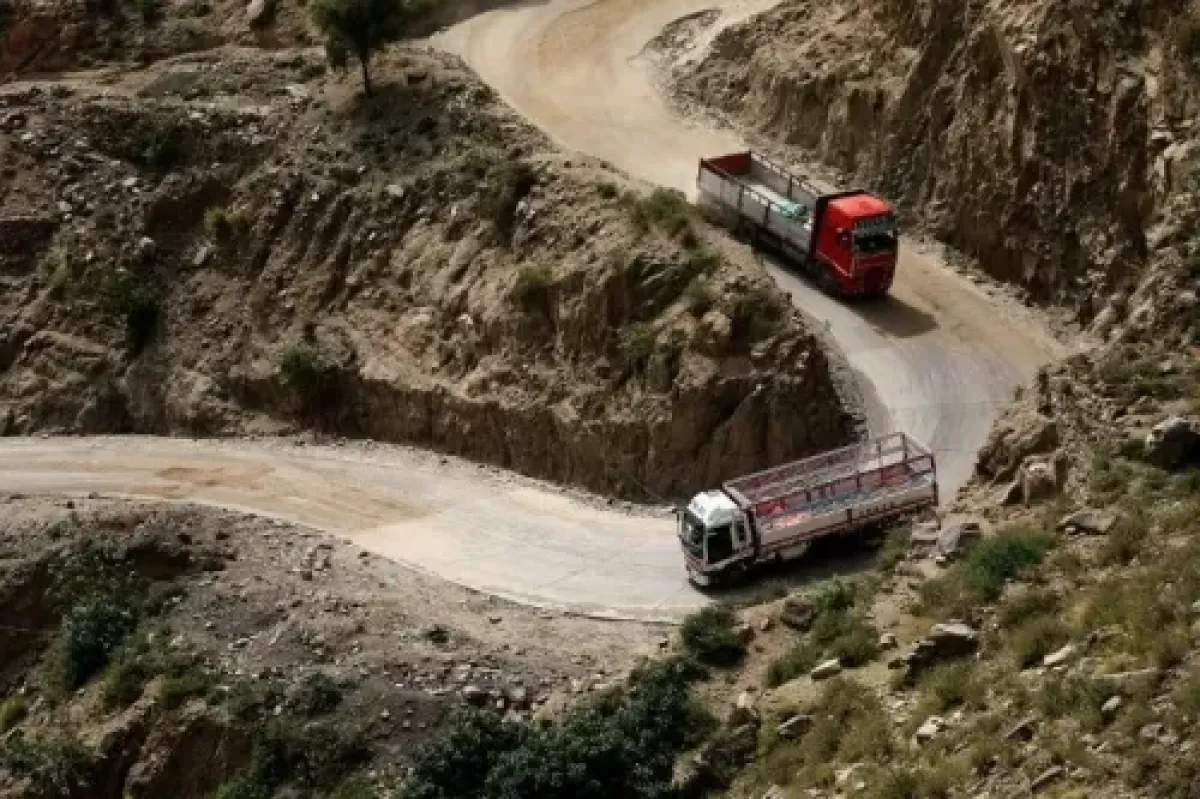
Conversely, the Ministry of Oil and Minerals offered a broader explanation, attributing the current bottlenecks not to administrative shortcomings or targeted actions but to a confluence of factors. These include tribal blockades of gas tankers, the unregulated expansion of gas use for vehicles and commercial establishments, and ongoing maintenance at the Safir plants. The ministry stated that gas tankers faced 25 tribal blockades between January and August 2026, causing a total of 126 days of supply disruptions. It also acknowledged that the increasing shift from gasoline to gas for vehicles and businesses has diverted some quantities intended for household consumption.
However, solely blaming the crisis on armed factions seems insufficient to explain all aspects of the shortage, particularly since the problem persisted even after maintenance was declared complete. The continued deficit, coupled with the announcement of a new unit shutdown, shifts the focus beyond transportation and blockades to the core issues of production, distribution, and oversight. If road blockades are a contributing factor, the shutdown of a production unit and the loss of approximately 6,000 barrels daily represent a distinct problem that requires public disclosure of its causes, rather than vague generalities that fail to address the sudden production decline.
Production figures paint a larger picture, indicating a significant drop in Safir's output over the past few years. According to journalist Ammar Ali Ahmed, production has fallen from about 128 tanker trucks daily in 2023 to 54, and now down to approximately 21. If these figures are accurate, the current crisis is not merely a temporary shortage due to maintenance or road blockades, but rather a symptom of a deeper decline in production capacity, necessitating an urgent and comprehensive review of the gas sector, from production to transportation, distribution, and retail points. The danger lies in relying solely on emergency measures; while redistributing quantities or forming field committees might offer short-term relief, they do not address the root cause if production capacity is continuously decreasing or if supply chain and distribution management are flawed.
Another issue arises from officials' statements concerning government policy towards gas. While citizens face severe shortages of a basic commodity, the Minister of Oil and Minerals noted that increasing production requires substantial resources and that imports are a potential solution. Concurrently, there are reports of negotiations with Total to resume gas exports from the Balhaf facility. This presents a pertinent question: How can the government discuss importing gas for domestic needs while simultaneously considering gas exports, when the current system struggles to supply citizens with gas cylinders at the official price? This contradiction, if left unexplained, places the gas management policy under genuine scrutiny and reinforces the perception that citizens are at the bottom of the priority list, despite the direct link between domestic gas and household livelihood security.
In the midst of these contradictions, citizens bear the brunt of the chaos. Women and the elderly queue for hours at filling stations, while public complaints highlight the activities of brokers and intermediaries, and the diversion of some quantities to unofficial channels. Testimonies suggest that some gas allocated for the local market is rerouted to restaurants and hotels or leaks into the black market, forcing families to wait extended periods for a single cylinder or purchase it at inflated prices outside official channels. If these complaints are accurate, the problem extends beyond production volume to the authorities' ability to protect quantities designated for households and ensure their delivery to end consumers. Gas that is produced but does not reach the citizen does not resolve the crisis, and increased production will be insufficient if leakage, monopolies, and black markets persist.
The Ministry of Oil announced a series of measures, including restructuring distribution, increasing quotas for governorates based on population density, prioritizing household consumption, monitoring tanker movements from production sites to filling stations, and forming committees to assess station performance and address violations. The ministry also mentioned coordinating with security and military agencies to protect transport lines and working to establish a strategic gas reserve in Aden and diversify supply sources. However, these measures, while important, do not yet answer the most critical questions: Why has production declined to such levels, and why did a production unit shut down just days after maintenance was declared complete? Furthermore, the continued queues and shortages after the announcement of increased production test government actions based on results, not just data.
The fundamental issue in the gas crisis is not merely a shortage of cylinders or the stoppage of tankers, but the absence of a unified official narrative that can explain the reality to citizens. The company cites maintenance and blockades, then suddenly announces a unit shutdown and substantial daily losses. The ministry offers an explanation based on multiple accumulated factors, while the market remains choked, and citizens face rising prices, longer queues, and a more active black market. This inconsistency erodes trust in responsible institutions, making any new announcement of crisis resolution suspect, especially after recent developments have shown that official reassurances can be followed within days by news of new deficits. Therefore, genuine resolution requires not another statement, but the disclosure of complete production and distribution figures, clarification of the reasons for Safir's declining output, an explanation for the CPU-2 unit's shutdown, publication of quantities produced and allocated to each governorate, and monitoring of tanker movements until they reach sales points.
Citizens do not need further justifications as much as they need gas cylinders delivered at the official price and in a timely manner. The continued conflicting statements and the passing of responsibility between the company, the ministry, and local authorities will only prolong the crisis and expand the black market, with Yemeni families ultimately paying the highest price for the failed management of a commodity so directly linked to daily livelihood security.