Astronomers are using the James Webb Space Telescope to observe young star systems experiencing extreme dust events, potentially caused by massive planetary collisions, offering new insights into how rocky planets form and evolve, mirroring events in our own solar system's past.
These rare "extreme debris disks" are characterized by small dust grains, high concentrations of warm dust near the star, and fluctuating brightness. Researchers analyzed 21 such systems, with a significant portion of these observations made possible by Webb's advanced capabilities.
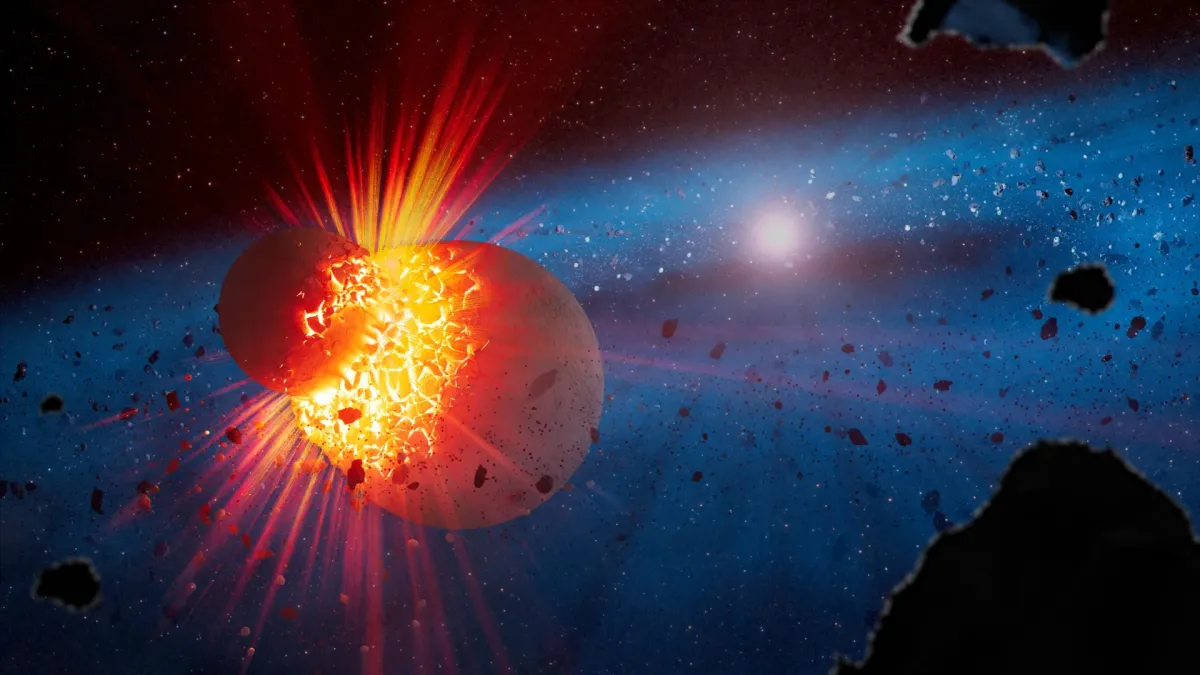
The composition of the dust within these disks offers clues about the impacts. "Silica-rich" disks, accounting for about a third of the sample, likely result from high-energy collisions between Mars-sized bodies, capable of vaporizing rock. The remaining "silica-poor" disks are thought to stem from less intense impacts, such as glancing blows between Moon-sized objects.
Notably, silica-rich disks are only found around stars younger than 300 million years, aligning with theories of early planet formation. Silica-poor disks, however, appear around stars of various ages and exhibit more dramatic brightness variations, possibly due to the rapid evolution and ongoing collisions within newly formed debris.
These findings could help scientists piece together the history of our own solar system, including the giant impact believed to have formed the Moon. The age and behavior of these debris disks are consistent with models of planetary formation and potential periods of orbital instability that could have triggered massive collisions.
While much has been revealed, scientists are eager to study more of these extreme debris disks to confirm their hypotheses. The James Webb Space Telescope, a leading space observatory, continues to provide unprecedented data for understanding planetary evolution and the origins of our universe.