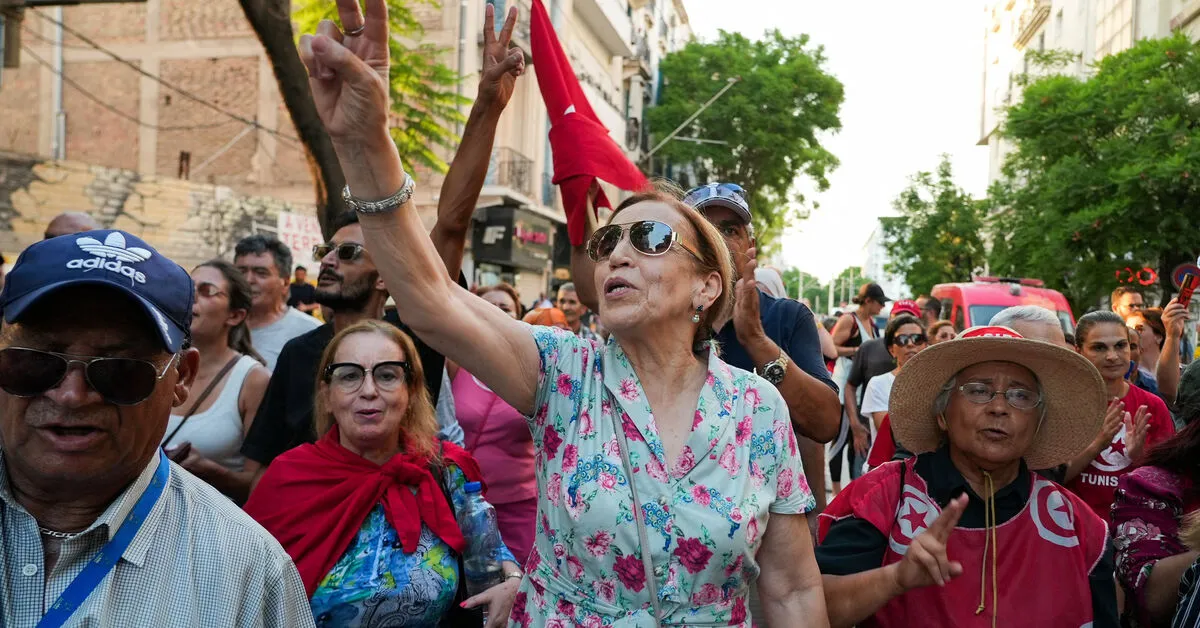
Hundreds of Tunisian activists and opposition supporters protested in Tunis on Thursday, demanding the resignation of President Kais Saied and the return of democratic governance amid escalating political and economic dissatisfaction.
Protesters voiced opposition to what they termed "one-man rule" and a "slide towards dictatorship," calling for the release of detained opposition figures, activists, and journalists. This demonstration follows a similar event last month, which coincided with the anniversary of President Saied's significant political actions on July 25, 2021. At that time, he dismissed the government, later dissolved the elected parliament, and assumed executive authority through decrees.
President Saied has also dissolved the Supreme Judicial Council and removed numerous judges, asserting that these measures were necessary to combat corruption within the judiciary. This action drew considerable international criticism, with human rights organizations labeling it an assault on judicial independence.
While these protests do not indicate an immediate political upheaval, they signify mounting pressure on the president and highlight the capacity of Saied's detractors to mobilize, despite internal divisions. Demonstrators carried banners advocating for the restoration of freedoms and condemning the nation's worsening economic and social conditions.
"Enough of the failure, enough of the injustice and enough of the absurdity. The country is experiencing a complete collapse," stated activist Wissem Sghaier to Reuters. Tunisians are currently contending with severe economic hardship and a rising cost of living, compounded by deteriorating public services and persistent shortages of essential goods and medicines.
Growing frustration has led to protests across various regions in recent weeks concerning issues such as water and power outages and environmental concerns. This suggests that public anger is expanding beyond political disagreements with President Saied to encompass the daily struggles faced by citizens.
Human rights organizations accuse Saied's administration of conducting a widespread crackdown targeting opposition leaders, civil society groups, journalists, and activists, alleging the use of judicial and security apparatus to suppress dissent. President Saied, however, denies claims of political repression, maintaining that his actions are in accordance with the law and aimed at individuals suspected of financial corruption or conspiring against the state.